
When you’re moving small loads long distance, the best approach is one that fits your wallet and how much heavy lifting you’re willing to do. Your main choices boil down to hiring specialized movers, using a freight service, or renting your own gear. Each one strikes a different balance between cost, convenience, and how much control you have over the move. Nailing down your choice early is the key to getting the best rates and locking in your dates.
Trying to figure out how to move a small amount of stuff across the country can feel like solving a puzzle with missing pieces. You don’t have enough to justify a giant moving truck, but it’s way too much to cram into your car. This is a super common scenario for students heading to a dorm, professionals relocating with just the contents of a studio apartment, or families trying to get a few pieces of furniture to a relative.
The good news? You’ve got some solid options. Think of it like booking a trip: you can hire a private car for total convenience, hop on a shared shuttle to save a few bucks, or drive yourself for complete control over the journey. Every method for moving a small load has its own perks, depending on what’s most important to you—saving money, getting it there fast, or keeping things simple.
To make the decision easier, let’s break down the three main ways people handle these kinds of moves:
To help you decide which path makes the most sense, we’ve put together a quick comparison.
This table gives you a snapshot of the main methods, highlighting the key differences to help you make a fast, informed decision.
| Moving Option | Best For | Typical Cost | Typical Timeline | Effort Level |
|---|---|---|---|---|
| Small-Load Movers | Convenience & reliability | $$$ | 5-14 days | Low |
| Freight Shipping | Budget-conscious moves | $$ | 7-21 days | Medium |
| DIY Rentals | Full control & flexibility | $ | Varies | High |
Each of these options can be a great choice, but the “best” one really depends on your specific situation and priorities.
This decision tree infographic can help you visualize which route—hiring pros, shipping freight, or doing it yourself—is the right one for you.
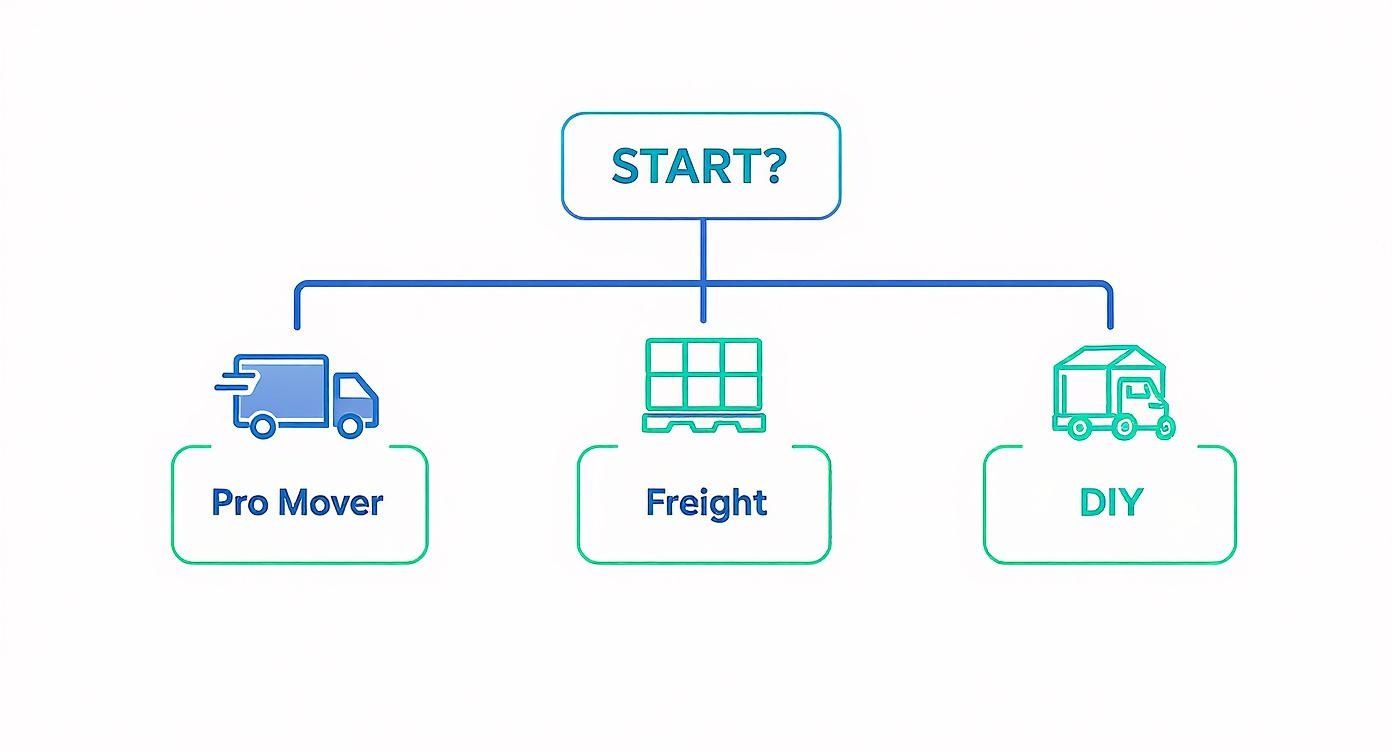
As you can see, it all comes back to whether you’re prioritizing convenience, sticking to a tight budget, or wanting total control over the move. Understanding these core options right from the start is absolutely crucial, especially when you need to know exactly what you’ll be paying. For a deeper dive into predictable pricing, our guide on flat-rate movers explains how you can lock in a guaranteed price.
Now, let’s dig into the details of each of these options.

If you’ve started calling around to traditional moving companies for a small long-distance move, you might have hit a wall. Many of the big van lines have minimum weight requirements, often starting at 2,000 to 3,000 pounds. So, if your studio apartment’s contents only add up to 1,500 pounds, you’ll still get a bill for the full minimum.
That model is a bit like having to buy out an entire movie theater just to watch a film by yourself—it’s just not efficient or sensible. Large movers are geared up for massive, full-household moves, and their pricing reflects that. Luckily, there’s a much smarter way to handle smaller shipments.
Specialized small-load movers operate on a completely different logic. Think of them as a ride-share service for your belongings. Instead of one person’s stuff getting a whole truck, they combine several small shipments from different customers onto a single truck heading in the same general direction.
This method, often called consolidated shipping, is the secret sauce that makes moving small loads long distance both affordable and practical. Everyone on the truck shares the cost of fuel and labor, so you only pay for the space your items actually take up. It just makes sense.
Going with a mover that actually focuses on small relocations gives you a real leg up. Their entire process is built around the challenges of smaller shipments, which means a much smoother experience for you from start to finish.
The most obvious benefit is the cost. By dodging those minimum weight charges, you can save hundreds, if not thousands, of dollars. A small move specialist will give you a transparent, all-inclusive price for your specific list of items, not a confusing weight-based guess that can suddenly change on moving day.
Small-load specialists don’t just save you money; they save you from massive logistical headaches. Their whole operation is designed for the quirks of smaller moves, from navigating tight apartment stairwells to providing the kind of accurate delivery windows that larger companies often can’t promise.
On top of that, you get a level of service tailored to your situation. These companies get it—even a “small” move is a huge deal to the person making it. This usually translates to better communication, more flexible scheduling, and a crew that knows how to handle and protect a single piece of furniture just as carefully as a stack of boxes.
Not all small-load movers are created equal, so you’ve got to do your homework to make sure your belongings are in good hands. A reputable company won’t be cagey with information; they’ll be upfront and stand by their commitments.
Keep an eye out for these tell-tale signs of a trustworthy partner:
Finding a company that checks all these boxes is non-negotiable. There are so many perks of hiring an experienced long-distance moving company that specializes in this niche, but the biggest is peace of mind. By choosing a dedicated specialist, you’re not just some small job filling a gap in their schedule—you’re their main focus.
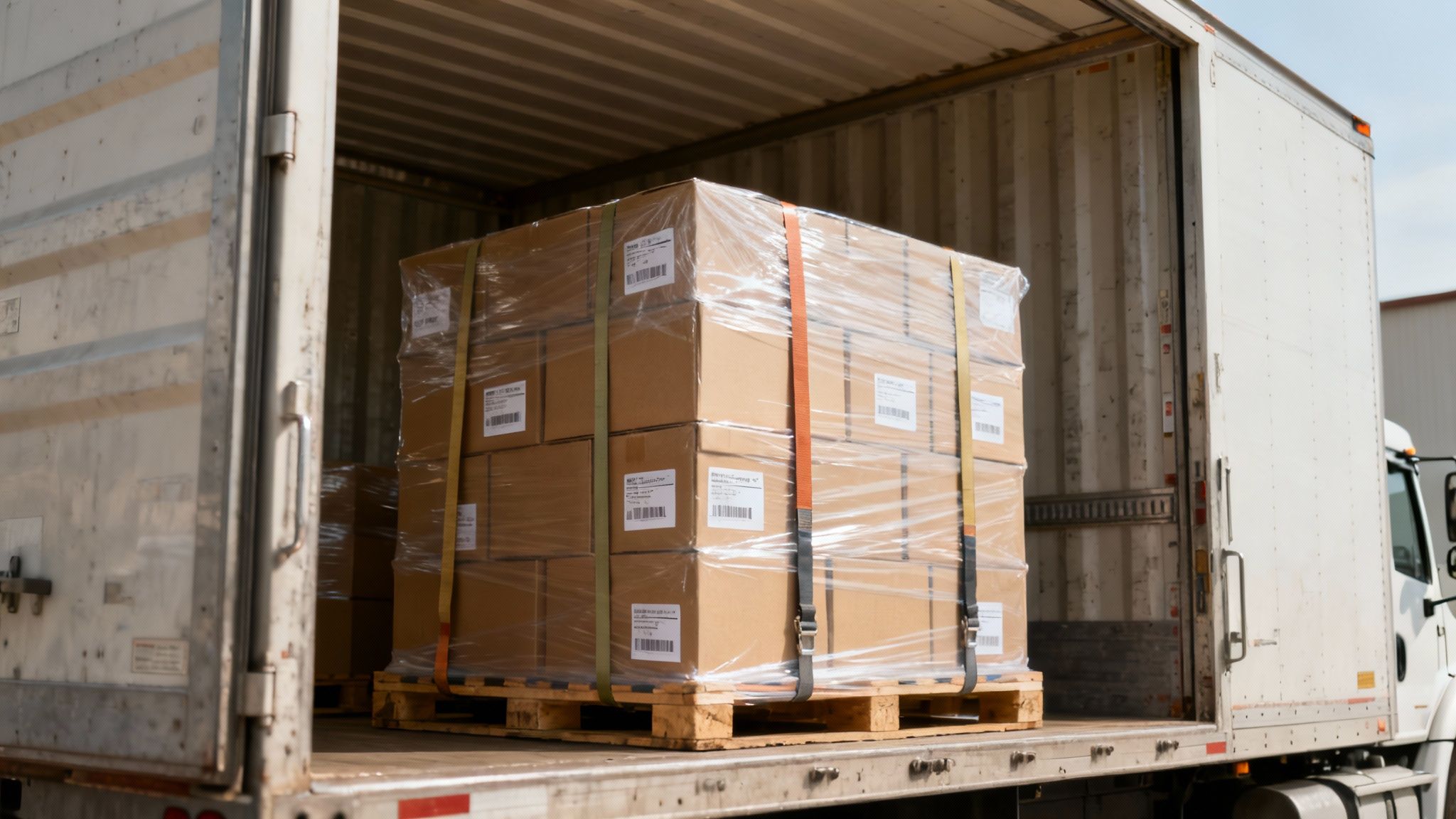
Think of it this way: if hiring a dedicated mover is like chartering a private car, using freight shipping is like catching a shared shuttle bus. It’s a method businesses rely on daily to move goods affordably, and you can absolutely tap into that same system for your personal move. This approach is a fantastic option when you’re working with a tight budget and don’t mind getting a little hands-on.
The whole idea is wonderfully simple. You’re sharing space on a massive commercial truck with a bunch of other shipments. Instead of footing the bill for an entire moving truck you don’t need, you only pay for the exact slice of space your belongings take up. This shared-space model is what makes freight a powerhouse for moving small loads long distance without emptying your wallet.
In the logistics world, this is called Less-Than-Truckload (LTL) shipping. The name might sound technical, but the concept couldn’t be more direct. Your items are usually stacked and secured onto a wooden pallet or packed inside a crate, which creates a single, solid unit that forklifts can move around easily.
Dipping your toes into the world of freight can feel like learning a new language. You’ll definitely run into terms that you just don’t hear during a typical residential move, but getting a handle on them is the key to a stress-free process.
Here are the big ones, translated into plain English:
Don’t let the lingo scare you off. The freight company you choose will help you figure out your freight class and walk you through the paperwork. Your main job is just getting everything packed and ready for its big journey.
The less-than-container load (LCL) shipping market has emerged as a critical segment within global logistics, particularly for those moving small loads long distances without needing full container capacity. In 2025, the global freight landscape has seen significant transformation, with LCL services becoming increasingly important as companies optimize supply chains. Learn more about how container shipping dynamics influence consumer costs at the National Retail Federation.
Freight shipping is a brilliant tool, but it’s not a one-size-fits-all solution. You have to carefully weigh the incredible cost savings against the trade-offs in convenience and timing.
Key Advantages:
Potential Downsides:
This method is really perfect for someone who is comfortable with the physical prep work and has a flexible move-in date. If you need a more concrete schedule, it’s worth taking the time to explore all your long-distance moving options.
At the end of the day, freight shipping puts you in the driver’s seat of your move’s logistics and can save you a serious amount of cash. It demands more planning and elbow grease, but for the right person, the financial upside makes it a no-brainer.
If you’re the type who likes to roll up your sleeves and take charge, a DIY move can be an empowering and wallet-friendly way to go. When you’re moving small loads long distance, you’ve really got two main contenders in the do-it-yourself arena: portable moving containers (think PODS) and the classic rental trailer.
Each one offers a totally different path to your new front door. One is all about convenience and taking your time, while the other is the old-school road trip method where you’re in the driver’s seat from start to finish.
Think of moving containers as your own personal warehouse, dropped right at your doorstep. A company delivers a big, weather-resistant box, you load it up on your own schedule, and then they whisk it away to handle the long-haul drive.
The single biggest draw here is flexibility. Most companies give you a generous window—often up to 30 days—to pack and load. This completely sidesteps that frantic, one-day rush that’s so common with renting a truck.
Once you’re packed and have the container locked up, their team comes to pick it up and drive it to your new city. It’s a great middle-of-the-road option, giving you total control over packing your stuff without the white-knuckle stress of driving a huge vehicle across state lines.
Using a moving container offers a unique blend of control and convenience. You manage the packing and loading on your schedule, but a professional driver handles the difficult long-distance travel, reducing stress and improving safety.
Of course, that convenience isn’t free. Moving containers typically cost more than renting a trailer. You also have to be sure you have the space for one to be dropped off and picked up, which can be a real headache in apartment complexes or tight city streets.
For the truly budget-conscious, renting a small trailer to hitch onto your own car or SUV is almost always the cheapest route. You’re just paying a daily rental fee and maybe some mileage costs, putting you in the driver’s seat of your moving budget. This is perfect for smaller moves, like hauling the contents of a studio apartment or a college dorm room.
The trade-off for saving all that cash is the sheer amount of work involved. You are responsible for everything. That means correctly hitching the trailer, loading it so the weight is balanced just right, and then driving with it for hundreds, maybe thousands, of miles. Towing fundamentally changes how your vehicle handles—braking takes longer, crosswinds are a bigger deal, and you just have to be on high alert the entire time.
If you like the idea of handling the transport but are dreading the back-breaking labor of loading and unloading, you’re not alone. Many people hire hourly moving help just for the heavy lifting. Knowing the cost of moving labor can help you budget for some professional muscle, saving your back while still keeping the overall move affordable.
So, a container or a trailer? The right answer really comes down to what you value most. Just run through these quick questions to figure out the best fit for your small long-distance move:
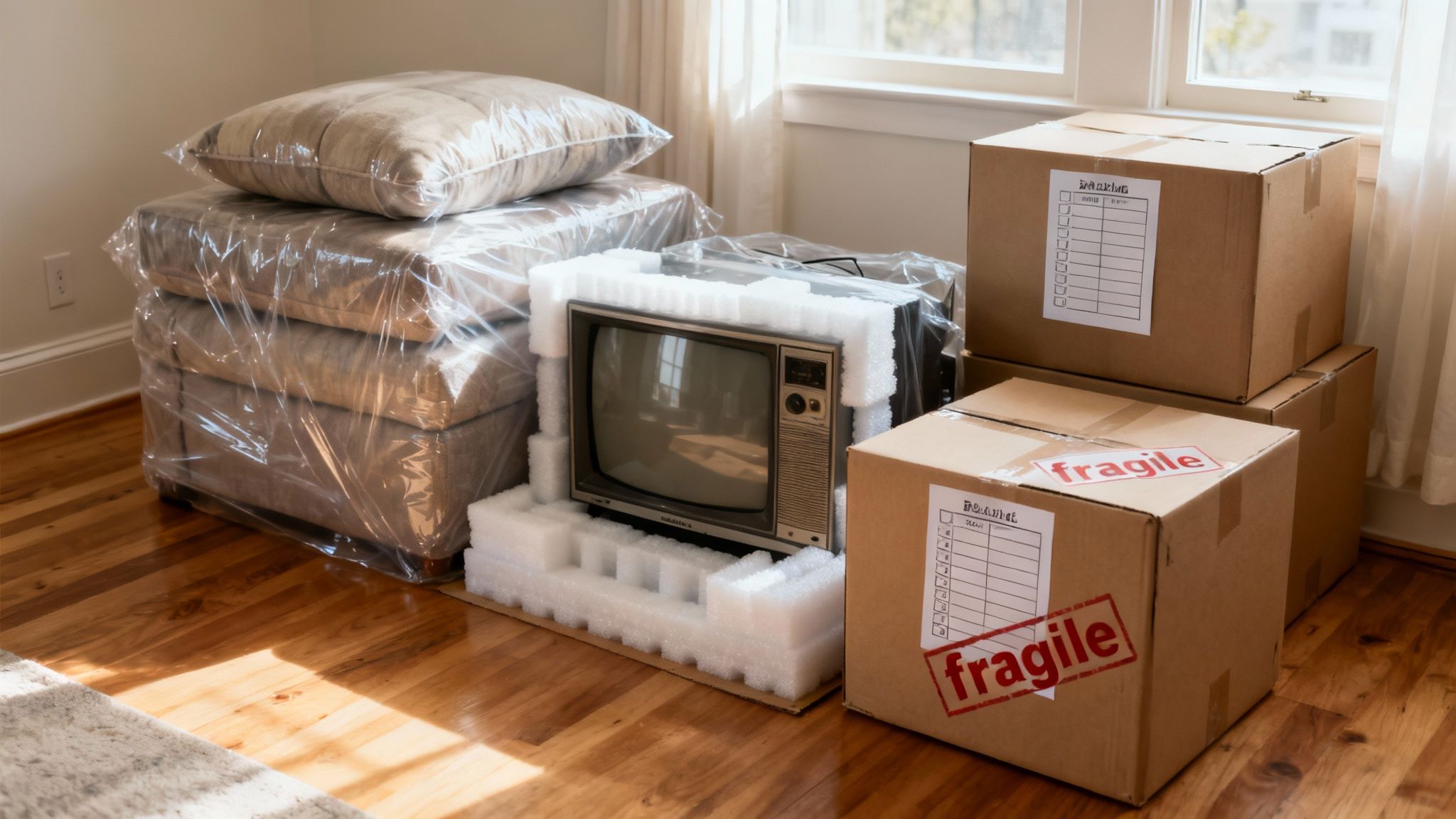
Here’s something you might not realize about small, long-distance moves: your stuff will likely be sharing truck space with other shipments. That means it might get handled a bit more than it would on a dedicated truck. This makes your packing job more than just a good idea—it’s your absolute first line of defense.
Think of it like this: every box and piece of furniture needs to be tough enough to hold its own and support its neighbors during the journey. A little extra time spent on prep now will pay off big time when everything arrives looking exactly as it did when you last saw it.
You don’t need years of experience to pack like a pro. Honestly, it just comes down to having the right materials and knowing a few key techniques. It turns a job you might be dreading into something totally manageable. First things first, let’s get your supplies in order.
Your Essential Packing Toolkit:
With your supplies ready, it’s all about technique. Always put heavier things at the bottom of the box with lighter items on top. Wrap fragile pieces one by one, making sure they’re cushioned on all sides. For a deeper dive, check out these five keys to packing your belongings for a long-distance move for more expert-level strategies.
One last tip: make a quick inventory list as you go. Just number each box and jot down what’s inside. It seems small, but this step makes unpacking so much less of a headache and helps you confirm everything made it.
Decided to go with freight shipping? Your packing game needs to be even stronger. For freight, all your items get consolidated onto a pallet, creating one solid block that can be moved with a forklift. This is called palletizing, and doing it right is crucial.
The idea is to build a stable, cube-like structure. Lay down a sheet of cardboard on the pallet first. Then, start stacking your heaviest and biggest boxes, working your way up to the lighter stuff. Try to interlock the boxes like you’re building with bricks to make the whole stack more stable.
When palletizing, your shipment becomes a single, self-contained unit. The quality of your stacking and wrapping directly determines how well it withstands the bumps and shifts of a cross-country journey. A tight, well-built pallet is a safe pallet.
Once everything is stacked, it’s time to lock it all down. Use industrial-strength shrink wrap and circle the entire pallet from the bottom to the top, over and over again. Pull the wrap tight as you go. You want it to bond all the boxes together into one solid unit that won’t budge. This tight wrapping is what will shield your small load from the toughest parts of transit.
Trying to budget for a move can feel a bit like guessing the weather—unpredictable and a little stressful. But it doesn’t have to be. Getting a handle on your financial roadmap is a must when you’re moving small loads long distance, because the final bill can swing wildly depending on the path you take. Once you understand the typical costs and can cut through the insurance jargon, you can build a solid budget and make sure your stuff is protected, no last-minute surprises attached.
Ultimately, the price tag for your move comes down to three things: how much you’re moving, how far it’s going, and how much of the heavy lifting you plan to do yourself. Professional movers factor in labor and the dedicated space on their truck, while options like freight or DIY rentals ask you to trade your own time and effort for a lower price.
Every moving method has its own way of pricing things out. When you work with a small-load specialist like Family Movers Express, you’ll get a single, all-in, flat-rate quote based on exactly what you’re moving. That number bundles everything—labor, transport, fuel, and basic insurance—into one predictable cost, which makes budgeting a breeze.
Freight shipping, on the other hand, is all about space and weight, usually calculated by the pallet. You’ll also have to factor in the cost of packing supplies, like the pallet itself and plenty of shrink wrap. DIY routes, like renting a trailer, come with daily fees and sometimes mileage charges. Moving containers usually have a flat fee for the container and a separate charge for getting it from point A to point B.
If you’re moving business inventory, there’s another layer to consider. Recent shake-ups in global logistics have changed the game. Thanks to some corrections in shipping capacity, businesses might see a 10-20% cost reduction for long-distance small moves compared to the sky-high rates we saw recently. But keep an eye out—future policy changes could always stir things up again. You can get a deeper dive into how maritime trade pressures affect shipping costs over at UNCTAD.
To give you a clearer picture, let’s look at a real-world scenario. Moving a studio apartment from New York City to Los Angeles is a classic small-load, long-distance move. Here’s a rough idea of how the costs and timelines stack up for different methods.
| Moving Method | Estimated Cost Range | Estimated Transit Time | Key Considerations |
|---|---|---|---|
| Small Load Movers (Family Movers Express) | $2,500 – $4,500 | 2-5 days | Flat rate, guaranteed dates, door-to-door service, no heavy lifting for you. |
| Moving Container (PODS, U-Pack) | $1,800 – $3,200 | 7-14 days | You pack and load. Flexible timeline, but you handle all the labor. |
| Freight Shipping (LTL) | $1,500 – $2,800 | 5-10 days | You must palletize everything. Good for boxed items, less so for furniture. |
| DIY Rental Truck/Trailer | $2,000 – $3,500 + fuel | 4-6 days (driving) | You do everything: packing, loading, driving, unloading. Physically demanding. |
As you can see, the “cheapest” option isn’t always the best value once you factor in your own time, physical effort, and the risk involved. The key is to find the right balance of cost, convenience, and peace of mind for your specific situation.
This is one of the most important parts of your move, so lean in. Moving insurance is your financial safety net if something goes wrong. By federal law, every interstate mover has to offer two basic types of liability coverage, and believe me, the difference between them is massive.
Here’s the simple breakdown:
Think of it this way: Released Value Protection is like the basic liability car insurance that’s legally required—it barely covers anything. Full Value Protection is like a comprehensive policy that actually protects your car if it gets totaled.
Always have your moving company walk you through their FVP options. For anything valuable, it’s almost always worth the extra cost for the peace of mind. Some people even get a separate moving insurance policy from a third-party company, especially for things like antiques or fine art. Whatever you decide, never just assume you’re covered—get the details in writing.
Even the best-laid plans can leave you with a few nagging questions. It’s completely normal. Think of this as the final huddle before the big day, where we tackle the most common things people ask about moving small loads long distance. Our goal is to clear up any lingering confusion so you can move forward feeling totally confident.
We’ll break down some of the industry lingo and give you straight answers to those last-minute “what ifs,” making sure you feel 100% ready for what’s ahead.
The term “small load” can feel a little fuzzy, but in the moving world, it has a pretty clear definition. Generally, we’re talking about any shipment that weighs less than 2,000 pounds. This could be anything from the contents of a studio or one-bedroom apartment to just a few big pieces of furniture and a dozen or so boxes.
Here’s where it gets tricky with traditional moving companies. Many of the big van lines have a minimum weight they charge for, often 3,000 pounds or more. That means if your stuff only weighs 1,500 pounds, you’re still paying for the full 3,000. It’s exactly why finding a mover who specializes in small loads isn’t just more practical—it’s way more affordable.
For just a couple of small, light boxes, parcel services like UPS or FedEx can work out. But their whole pricing model is built around a per-box rate that factors in both weight and size. Once you start adding furniture or more than 5-10 boxes, those costs add up shockingly fast.
When you’re moving more than a handful of items, a dedicated small-load mover or a freight service will almost always be the more economical choice. They charge you for the total space your things take up on the truck, not by the piece. This consolidated approach delivers some serious savings.
The secret to a rock-solid quote is a detailed inventory. It’s a little bit of homework that pays off big time. Before you even pick up the phone, walk through your place and make a list of every single thing you plan to move. For bigger items like your sofa or mattress, jot down the rough dimensions. Snapping a few photos on your phone is a great idea, too.
When you talk to potential movers, give them this list. Any reputable company will use it to provide a written, binding quote. Always, always ask if an estimate is binding (meaning the price is locked in) or non-binding (meaning the final bill could be higher). You want a binding quote for peace of mind.
Ready to get a clear, guaranteed price for your small move? The team at Family Movers Express LLC is all about making long-distance simple and stress-free. We offer guaranteed moving dates and even same/next-day availability to fit your schedule. Get your free estimate today!
Ready to protect your upcoming move?
Click Here to Fill Out Our Quick Form & Secure Your Instant Quote!