

Let’s be honest: moving long-distance cheaply is all about smart planning and getting ruthless about what matters most. The winning strategy boils down to three things: drastically cutting down the amount of stuff you move, picking a budget-friendly way to get it there (like a rental truck or a moving container), and timing your move for the off-season to dodge peak prices.
Your Smart Start to an Affordable Cross-Country Move

A cross-country move can feel like a battle between your belongings and your bank account. But here’s the good news: an affordable move is totally within reach if you have the right game plan. You don’t have to choose between breaking the bank or breaking your back. The real secret is making informed decisions long before you even tape up the first box.
This guide is built on four pillars of savings that will show you exactly how to pull off a cheap long-distance move:
- Radical Downsizing: The less you move, the less you pay. It’s the single most direct path to a smaller bill.
- Smart Transport Choices: From DIY truck rentals to hybrid container services, the right option for your budget and sanity is out there.
- Strategic Timing: Moving when no one else wants to can slash your costs.
- Resourceful Packing: Sourcing free supplies and using what you already own can easily save you hundreds.
Understanding the Financial Landscape
The price jump from a local to a long-distance move is huge. We’re talking an average of around $4,890 for a long-distance haul, a massive leap from the typical $1,250 for moving across town. This difference is exactly why every single cost-saving trick counts.
Timing is a massive piece of this puzzle. Moving during the off-peak seasons like fall and winter can knock 20-30% off your final bill. You can dig into more moving statistics and trends to see just how much the calendar impacts your bottom line.
A cheap long-distance move isn’t about cutting corners—it’s about eliminating waste. Wasted space in a truck, wasted money on services you don’t need, and wasted effort moving items you no longer love all add up.
To give you a clear financial picture from the get-go, it helps to see how the most common budget-friendly methods stack up against each other. This table gives you a quick snapshot of the trade-offs between cost, effort, and convenience, setting the stage for the nitty-gritty details we’ll cover next.
Comparing Low-Cost Long-Distance Moving Options
| Moving Method | Average Cost Range (Cross-Country) | Best For | Effort Level |
|---|---|---|---|
| DIY Truck Rental | $1,500 – $3,500 | Those with smaller moves (1-2 bedrooms) who are comfortable driving a large vehicle and handling all the labor. | High |
| Moving Container | $2,500 – $5,000 | People who want to pack on their own schedule but prefer not to drive a truck across the country. | Medium |
| Freight Trailer | $1,800 – $4,000 | Individuals moving larger homes who can pack and load themselves to get significant savings over full-service options. | Medium |
| Budget Full-Service | $3,500 – $7,000+ | Anyone who needs professional help with loading and transport but is flexible on delivery dates to secure lower rates. | Low |
Seeing the numbers side-by-side makes it easier to figure out where you fit. Are you willing to put in the sweat to save thousands with a truck, or does the convenience of a container sound like the perfect middle ground? Each path has its pros and cons, which we’ll break down in the coming sections.
Downsize Your Stuff to Downsize Your Bill
Let’s be brutally honest: every single thing you own has a price tag attached to moving it. The most direct, no-nonsense way to engineer a cheap long-distance move is to get absolutely ruthless about what actually makes the trip.
Think about it. More weight and volume means a bigger truck, more boxes and tape, higher fuel costs, and more hours of labor. Each of these things inflates your final bill. Before you even think about packing a box, your first job is to become a master editor of your own life. This isn’t just spring cleaning; it’s a strategic financial move.
For every clunky piece of furniture, box of books, or old kitchen gadget you leave behind, you are actively putting money back into your pocket.
The Four-Box Method for Simple Decisions
Staring down a room full of your possessions can feel completely overwhelming. It’s easy to get paralyzed. To cut through that decision fatigue, I always recommend the dead-simple four-box method. Just grab four big boxes or just designate four corners of the room and label them:
- Keep: These are your non-negotiables. The stuff you love, use all the time, or that holds real sentimental value.
- Sell: This is for anything with some resale value that you’re ready to part with. Think decent furniture, electronics, or brand-name clothes.
- Donate: Items that are still in good, usable shape but aren’t worth the hassle of selling. Give them a second life with someone who needs them.
- Trash/Recycle: Be honest with yourself here. This is for anything broken, expired, or just too worn out to be useful to anyone.
Go through your home one room at a time, closet by closet, and physically touch every item. This simple action forces you to make a conscious choice instead of just defaulting to, “Eh, I’ll just pack it.”
The goal isn’t just to get rid of things. It’s to make smart, strategic cuts that deliver the biggest financial impact on your moving costs. Every bulky item sold or donated is a tangible saving.
Turning Clutter into Cash
That “sell” pile you’ve created is a golden opportunity to help fund your move. A well-organized moving sale or a few online listings can easily generate hundreds, sometimes even thousands, of dollars. Better yet, it simultaneously shrinks the size of your moving quote.
Real-World Example: I once worked with a family moving from Chicago to Austin who had an old, incredibly heavy solid-wood bedroom set. Movers quoted them an extra $500+ just for the weight and space it would hog on the truck. Instead of paying to haul it across the country, they listed it on Facebook Marketplace for $400.
Not only did they avoid the $500 moving fee, but they also pocketed $400 in cash. That’s a $900 swing in their favor—more than enough to buy a brand-new, modern bedroom set at their destination without the headache of moving the old one. This is exactly how you move long distance cheap by thinking like a strategist.
Where to Sell Your Unwanted Items
- Facebook Marketplace: Hands down the best for large items like furniture and appliances. Buyers are local and expect to handle pickup themselves.
- OfferUp: Very similar to Marketplace, this app is great for quick, local sales of pretty much anything.
- Poshmark or thredUP: Your go-to for selling brand-name clothing, shoes, and accessories that are in good condition.
- Traditional Moving Sale: Perfect for offloading a high volume of smaller items quickly over a single weekend. Get the whole neighborhood involved.
Successfully downsizing is one of the most powerful moves you can make. To keep the savings going, you can find more smart tactics by reading about 5 ways to avoid unnecessary spending during a big move and keep your budget firmly on track.
Choosing Your Budget-Friendly Moving Method
Deciding how your stuff will get from point A to point B is the biggest financial fork in the road you’ll face. No other choice will hit your wallet harder, so if you’re trying to figure out how to move long distance cheap, you’ve got to get this right. Let’s dig into the most common ways people move on a budget, exposing the real costs, benefits, and hidden headaches of each one.
Your options really boil down to three paths: going full DIY, taking a hybrid approach, or finding a full-service mover that won’t break the bank. Each one offers a different trade-off between how much you spend, how much you lift, and how much you have to plan.
The Full DIY Rental Truck Route
On paper, renting a truck from a place like U-Haul or Penske and doing everything yourself often looks like the cheapest way to go. You’re in complete control of the timeline, the packing, and the driving. You’re the captain of your own moving ship.
But that initial quote? It’s just the starting line. The final bill is almost always way higher once you tack on all the extras.
- Fuel Costs: This is the killer. A big moving truck might guzzle gas at a rate of only 6-10 miles per gallon. On a cross-country haul, that can easily add up to over a thousand dollars you didn’t budget for.
- Insurance: Don’t assume your personal auto policy has you covered—it almost certainly doesn’t for a giant rental truck. You’ll have to buy liability and damage waivers directly from the rental company.
- Mileage Fees: Some outfits offer unlimited mileage for one-way moves, but you have to double-check. Getting hit with unexpected per-mile charges is a surefire way to wreck your budget.
- Taxes and Fees: Get ready for a laundry list of extra charges, from environmental fees to state taxes and other surcharges that magically appear on the final receipt.
Before you commit, do the math. Use an online fuel calculator and ask for a detailed breakdown of every single potential fee. This route will save you the most cash, but it will cost you the most in sweat and logistical headaches.
Hybrid Solutions: Containers and Freight Trailers
What if you don’t mind packing your own boxes but the thought of navigating a 26-foot truck through downtown traffic or over mountain passes gives you cold sweats? This is where hybrid solutions are a total game-changer. They strike a brilliant balance between saving money and saving your sanity.
Companies like PODS or U-Pack drop off a container at your house. You load it up on your own schedule, and when you’re done, they whisk it away to your new home. Freight trailers are a similar deal, just on a bigger scale—you only pay for the linear feet your stuff takes up in a commercial trailer.
This hybrid model is a fantastic option for budget movers. You dodge the massive labor costs by packing yourself but hand off the most grueling part of the job—the long-haul drive—to the pros.
This approach has become incredibly popular for a reason. Recent data shows typical cross-country moves can cost anywhere from $5,000 to $12,000, with prices skyrocketing in peak season. To fight back, more and more people are choosing self-pack containers to blend DIY savings with professional transport. You can check out more about these long-distance moving trends to see how people are getting creative with their moves.
No matter which method you pick, the first step is always getting rid of stuff. The less you have to move, the less you pay. This infographic gives you a simple framework for deciding what to keep, toss, or donate.
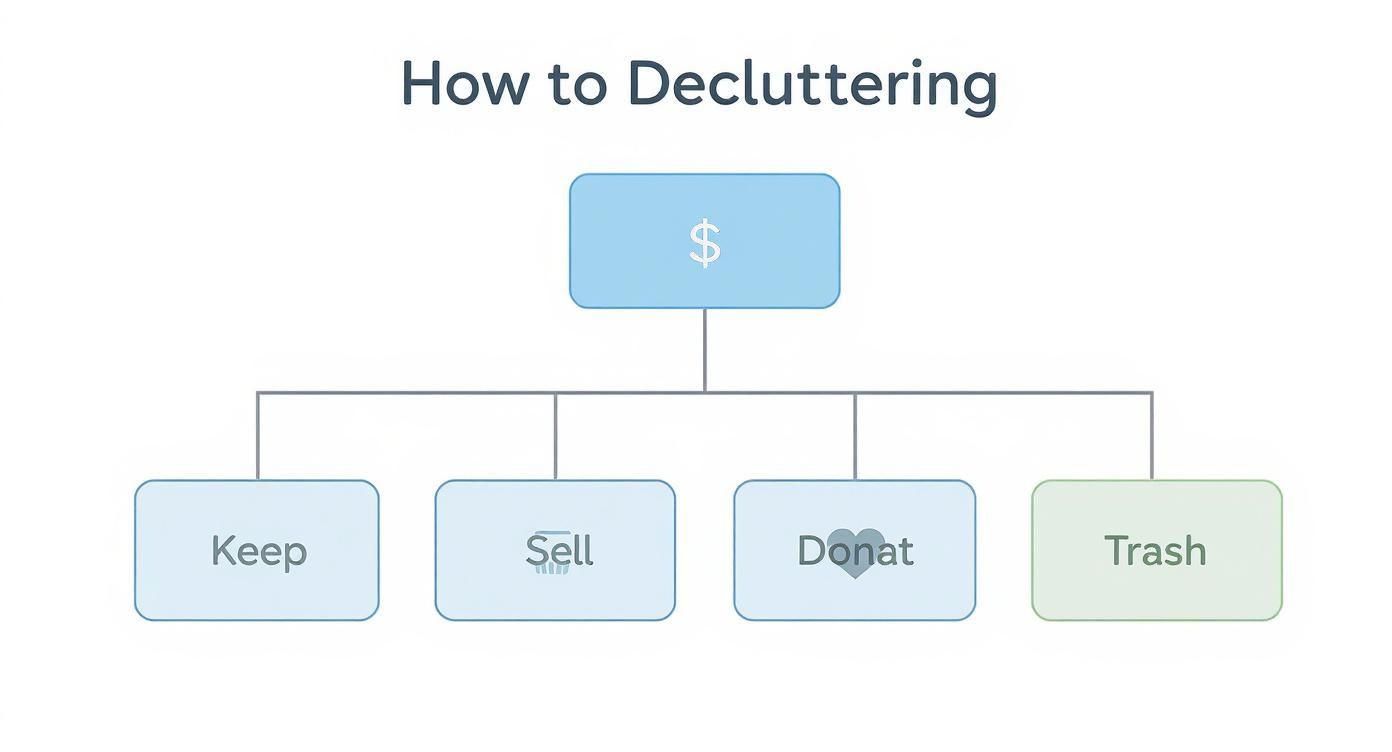
Use it to trim the fat. Every item you leave behind is money back in your pocket, whether you’re paying for truck fuel, container space, or a mover’s time.
Finding Affordable Full-Service Movers
Hiring a full-service moving company might sound like a luxury expense, but it doesn’t have to be. If you’re smart about it, you can find a great deal. This is the best route if you’re on a tight deadline, can’t do the heavy lifting yourself, or just want to keep your stress levels in check. The trick is to hunt for value, not just the lowest price tag.
One of the smartest ways to control costs is to find companies that offer a guaranteed price. It’s worth looking into flat-rate movers, who can give you a binding quote so there are no nasty surprises on moving day. That kind of budget certainty is priceless.
Here are a few insider tips for landing the best deal with professional movers:
- Book Far in Advance: Don’t wait. Try to lock in your move at least two to three months out, especially if you’re moving during the summer chaos. Last-minute moves always come with a premium.
- Be Flexible with Your Dates: If you can give the moving company a window for pickup and delivery, they can often group your shipment with others on the same route. This is called “consolidated shipping,” and the savings can be huge.
- Get Multiple In-Home Estimates: A quote over the phone is just a guess. Any reputable mover will insist on an in-home or video walkthrough to see exactly what they’re moving before giving you a solid, binding estimate.
- Ask About Off-Peak Discounts: Moving on a Tuesday in the middle of February is a whole lot cheaper than a Saturday in July. If you can move between October and April, you’ll find some serious discounts.
To give you a clearer picture of how these costs stack up, here’s a sample breakdown for a typical 2-bedroom, 1,500-mile move.
Cost Breakdown of a 2-Bedroom Cross-Country Move
This table gives you a ballpark idea of what you might pay. Remember, these are just estimates—your final cost will depend on the exact distance, the weight of your belongings, and the time of year.
| Expense Category | DIY Truck Rental | Moving Container | Budget Full-Service Mover |
|---|---|---|---|
| Transportation | $1,500 – $2,500 | $2,500 – $4,000 | Included |
| Fuel (1,500 miles) | $750 – $1,200 | Included | Included |
| Insurance/Waivers | $150 – $300 | $100 – $250 | Included (Basic) |
| Packing Supplies | $200 – $400 | $200 – $400 | Included |
| Labor (Help) | Optional ($300+) | Optional ($300+) | Included |
| Lodging/Food | $300 – $600 | Minimal | Minimal |
| Estimated Total | $2,900 – $5,000 | $2,800 – $4,950 | $4,500 – $7,000 |
As you can see, the hybrid container option is often surprisingly competitive with a full DIY move once you factor in fuel and other hidden costs.
Ultimately, picking a mover isn’t just about finding the rock-bottom price. It’s about finding a reliable partner for one of life’s biggest transitions. A slightly higher quote from a licensed, insured company with stellar reviews is a much better value than a suspiciously low bid that could turn into a nightmare. Your final choice comes down to what you value most: trading your own time and effort to save money, or paying a bit more for a smooth, stress-free experience.
Pack Like a Pro with Free Supplies

New moving boxes, bubble wrap, and packing paper can easily sneak a few hundred dollars onto your final moving bill. But here’s the good news: this is one of the easiest areas to slash costs if you’re willing to get a little resourceful.
Forget buying stacks of brand-new cardboard. Your mission is to gather sturdy, clean boxes and padding materials without spending a dime. With a little planning, you can get almost everything you need for free.
Hunt for Free Moving Boxes
Before you even think about heading to a hardware store, start your scavenger hunt at these spots. A quick pro tip: timing is everything. Call ahead and ask about the best day for pickups, as most stores flatten their boxes in a hurry.
- Grocery Stores: Apple, banana, or egg cartons are gold. They’re built to carry heavy, fragile loads without crushing, making them perfect for your books or kitchen gear.
- Liquor Stores: The boxes used to ship wine and spirits are fantastic. They’re often double-walled and come with built-in dividers—ideal for protecting glasses and other fragile decor.
- Big-Box Retailers: Stores like Walmart, Costco, or Target get massive shipments every single day. The electronics and home goods departments are your best bet for finding large, heavy-duty boxes.
- Online Community Groups: Check out Facebook Marketplace, the “free” section on Craigslist, or your local Buy Nothing group. You’ll find tons of people who just moved and are desperate to get rid of their mountain of boxes.
Use Household Items as Free Padding
This is where you can get really creative and save a surprising amount of cash. Instead of buying endless rolls of bubble wrap, just turn your own belongings into protective cushioning. This trick is a classic two-for-one: you protect your fragile items while packing your linens at the same time.
Your softest items are now your best packing tools.
- Wrap plates and bowls individually with sweaters or t-shirts.
- Use bath towels and blankets to cushion electronics like TVs and computer monitors.
- Stuff socks inside your glasses and mugs to stop them from cracking.
- Line the bottom and top of boxes with pillows or comforters for some extra shock absorption.
By using what you already own, you reduce the volume of supplies you need to buy and the number of boxes you need for linens. Every towel wrapped around a picture frame is one less item taking up space in another box.
Maximize Your Truck or Container Space
Wasted space is literally wasted money, especially when you’re paying for every cubic foot of that truck or container. Your goal is to pack it like a game of Tetris, creating tight, secure walls of boxes and furniture. This density not only saves precious space but also keeps your stuff from shifting and breaking on the road.
For a deeper dive into organizing your items, our complete guide on how to pack for a move offers step-by-step instructions for every room in your house.
Here’s a basic loading strategy that we’ve seen work time and time again:
- Start Heavy: Always place your heaviest items—appliances, dressers, anything solid—against the back wall of the truck, closest to the cab.
- Build Walls: Create solid tiers of boxes from the floor to the ceiling. Put the heaviest boxes on the bottom and the lighter ones on top. It seems obvious, but you’d be surprised how many people forget.
- Fill Gaps: Use soft items like duffel bags, pillows, or cushions to fill any empty pockets between furniture and boxes. No wiggle room!
- Protect Fragiles: Position your most fragile items in the most secure spots, wedged between mattresses or other soft surfaces where they have zero chance of shifting.
Unlock Big Savings with Smart Timing and Location
Once you’ve decluttered and picked a moving method, there are two huge, often-missed factors that can slash your bill: when you move and where you move. Honestly, getting these two things right can be the difference between a standard move and a truly cheap long-distance move.
Most people don’t realize just how much pricing power they have. It all comes down to understanding the moving industry’s calendar and knowing how to use today’s work-from-anywhere trends to your advantage.
Cash In on Off-Peak Season Discounts
The moving business runs on a predictable schedule. The mad dash—what we call “peak season”—happens between May and September. Families are moving while school’s out, the weather is nice, and demand goes through the roof. And so do the prices.
But if you can shift your move outside that popular window, you’ll find some serious savings.
From October to April, things slow down considerably. Moving companies are hungry for business during this “off-season,” and you can often lock in discounts of 30% or more for the exact same crew and truck. With fewer people on the move, there’s more availability and a lot more room to negotiate.
Choosing a Tuesday in February instead of a Saturday in July is one of the single best money-saving hacks in the moving world. The price difference can easily be hundreds, if not thousands, of dollars.
On top of that, movers almost always charge less for mid-week and mid-month moves. Why? Because most leases turn over at the end of the month, creating another mini-rush. You can get a much deeper dive into this strategy in our guide on the best time of year to move to a new state.
Let Your Destination Lower the Bill
The second lever you can pull is your destination. With the explosion of remote work, millions of Americans are cutting ties with expensive coastal cities and heading for more affordable parts of the country. This is great news for your wallet.
When tons of people are moving to the same region, it creates busy, high-volume shipping routes. Movers can pack their trucks more efficiently along these corridors, which means they can offer better prices for anyone heading in that direction.
For example, a move from a high-cost hub like New York City to a popular Sun Belt city is often cheaper than moving the same distance to a less-traveled destination. Movers know they can easily find another shipment to fill the truck for the return trip, which helps them spread out their costs.
The numbers back this up. Roughly 75% of the fastest-growing places in the U.S. are in the Sun Belt, a region known for its lower cost of living and better weather. Cities like Raleigh, NC, and Dallas-Fort Worth, TX, are magnets for people leaving traditional economic centers. You can dig into more of these trends and discover more insights about moving statistics on ConsumerAffairs.com to see how these patterns are changing the game.
How Timing and Location Work Together
This is where the magic happens. When you combine smart timing with a popular destination, the savings really start to stack up. A move from San Francisco to Austin in January, for instance, is the perfect recipe for a budget-friendly relocation.
Here’s how you win:
- Off-Season Pricing: Right off the bat, you’re getting a winter discount.
- Popular Route: The California-to-Texas lane is a super common route, so movers are competing for your business with great rates.
- Lower Living Costs: The move itself becomes part of a bigger financial win, as you’re heading to a place with more affordable housing and taxes.
By thinking beyond just the truck and boxes, you can turn your relocation into a smart financial move. It’s no longer just an expense—it’s an investment in a lower cost of living. Your timing and destination aren’t just details; they are your secret weapons for figuring out how to move long distance cheap.
Got Questions About Your Budget Move? We’ve Got Answers.
Even the most meticulously planned move throws a few curveballs. When you’re trying to move long-distance on a budget, navigating contracts, insurance, and potential fees can feel like walking through a minefield. Let’s tackle some of the most common worries that pop up so you can sidestep any costly mistakes.
Think of this as your cheat sheet for the tricky parts. We’ll get straight to the point on how to lock in an honest price, make sense of moving insurance, and sniff out those sneaky fees that can blow a perfectly good budget.
How Do I Get a Moving Quote I Can Actually Trust?
Here’s the biggest rookie mistake I see people make: accepting a quote over the phone without a visual survey. A mover simply can’t give you a genuine, reliable price without seeing your stuff. Any reputable company knows this and will insist on it.
To get a real price and protect yourself from bait-and-switch tactics, stick to these rules:
- Always get at least three estimates. This is your best tool for comparison. It helps you immediately spot any quote that seems way too high or suspiciously low.
- Insist on a visual inventory. This is non-negotiable. The mover must conduct a walkthrough of your home, either in person or via a live video call.
- Ask for a “binding not-to-exceed” estimate. This is the gold standard of moving quotes. It means the price they give you is the absolute most you’ll pay, unless you decide to add more items or services down the road.
A quote based on a quick phone call is just a ballpark guess, nothing more. A professional mover who invests the time to see what you’re moving is showing you they’re serious about accuracy. This step is a crucial part of figuring out how much it usually costs to move to another state, because it grounds the entire estimate in reality.
Is Moving Insurance Really Worth the Extra Cash?
In almost every single case, the answer is a resounding yes. The default coverage movers are required to provide by law is called Released Value Protection, and it’s practically worthless. It covers your belongings for a mere 60 cents per pound per item.
Let that sink in for a second. If your 10-pound, $1,000 laptop gets crushed in transit, you’d only get $6.00 back. Relying on this basic coverage is a massive gamble, and frankly, one you shouldn’t take.
The smart alternative is Full Value Protection. While it might add a few hundred dollars to your bill, it’s your best defense. With this coverage, the moving company is on the hook to either repair a damaged item, replace it with a similar one, or pay you its current market value.
Think of it this way: the extra cost for Full Value Protection is a small price to pay for peace of mind. When your entire life is bumping around in the back of a truck for hundreds of miles, that peace of mind is priceless. It turns a potential financial nightmare into a manageable hiccup.
What Are the Most Common Hidden Fees I Should Watch Out For?
Nothing ruins the relief of a completed move faster than a final bill that’s hundreds of dollars more than you were quoted. Some less-than-reputable movers rely on hidden fees to boost their bottom line, but you can avoid getting burned by knowing what to look for. Before you sign a single document, ask for a complete list of all potential extra charges in writing.
Here are the usual suspects to keep on your radar:
- Shuttle Fee: This is a big one. If a 53-foot semi-truck can’t navigate your street because of tight turns or low-hanging trees, the crew has to use a smaller “shuttle” truck to ferry your stuff. This service can easily add $300 to $700 or more to your bill.
- Long Carry Fee: Movers expect to park their truck reasonably close to your door. If they have to haul everything further than a set distance (usually 75-150 feet), they’ll tack on a long carry fee for the extra labor.
- Stair Fee: Live in a third-floor walk-up? You can bet there’s a fee for every flight of stairs the crew has to conquer.
- Appliance Service Fee: This covers the work involved in prepping your major appliances, like disconnecting a washing machine or installing shipping bolts on a dryer.
- Disassembly/Reassembly Fee: Don’t just assume taking your bed frame apart and putting it back together is included. Many companies charge extra for this, so you need to clarify their policy upfront.
By asking direct questions about these specific charges, you force the moving company to be transparent. An honest mover will have no problem walking you through these potential costs. If they get dodgy or try to brush off your questions, consider it a major red flag.
When you’re ready for a stress-free move with transparent pricing and no surprises, Family Movers Express LLC is here to help. Our dedicated teams ensure your belongings arrive safely, on time, and on budget. Get your free moving quote today and experience the difference of working with true professionals.
Ready to protect your upcoming move?
Click Here to Fill Out Our Quick Form & Secure Your Instant Quote!
