

When you’re searching for affordable moving services near me, the goal isn’t just to find the cheapest price tag. It’s about striking that perfect balance between a fair cost and genuine reliability. The real secret is to do your homework and properly vet potential movers before you even think about hiring them. This simple step is what separates a smooth, budget-friendly move from a total nightmare.
Your Search for Affordable Movers Starts Here
Finding a mover you can trust with your wallet and all your worldly possessions can feel like a huge challenge. Punching a quick search into Google often spits back a massive list of companies, but it doesn’t really tell you who’s actually any good. That’s what we’re here to fix.
Let’s start with a straightforward way to weed out the bad apples and zero in on the companies that offer real value.
It’s about more than just the number on the quote. True affordability is a mix of honest pricing, clear communication, and the confidence that your stuff is in good hands. To get you started on the right foot, let’s walk through the essential first steps for finding great local movers.
Core Vetting Principles for Movers
Before you start dialing for quotes, you need to get into a vetting mindset. This just means knowing what red flags to look for so you can quickly filter out the sketchy operators. Think of it as a pre-screening process that saves you a ton of time and trouble down the road.
You’ll want to focus on a few key areas:
- Legitimacy and Licensing: Is this a real, registered business with the proper credentials to be moving people’s things?
- Reputation and Reviews: What are actual past customers saying? Look for consistent patterns, good or bad.
- Transparency in Services: Are they upfront and clear about what their services include and, just as importantly, what they don’t?
A truly affordable move is one that ends without surprise fees, broken heirlooms, or a massive spike in your blood pressure. That initial quote is just one piece of the puzzle; it’s the mover’s reliability and professionalism that truly protect your budget in the end.
To simplify things, we’ve put together a quick checklist you can use to size up any company you’re considering. It’s a great framework for making a smart, informed choice right from the get-go. For more ideas, you can also check out our top picks for 10 budget-friendly moving companies near you.
Quick Checklist for Vetting Affordable Movers
Think of this table as your cheat sheet. Run every potential mover through these checks to make sure you’re dealing with a legitimate, trustworthy company that offers true value for your money.
| Vetting Step | Why It's Critical | Where to Check |
|---|---|---|
| Check Licensing | Verifies the mover is a legitimate business authorized to transport household goods. Unlicensed movers offer no protection. | Federal Motor Carrier Safety Administration (FMCSA) for USDOT number (interstate moves) or your state's Department of Transportation. |
| Verify Insurance | Confirms they carry the required insurance to cover your belongings in case of accidents or damage during transit. | Ask the company directly for their Certificate of Insurance (COI) and understand their liability coverage options. |
| Read Recent Reviews | Provides real-world insight into the company’s professionalism, timeliness, and customer service from multiple perspectives. | Google, Yelp, and the Better Business Bureau (BBB) are excellent resources for unbiased customer feedback. |
Using this checklist helps you quickly cut through the noise. It ensures that any "affordable" mover you consider is also a safe and professional one, which is what really matters.
Decoding the Moving Quote
A moving quote is so much more than a price tag. Think of it as a roadmap for your move—one that can either guide you to a stress-free experience or lead you straight into a maze of unexpected costs. Getting a handle on how to request and read an estimate is your first real step toward finding genuinely affordable moving services near me.
Before you even start calling around, do a little prep work. Walk through your home, room by room, and create a detailed inventory. Jot down all the big stuff, but also make a note of anything that's unusually heavy, fragile, or just plain awkward to move. Don't forget to list any potential obstacles at both your current place and the new one. Are there three flights of stairs? A super narrow hallway? Is there even a place for a big truck to park? Giving a mover this information upfront is the only way they can give you a quote that’s actually accurate.
Understanding Estimate Types
You'll quickly find that not all quotes are created equal. The type of estimate you get has a huge impact on your final bill, so you absolutely need to know the difference.
- Non-Binding Estimate: This is really just a ballpark guess. The final price is based on the actual weight of your stuff and the services you use on moving day. That means it could easily end up being higher (or lower) than what they first told you. It’s the riskiest option for your budget.
- Binding Estimate: This is a locked-in, guaranteed price. As long as you don’t suddenly add a grand piano to the inventory or ask for extra services last minute, the price you’re quoted is the exact price you’ll pay. This gives you solid peace of mind.
- Binding-Not-to-Exceed Estimate: Honestly, this is the one you want. Your final bill will never go above the quoted price. But, if your shipment ends up weighing less than they estimated, your cost will actually go down. It's the protection of a binding quote with the potential for savings.
Once you have a few quotes in hand, the real work begins. It’s time to vet the companies behind the numbers.
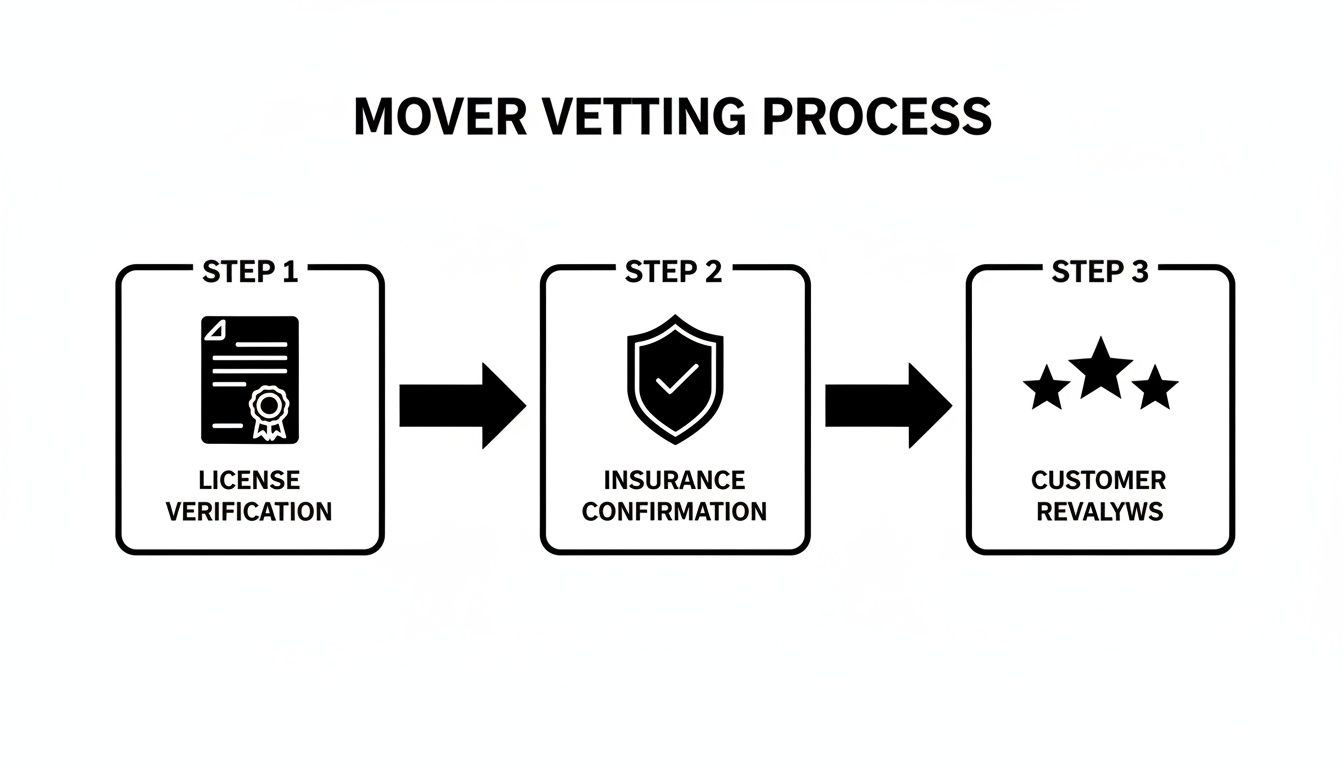
This three-step check—verifying licenses, confirming insurance, and digging into reviews—is your best defense against the hidden fees and awful service that often come with those too-good-to-be-true lowball offers.
Comparing Quotes and Spotting Red Flags
When you’re laying the quotes out side-by-side, resist the urge to just look at the final number. A shockingly low price is often a major red flag, especially if it’s light on details. A professional estimate, like the ones we provide at Family Movers Express, will break everything down for you. You should see clear line items for labor, transportation, packing materials, fuel surcharges, and anything else that might apply.
Always ask what is not included in the price. If a company gets cagey with the details or only gives you verbal promises, run. A mover you can trust will put every single detail in writing to make sure there are no surprises on moving day.
Be very skeptical of any company that throws out a quote without doing a detailed inventory or an in-home (or virtual) survey. Another huge red flag is a demand for a large cash deposit upfront. A small, reasonable deposit is normal, but anything excessive could be a sign you're dealing with a scam.
To get a solid idea of what your move should cost before you even start calling, try using a professional moving company cost calculator. It gives you a reliable baseline to work from. Armed with that knowledge, you can confidently sort through the quotes and pick a mover who offers real, honest value.
An attractive quote is a great start, but it's only half the battle. When you’re searching for affordable moving services near me, the real win comes from finding a company that’s not just cheap, but genuinely trustworthy and reliable.
Sometimes, a price that seems too good to be true is exactly that—a red flag for a mover who might be cutting corners on licensing, insurance, or just plain old good service. Doing your homework upfront is the best way to avoid a nightmare on moving day.
Your first move should be to confirm the company is legally allowed to operate. For any move that crosses state lines, a mover must have a USDOT number from the Federal Motor Carrier Safety Administration (FMCSA). You can pop that number into the FMCSA's online database to check their safety history and if they're cleared for business. For local moves, the rules change from state to state, so a quick visit to your state’s Department of Transportation website is in order to make sure they're legit.

Reading Between the Lines of Customer Reviews
Once you know a mover is legitimate, it’s time to play detective and see what their past customers are saying. Don’t just look at the 5-star rating on Google or Yelp; get into the nitty-gritty of the actual reviews.
Are you seeing a pattern? Do multiple people rave about the crew’s work ethic and care? Or is there a recurring theme of damaged furniture, crews showing up hours late, or surprise charges tacked onto the final bill? A couple of unhappy campers are normal for any business, but if you see the same problems popping up again and again, consider it a giant warning sign.
The moving industry is a huge part of the U.S. economy, with the market expected to grow by $4.4 billion through 2029. That’s a compound annual growth rate of 3.8%, fueled by people and companies on the move. With that much competition out there, you can—and should—be picky.
Understanding Your Insurance Options
This is probably the most critical piece of the puzzle: figuring out how a moving company will protect your stuff if something goes wrong. Federal regulations mandate that movers offer two basic types of liability coverage, and believe me, the difference between them is massive.
- Released Value Protection: This is the standard, no-extra-cost option. It’s also the bare minimum. It covers your belongings at a flat rate of just 60 cents per pound, per item. So if your prized 50-pound flat-screen TV gets smashed, you'll only get $30 back. That’s it.
- Full Value Protection: You’ll pay more for this, but the peace of mind is worth it. With this coverage, the moving company is on the hook for the actual replacement value of anything that gets lost or broken. They have to either repair it, replace it with a similar item, or give you a cash settlement for its current value.
Don’t just assume you’re covered. You need to ask for a clear, written explanation of their insurance options. That small extra investment for better protection can save you a world of heartache later.
Getting these details straight is what separates a smooth move from a stressful one. If you’re not sure what else to bring up, check out our guide on the essential questions to ask moving companies. It’ll help you walk into that conversation feeling prepared and confident.
Proven Strategies to Lower Your Moving Bill
Once you’ve found a few movers you trust, the power to shrink that final bill is squarely in your hands. It's all about being proactive and smart about the details. This is where you can turn a standard quote into a seriously affordable move.
Think about timing, for starters. It has a massive impact on your price. The moving industry has a peak season—summer, weekends, and the end of the month are always slammed. If you can swing it, booking your move for a Tuesday in October will almost always cost less than a Saturday in July. It’s simple supply and demand.
This flexibility is your secret weapon, especially now. The global moving services market is expected to hit a staggering $159.67 billion by 2032, and residential moves account for a huge 43.6% of that. With demand that high, scheduling your move during an off-peak time is one of the single most effective ways to find an affordable rate.
The Power of Decluttering and Smart Packing
Here’s a simple truth: every item you get rid of is one less thing you have to pay to move. Be ruthless. Before you even think about packing, go through your stuff and decide what really needs to make the trip. If you haven't used something in a year, it's time to sell, donate, or toss it.
Fewer things mean a lower cost. For long-distance moves that are priced by weight, this is a no-brainer. But even for local moves priced by the hour, it means less time for the crew to load and unload the truck, which saves you money. Learning how to declutter before moving is a game-changer for your budget and your sanity.
You can also save a ton of cash by getting creative with your packing.
- Source Free Materials: Swing by your local grocery or liquor stores and ask for their used boxes. They're usually sturdy and free for the taking. For fragile items, skip the packing paper and use your own towels, blankets, and even clothes for padding.
- Consider Partial Packing: Feeling overwhelmed? You don't have to do it all yourself. Have your movers pack the tricky stuff—like the kitchen with all its fragile dishes or your delicate electronics—and you can handle the easier things like books and clothes.
Moving is the perfect opportunity to re-evaluate what you truly need. Don't pay to transport items that are just going to end up collecting dust in your new home. A lighter move is always a cheaper move.
Be Flexible with Services and Payments
Finally, think about what you actually need from the movers. Do you really need full-service packing and unpacking, or could you manage some of it? Could you use your own car to move smaller boxes and personal items, leaving only the big, heavy furniture for the pros?
We get it. A move is a major expense, and cash flow can be tight. That’s why many companies, including Family Movers Express, offer flexible options like move-now, pay-later plans to help ease the financial burden. Never hesitate to ask about payment flexibility when you’re gathering quotes.
By taking control of these key things—your timing, the amount of stuff you move, and the services you choose—you can make a huge dent in your final bill. For more great ideas, check out these 6 tips for saving money during a move.
How to Prepare for a Smooth Moving Day
You’ve vetted the companies, compared the quotes, and booked your affordable moving service. Nicely done. You're officially in the home stretch now, but don't kick your feet up just yet. A little prep work in these final days can be the difference between a day of total chaos and a surprisingly smooth transition into your new place. It really all comes down to organization and clear communication.
On moving day, the most important piece of paper you'll touch is the Bill of Lading. Think of it as more than just a receipt—it's the legally binding contract between you and your movers. Before you even think about signing, pause and give it a thorough read-through. Make sure everything lines up: the services you agreed to, the correct delivery address, the insurance coverage you picked, and the final cost from your binding estimate. If something’s off, now is the time to speak up.
Final Preparations for a Seamless Move
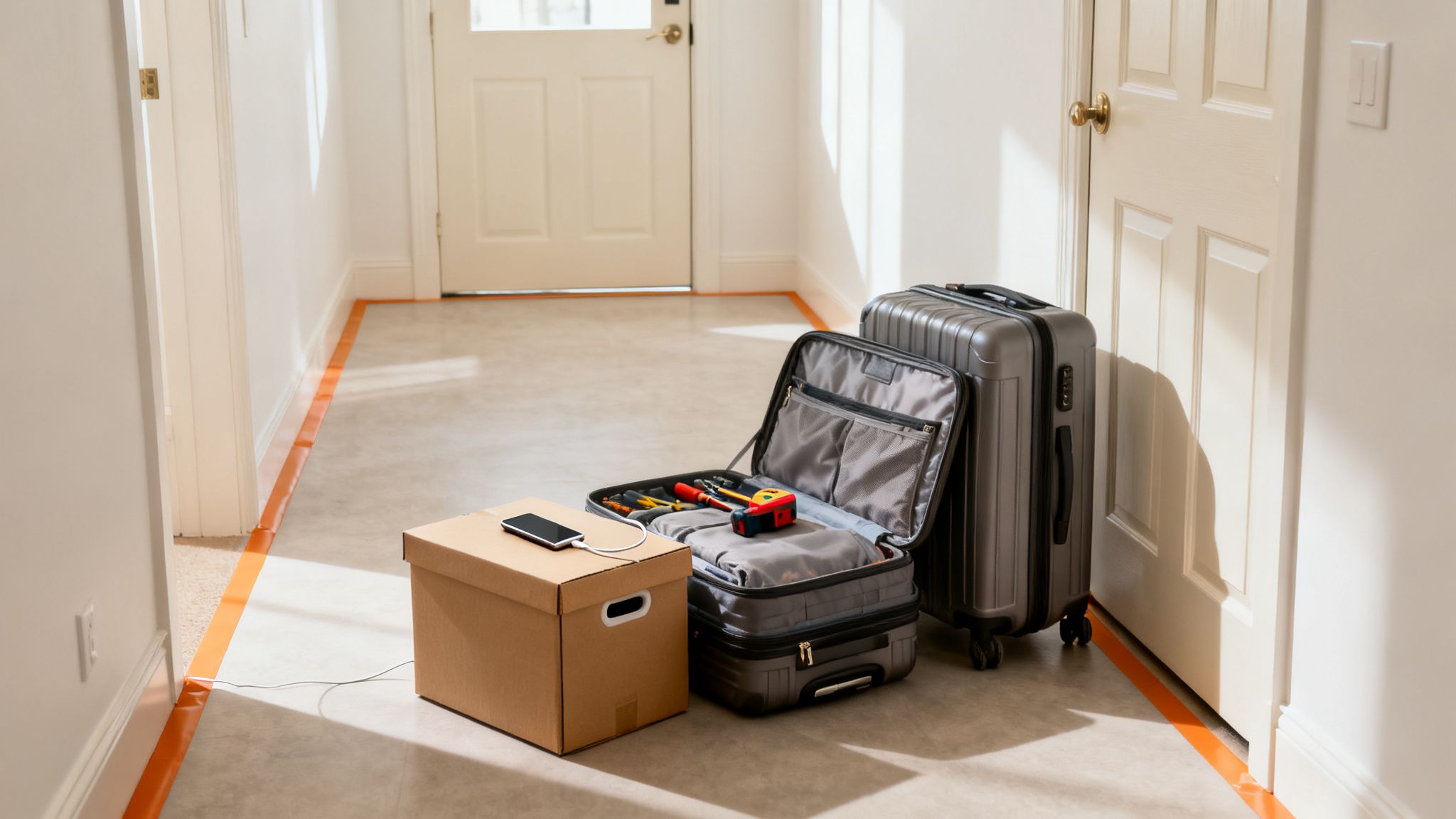
As the big day gets closer, your focus should shift from big-picture planning to the small, practical tasks that prevent that last-minute panic. One of the smartest things you can do is pack an "essentials" box. This is the absolute last box that goes on the truck and the very first one you’ll rip open when you arrive.
So, what goes in this miracle box? Think about what you'll need immediately:
- A basic toolkit: You’ll be glad you have a screwdriver, hammer, and box cutter handy for quick furniture assembly and, of course, opening all those other boxes.
- Cleaning supplies: Paper towels, a good all-purpose cleaner, and some trash bags are a must for tackling any immediate messes.
- Personal items: Don’t forget medications, phone chargers, toiletries, and a fresh change of clothes for everyone.
- Important documents: Keep your Bill of Lading and the mover's contact info with you personally. Never pack these on the truck.
Key Takeaway: Getting your home ready is just as crucial as packing your belongings. Clear wide, obvious pathways from every room to the front door. This gives the crew unobstructed access and speeds things up. It’s also a good idea to protect your floors with old blankets or cardboard, especially in those high-traffic spots.
As you get ready, other little details will pop up. A common question we hear is about the best way of handling cleaning carpets before moving into a new home. Sorting these things out beforehand makes settling in so much more enjoyable. When the crew shows up, do a quick walkthrough with them. Point out any particularly fragile items or give any special instructions to get everyone on the same page.
A well-organized move transforms a stressful day into the exciting first step of your next chapter. For an even deeper dive, check out our complete guide on how to prepare for a move.
Of course. Here is the rewritten section, crafted to sound completely human-written and natural, following all your specific requirements.
Your Top Questions About Affordable Moving, Answered
Even when you think you've got it all figured out, moving always throws a few curveballs. When you're trying to keep costs down, a little uncertainty can feel like a big deal. We get it. Over the years, we've heard just about every question in the book.
So, let's clear up some of the most common things people wonder about. Think of this as a quick FAQ from a seasoned pro to help you sidestep those pricey rookie mistakes and move forward with confidence.
How Far in Advance Should I Book Movers to Get the Best Price?
If you want the best rates and your pick of moving companies, you really need to be thinking ahead. I always tell people to aim for booking four to eight weeks in advance. This is non-negotiable if you’re planning a move during peak season, which is basically May through September.
Booking early isn't just about securing a spot on the calendar. It gives you the breathing room to gather and compare quotes without that last-minute pressure. More often than not, that extra time translates directly into savings. Sure, some companies might be able to squeeze you in on short notice, but you’ll definitely pay a premium for it.
What Hidden Fees Should I Be Watching Out For?
This is a big one. Before you sign on the dotted line, you need to flat-out ask for a complete rundown of any and all potential charges. A good, honest company will have no problem being transparent, but you should still know what to look for.
A few common "gotchas" that can inflate your bill are:
- Stair Fees: Yep, you can be charged extra for every flight of stairs the crew has to haul your stuff up or down.
- Long Carry Fees: This kicks in if the truck can’t park close to your door, forcing the movers to carry everything a long distance.
- Shuttle Services: If a big rig can't navigate your narrow street, they'll need a smaller truck to shuttle your belongings, and that costs extra.
- Bulky Item Charges: Things like pianos, massive safes, or that Peloton bike often need special equipment and muscle, which comes with an added fee.
Here's the bottom line: a trustworthy mover will be upfront about these possibilities and detail them in a written, binding estimate. If a company gets cagey or dodges your questions about extra fees, that’s a huge red flag. Walk away.
Is It Really Cheaper to Move on a Weekday?
Yes, absolutely. The difference can be significant. Weekends and the last few days of the month are prime time for moving, and just like airline tickets, prices shoot up with demand.
If you have any wiggle room in your schedule, booking your move for a Tuesday or Wednesday in the middle of the month is your best bet for a lower price. Many movers offer lower hourly rates or better deals for these off-peak slots. It never hurts to ask specifically what kind of discount you can get.
How Is a Local Move Priced Differently Than a Long-Distance One?
The way movers calculate your bill is completely different for local versus long-distance moves. Getting this straight is essential for budgeting.
A local move—usually anything under 50-100 miles—is almost always priced by the hour. The final bill is a simple calculation: the number of movers multiplied by their hourly rate, for the total time the job takes. The clock starts when they arrive and stops when the last item is in its new home.
On the other hand, a long-distance or interstate move is priced based on two main factors: the total weight of your shipment and how many miles it's traveling. This is precisely why getting a binding or binding-not-to-exceed estimate is so critical for these moves. It locks in your price so you aren't surprised by a bigger bill because your stuff weighed more than initially estimated.
Ready to get a clear, transparent quote with no surprises? The team at Family Movers Express LLC is here to answer all your questions and provide a seamless, affordable moving experience. Get your free estimate today!
Ready to protect your upcoming move?
Click Here to Fill Out Our Quick Form & Secure Your Instant Quote!
