

Let’s be honest, the thought of moving can be completely overwhelming. But the secret to a smooth, sane relocation isn’t magic—it’s turning a massive project into small, manageable steps. The whole process becomes far less intimidating when you give yourself a proper runway. We’ve found the sweet spot is starting about eight weeks before the truck pulls up.
This isn’t about creating more work; it’s about spreading it out so you can handle everything without that last-minute, everything-is-on-fire feeling.
Your Moving Timeline From Eight Weeks Out to Moving Day
A successful move doesn't just happen. It's the result of smart, early planning that starts long before a single box gets taped shut. Breaking it down week by week transforms the chaos into an organized, logical process.
Think of this timeline as your personal roadmap. It guides you from the big-picture decisions all the way down to the final details, helping you stay on track and on budget. When you tackle the research and lock in the major players early on, you give yourself the breathing room to actually pack without the pressure of a looming deadline.
The Crucial First Steps: 6 to 8 Weeks Before Your Move
This is your strategy phase. The decisions you make right now will have the biggest impact on your budget and your stress levels down the road. This is when you lay the foundation for everything else.
A few things need to happen right away:
- Vet and Book Your Movers: Start getting quotes from reputable companies. You’ll want to get at least three written estimates to see how costs and services stack up. Read the reviews, check their insurance, and ask if they offer guaranteed dates—this is especially critical for long-distance moves.
- Create a Realistic Moving Budget: Think beyond just the movers. Factor in packing supplies, potential storage costs, and even things like takeout for the first few nights in your new place. We always recommend adding a 10-15% contingency fund for those little surprises that always pop up.
- Give Notice or List Your Home: If you're renting, double-check your lease for how much notice you need to give. If you're selling, it’s time to connect with your real estate agent to get your home on the market.
This simple breakdown shows how the early work builds momentum for the rest of your move.
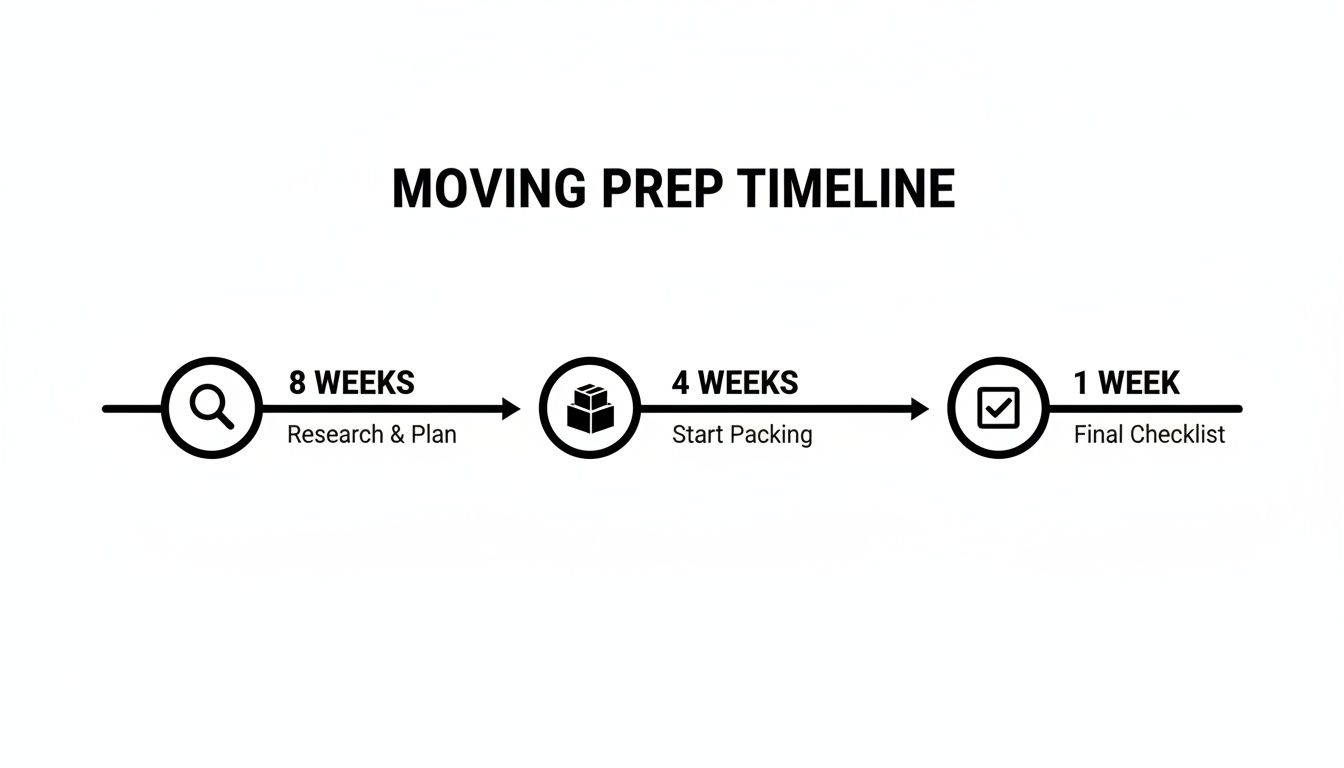
As you can see, getting the research done at the eight-week mark makes the hands-on packing phase so much smoother.
To help you stay on top of it all, here's a quick-glance checklist breaking down the entire process.
The 8-Week Moving Countdown Checklist
This table summarizes the critical tasks week by week, ensuring nothing slips through the cracks as you prepare for your move.
| Timeframe | Key Planning Tasks | Packing & Decluttering Focus |
|---|---|---|
| 8 Weeks Out | Research & get quotes from movers. Create a detailed moving budget. Give notice to your landlord. | Start with one room (e.g., garage, attic) and sort into keep, donate, sell, discard piles. |
| 6-7 Weeks Out | Book your moving company. Order all necessary packing supplies (boxes, tape, wrap). | Begin decluttering non-essential areas like guest rooms and storage closets. |
| 4-5 Weeks Out | Start packing items you don't use daily. Label boxes clearly by room and contents. | Focus on packing decorative items, books, and out-of-season clothing. |
| 2-3 Weeks Out | Confirm all arrangements with movers. Submit your change of address form. Arrange utility transfers. | Pack most of your belongings, leaving only daily essentials. Pack kitchen items you can live without. |
| 1 Week Out | Pack your "essentials box." Confirm travel plans. Defrost the refrigerator and freezer. | Finish all packing except for clothes and toiletries for the final few days. |
| Moving Day | Supervise the movers. Do a final walkthrough to check for forgotten items. | Keep your essentials box and important documents with you, not on the truck. |
This checklist is your game plan, designed to keep the process moving forward without feeling overwhelming.
The Declutter and Pack Phase: 4 to 5 Weeks Out
With the big logistics handled, your focus can shift to your stuff. This is where the real work begins, but it’s also your biggest chance to save some serious money.
Moving is a massive industry, and a huge chunk of your cost is tied directly to how much stuff you have. On average, people get rid of 20-30% of their belongings during a move, which can cut service fees by up to 15%. Lighter load, lighter cost. It's that simple.
Here’s a simple rule of thumb we've learned from years in the business: If you haven’t used it, worn it, or even thought about it in the last year, do you really want to pay to move it? Asking that one question is the most powerful decluttering tool you have.
This is the perfect time to start sorting through your home room by room. Use a simple four-box system: Keep, Donate, Sell, and Trash. Tackle the easy areas first—the guest room, basement, or that closet full of forgotten projects. Now is also the time to stock up on boxes, tape, and markers.
For a deeper dive into this stage, our guide to planning your move 6-8 weeks in advance has you covered.
Final Preparations: 1 to 3 Weeks Before Moving Day
You’re in the home stretch! This is when all that early planning pays off. Your focus now is on locking in the final details and packing up the last of your essentials.
Your to-do list for this final countdown should include:
- Final Confirmation: Touch base with your moving company one last time to confirm all the details.
- Switching Services: Arrange to have your utilities transferred and set up mail forwarding with the post office.
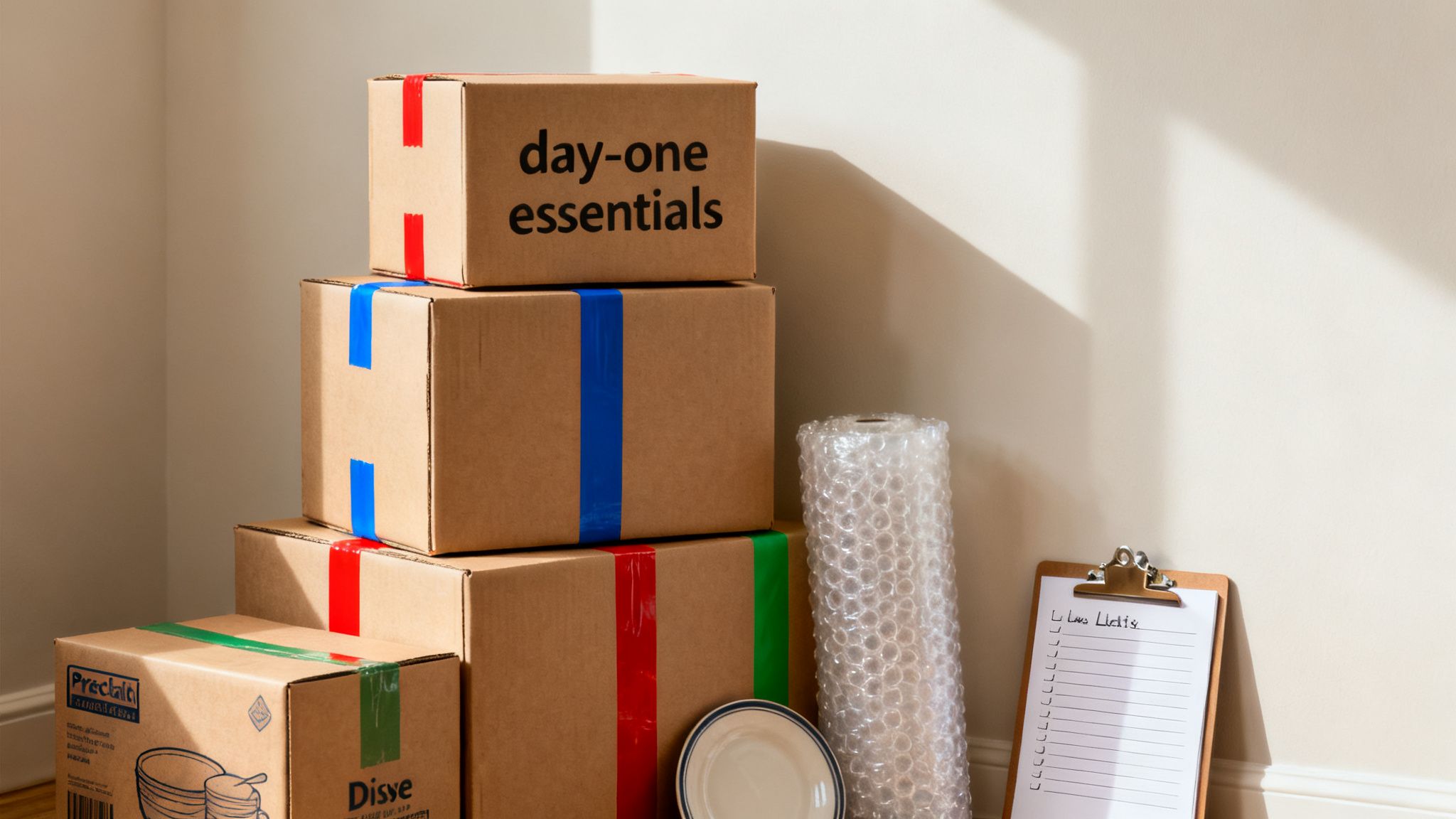
- The "Day-One" Box: Pack a suitcase or box with everything you'll need immediately upon arrival—toiletries, medications, phone chargers, a change of clothes, and maybe some snacks.
- Kids and Pets: If you have them, arrange for a sitter on moving day. It keeps them safe and drastically reduces the stress for everyone involved.
By following a timeline, you turn what feels like a monumental task into a calm, methodical process. One step at a time.
The Art of Decluttering Before You Pack
Let’s be honest: every single item you decide not to move is a win. It’s a win for your wallet, your back, and your sanity when you’re unpacking on the other side. Decluttering isn’t just about making your place look tidy for photos; it’s a strategic first strike against high moving costs and future chaos.
Think of it this way: you’re about to pay someone to transport your belongings. Why waste money moving things that will just end up collecting dust in a new closet? This is your chance to be ruthless and make sure only the good stuff makes the trip.
Adopt the Four-Box Method
I’ve seen a lot of decluttering systems over the years, but the one that consistently works is the four-box method. It's beautifully simple. As you tackle each room, you’ll have four designated containers:
- Keep: No-brainers. These are the things you love, use all the time, and can't imagine your new home without.
- Sell: Good-condition items that just don't fit your life anymore. Someone else might be thrilled to have them.
- Donate: Perfectly usable items that can get a second life and help out a local charity.
- Discard: This is for the truly unsalvageable—broken, expired, or just plain worn out.
This forces you to make a decision on everything you touch, killing the "I'll deal with this later" pile before it even starts. My advice? Start in an easy, low-emotion area like the linen closet to get a few quick wins under your belt before you move on to sentimental spaces like your office or bedroom.
Smart Strategies for Selling and Donating
Once you’ve sorted everything, it's time to take action. As you sift through your belongings, finding the best places to sell used furniture for top dollar can lighten your load while padding your moving budget. Platforms like Facebook Marketplace are fantastic for local sales because you avoid the headache of shipping—buyers come to you.
When it comes to donations, do a little homework first. In places like Raleigh or Orlando, local shelters and community centers often have very specific needs. A quick phone call can tell you if they’re looking for furniture or clothing, making sure your donation goes exactly where it’s needed most. It’s way more effective than a generic drop-off.
Here’s a rule of thumb I live by: the one-year rule. If you haven't used it, worn it, or even thought about it in the last 12 months, it’s a prime candidate for the sell or donate pile. Seriously, why pay to move something you completely forgot you owned?
The financial impact here is huge, especially for long-distance moves. Movers have told us that a 40% reduction in household volume can shave over $500 off the final bill. By getting a jump on this 6-8 weeks before your move, you're taking direct control of a major cost factor.
When to Call for Backup
It’s amazing how quickly the "discard" pile can turn into a mountain of junk. Old furniture, bags of random stuff—it all has to go somewhere. Don't let a trash pile-up become your last-minute moving crisis.
This is where a little professional help goes a long way. Many full-service movers, like Family Movers Express, offer junk removal services. They can just haul away everything you’ve decided to part with. No dump runs, no trying to coordinate a separate pickup. It frees you up to focus on packing what really matters, keeping the whole process streamlined and a lot less stressful.
Packing Strategies That Actually Work
Let's talk about packing. Done right, it's the difference between a smooth transition and a chaotic nightmare of endless, disorganized boxes when you get to your new home. Forgetting about just randomly tossing things into boxes is key; a real strategy will protect your belongings, save you a ton of time, and seriously cut down on the stress.
This is all about working smarter. With the right gear and a solid plan, that mountain of stuff in front of you becomes a manageable, organized system ready for the truck.

Gather the Right Packing Supplies
Before a single item goes into a box, you need to get your tools in order. Trust me, scrambling for supplies mid-pack is the fastest way to kill your momentum. You don't need a warehouse full of stuff, just the essentials.
Here’s a practical list to get you going:
- A Variety of Box Sizes: Stock up on more small and medium boxes than you think you'll need. They're perfect for heavy things like books and plates, keeping them from getting too heavy to lift safely.
- Quality Packing Tape: Don't go cheap on tape. A good dispenser is also worth its weight in gold—it'll save your sanity.
- Wrapping Materials: Think bubble wrap, packing paper, and even old towels or sheets. Anything that cushions fragile items works.
- Permanent Markers and Labels: Clear, bold labeling is non-negotiable. It's your roadmap for an organized move.
And a pro tip: for protecting furniture or keeping bundles of things together, get some hand stretch film. It’s amazing for keeping drawers shut and protecting cushions from dirt during the move.
Adopt a Smart Labeling System
Your future self will thank you for this. A simple, logical labeling system transforms unpacking from a frustrating guessing game into a straightforward task.
Try a color-coded system. Just assign a color to each room in the new place—blue for the kitchen, green for the master bedroom, you get the idea. Stick a colored label on every box and a matching one on the doorframe of the room it belongs in. This lets the movers know exactly where to put things without having to read a single word.
On top of the color, grab your marker and write three things on the top and at least one side of every box:
- Destination Room: (e.g., Kitchen)
- General Contents: (e.g., Pots & Pans)
- Handling Instructions: (e.g., FRAGILE or THIS SIDE UP)
This kind of detail makes finding what you need right away a breeze. For a deeper dive, you can learn more about how to pack for a move efficiently in our full guide on the topic.
Pack a "Day-One" Essentials Box
This might just be the most important box you'll pack. Picture this: you finally arrive at your new, empty house late at night, completely exhausted. The last thing you want to do is dig through dozens of boxes just to find a toothbrush or a phone charger.
The "day-one" box is your survival kit. It stays with you in your car, not on the moving truck. It contains everything you need to function comfortably for the first 24 hours in your new space, bridging the gap between moving in and being settled.
Your essentials box should have things like:
- Toiletries for the whole family
- A change of clothes and pajamas for everyone
- Medications and a simple first-aid kit
- Phone chargers and a power bank
- Snacks, bottled water, and pet food if you have furry friends
- A box cutter, paper towels, and a few trash bags
Consider Professional Packing Services
If you're facing a tight deadline or just feel overwhelmed by the sheer amount of stuff you have, bringing in professional packers can be a game-changer. Companies like Family Movers Express have trained crews who can pack up your entire home in a fraction of the time it would take you.
They come with high-quality materials and know all the tricks to make sure everything from your fine china to your big-screen TV is packed securely. While it is an extra expense, the time and stress it saves can be priceless, freeing you up to handle all the other things on your moving checklist.
Hiring Movers Versus a DIY Move
This is one of the biggest forks in the road you'll hit when planning a move: do you hire the pros or go it alone? Your answer will shape your budget, your timeline, and honestly, your stress levels more than just about anything else. There's no single "right" answer here, but taking a clear-eyed look at what each path really costs will help you figure out what makes sense for you.
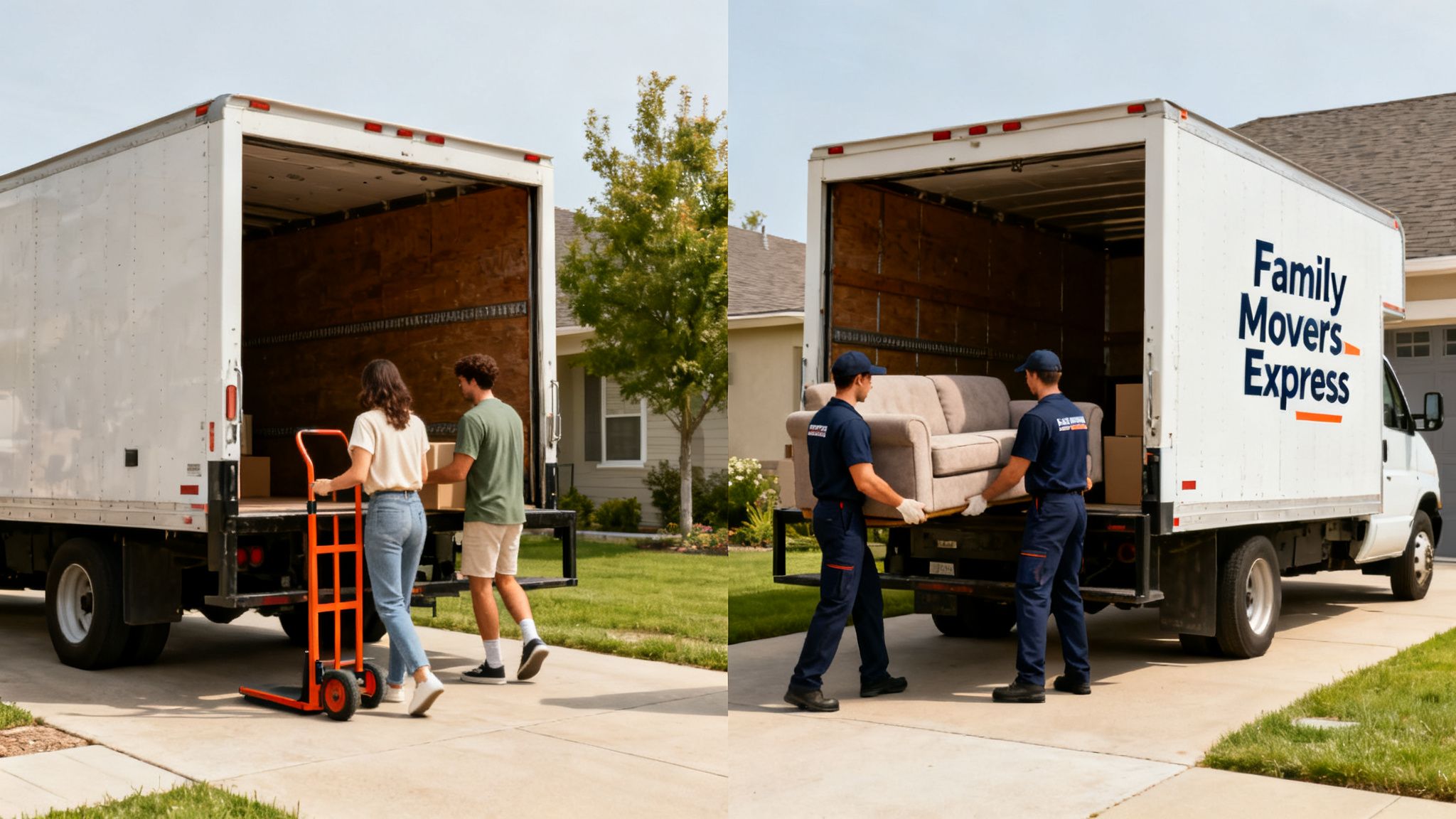
At first glance, the DIY route looks like the obvious money-saver. But the hidden costs can sneak up on you fast. You're not just renting a truck; you're on the hook for fuel, insurance, moving equipment like dollies and furniture pads, and the biggest one of all—your own time and energy.
The True Cost of a DIY Move
Going the do-it-yourself route means you're wearing all the hats: project manager, packer, and heavy lifter. That complete control is tempting, for sure. But it demands a ton of planning to sidestep the usual headaches.
First up is the truck rental. You have to nail the right size—too small, and you're making multiple trips; too big, and you're just wasting money. And you've got to book it way ahead of time, especially if you're moving during the busy season. Then there's all the gear you need to round up:
- Appliance Dolly: You absolutely need this for moving refrigerators, washers, and dryers without wrecking them or your floors.
- Furniture Pads/Blankets: These are non-negotiable for keeping your wood furniture from getting scratched and dinged up.
- Straps and Tie-Downs: Essential for locking everything down in the truck so it doesn't become a giant, damaging avalanche during the drive.
Beyond the equipment, you have to think about the labor. Sure, you can ask friends and family for help, but coordinating everyone's schedule is a puzzle, and there's always the risk of someone pulling a muscle. Let's be real: the physical toll of hauling furniture all day is no joke and it's something people consistently underestimate.
The Value of Hiring Professional Movers
Hiring a moving company isn't just about paying someone to do the heavy lifting. It's about buying expertise, efficiency, and a whole lot of peace of mind. Professional crews know exactly how to pack and load a truck to maximize every inch of space while keeping your things safe.
The moving industry is massive, with North America holding a 42.3% share of a global market worth over $111 billion. For an average person, a local move might run between $1,200 and $2,000, but the time you get back is huge. A full-service company like Family Movers Express can slash the labor time by up to 60%. Their trained crews have seen it all, from tiny apartments to sprawling estates.
When you bring in the pros, you're also getting insurance. If your buddy drops your TV during a DIY move, you're just out of luck. A licensed and insured moving company provides valuation coverage, which acts as a crucial safety net. For long-distance moves, reputable companies offer guaranteed pickup and delivery dates—a massive relief compared to the guesswork of a cross-country DIY trip. For a deeper dive, check out our guide on professional packers and movers.
Think of hiring movers as an investment in a smooth, sane transition. The price tag covers the physical work, but it also buys you logistical coordination, the right equipment, insurance, and the experience to handle whatever surprises pop up.
Making the Right Choice for Your Move
To make this decision a little easier, let's put it all side-by-side.
Hiring Professional Movers vs DIY Moving
Deciding between hiring a moving company and managing the move yourself comes down to a few key trade-offs between cost, effort, and convenience. This table breaks down what you can expect from each option.
| Factor | Professional Movers (e.g., Family Movers Express) | DIY Move |
|---|---|---|
| Total Cost | Higher upfront cost but often includes all equipment, labor, and insurance. | Lower initial price but with potential hidden costs for fuel, gear, and supplies. |
| Time & Effort | Significantly less time and physical effort required from you. Professionals handle all loading and transport. | Very time-consuming and physically demanding. You are responsible for every step. |
| Risk of Damage | Lower risk. Experienced crews use proper techniques and materials. Insured against accidents. | Higher risk of damage to belongings and property. You bear the full financial responsibility. |
| Convenience | High. The company manages the logistics, allowing you to focus on other moving tasks. | Low. Requires extensive planning, coordination, and hands-on work from start to finish. |
In the end, it really boils down to your specific situation—your budget, your timeline, and how much stuff you actually own. If you're moving a small apartment across town and have a solid crew of friends ready to help, a DIY move could be perfect. But for a larger home, a long-distance relocation, or if you're just slammed for time, the value you get from a professional mover is almost always worth it.
Managing the Final Details Before Moving Day
The last two weeks before you move are an absolute blur. This is where all your planning pays off, and it's time to nail down all the loose ends. Think of it as the final countdown—every small thing you do now prevents a massive headache later and paves the way for a much smoother transition.
Honestly, it’s all about the admin work and final home prep. If you forget something simple, like transferring the electricity service, your first night in the new place can turn into a real disaster. A methodical approach during these last few days is your best defense against chaos.
Finalizing Your Administrative Checklist
With most of the packing behind you, it’s time to switch gears to the paperwork and digital details that keep your life running. Getting these things sorted out is critical to make sure your services and mail follow you without a hitch.
Start with your utilities. You’ll want to contact your current and future providers for electricity, gas, water, and internet at least two weeks in advance. A pro tip: schedule the disconnection at your old place for the day after you move out and the connection at your new home for the day before you arrive. This little overlap is a lifesaver and prevents any gap in service.
Next up is your mail and official address change. Setting up mail forwarding with USPS is easy to do online. But don’t stop there—you need to let important people know you’ve moved directly.
- Financial Institutions: Banks, credit card companies, and anyone you have a loan with need your new address ASAP.
- Subscriptions and Services: Think about your streaming services, magazines, and all those online shopping accounts.
- Official Records: Don’t forget to update your driver’s license, vehicle registration, and your address with the IRS.
Here's a piece of advice we give every client: keep a folder—both a physical one and a digital one on your phone—with all your moving documents. This means your mover's contract, utility confirmation numbers, and your new lease or closing papers. Having it all in one spot will save your sanity on a hectic moving day.
For a full rundown on getting everything updated, you can learn more about how to change your address when moving in our detailed guide.
Prepping Your Home for the Movers
Getting your home ready for the moving crew isn't just about being polite; it's a practical step that makes the whole day faster and safer for everyone involved. Professional movers are magicians, but they work best when they have a clear, safe space.
Start by creating wide, clear pathways. Get any small furniture, area rugs, or stray plants out of the main walkways between rooms and the front door. This helps prevent tripping and lets the crew haul big furniture out without running an obstacle course.
Protecting your property is also key. While any good moving company will come equipped with their own protective gear, a little extra precaution never hurts. You can use painter's tape to stick some spare cardboard to high-traffic door frames or lay down floor coverings, especially if you have nice hardwood or light carpets.
Easing the Transition for Kids and Pets
Moving day is stressful, period. But for kids and pets, the disruption can be completely overwhelming. Their whole world and routine are turned upside down, and watching strangers carry away their stuff can be really confusing.
For children, get them involved in tasks that make sense for their age. Let them pack a special "first night" box with their absolute favorite toys, books, and PJs that travels with you in the car. Keep talking about the new house and all the fun things you'll do there—it helps frame the move as an adventure, not a loss.
Pets, on the other hand, are creatures of habit. The noise and chaos are pretty much their worst nightmare. The absolute best strategy is to have them stay with a friend, family member, or at a pet daycare for the day. If that’s not an option, set them up in a quiet, empty room (like a bathroom) with their bed, food, water, and a big sign on the door that says "DO NOT OPEN." This keeps them safe, secure, and out of everyone's way.
Frequently Asked Moving Questions
Even with the most airtight plan, moving always throws a few curveballs. It's just part of the process. Having a few answers in your back pocket for those "what if" moments can be a real lifesaver when things get hectic.
This is where we get into the real nitty-gritty of moving challenges. From a last-minute job offer forcing a quick relocation to figuring out what to do with that grand piano, let's tackle the questions that pop up when you least expect them.
How Do You Handle a Short-Notice Move?
Life doesn’t always give you a nice, neat eight-week timeline. Sometimes you have to move, and you have to move now. When that happens, you’ve got to shift your mindset from "perfect" to "done." The goal is simply to get from your old place to your new one with as little friction as possible.
The first step is making fast, ruthless decisions. This isn't the time to sit and reminisce over every old photo. A good rule of thumb? If you haven't used it in the last six months, it's a prime candidate for selling, donating, or trashing. Channel all your energy into what you absolutely cannot live without.
Then, it's time to call in the cavalry—immediately.
- Call Movers Right Away: Don't wait. Companies like Family Movers Express are used to these calls and often have crews ready for same-day or next-day jobs. If you can be flexible with your timing (say, a Tuesday instead of a Saturday), you'll have a much better chance of booking someone.
- Embrace Professional Packers: Seriously, this is not the time to be a hero and DIY your packing. A professional crew can have your entire house safely boxed up in a few hours—a job that would likely take you several stressful days.
- Mass Declutter: Forget sorting item by item. Create big categories. Designate one corner of a room for "donations" and schedule a pickup from a local charity to clear it all out in one go.
A last-minute move is all about triage. Lock in your movers, pack the essentials, and get everything else out of the way.
What About Valuable or Bulky Items?
Getting a concert grand piano down three flights of stairs is a whole different ballgame than moving a box of sweaters. The same goes for that fragile, century-old armoire you inherited. These specialty items need specific skills, equipment, and experience to be moved without a scratch.
The single biggest mistake I see people make is just assuming any moving company can handle it. When you're gathering quotes, you have to be crystal clear about these unique pieces. Ask them directly if they've moved a similar item before and what their process is. For more tips, check out our guide on the right questions to ask moving companies before signing anything.
When it comes to high-value items like artwork, antiques, or collections, you absolutely must discuss insurance and valuation coverage. The standard, legally required coverage is minimal—often just cents on the dollar. You will likely need to purchase additional protection to cover the true replacement value of your treasures.
True specialty movers will come prepared with custom crating, specialized dollies, and the know-how to properly pad and secure these items inside the truck. Yes, it's an extra cost, but it pales in comparison to the cost of repairing or, worse, replacing a priceless heirloom.
What If Your Move-Out and Move-In Dates Don’t Align?
It happens more often than you'd think. Your apartment lease is up on the 31st, but you can't get the keys to your new house until the 3rd. That gap can feel like a logistical nightmare, but there are straightforward solutions.
The easiest option is usually storage-in-transit (SIT), a service many professional moving companies offer. Here’s how it works:
- Load-Out: On your move-out day, the crew loads all your belongings onto the truck just like a normal move.
- Secure Storage: Instead of driving to your new home, they take the sealed truck or container to their own secure, often climate-controlled, warehouse.
- Delivery: When your new home is ready, they drive the truck over and unload everything for you.
The beauty of this is that your belongings are only handled twice (loading and unloading), which dramatically cuts down the risk of damage compared to the alternative of moving everything into a self-storage unit, then having to hire movers again to get it all out. A little planning here can save you a massive headache.
When you're ready to make your move simple and stress-free, the team at Family Movers Express LLC is here to help with everything from short-notice relocations to specialty item transport.
Get Your Free Moving Quote Today
Ready to protect your upcoming move?
Click Here to Fill Out Our Quick Form & Secure Your Instant Quote!
