Moving to Raleigh? Or maybe just across town? You’re in good company. The city is booming, thanks in large part to the ever-expanding Research Triangle Park, and that means the moving market here is buzzing. Finding the right crew to handle your stuff is more important than ever. This guide is your complete roadmap to a stress-free move.
Your Guide to a Smooth Raleigh Move

Planning a move in Raleigh isn’t just about booking a truck. It’s about navigating a dynamic, fast-growing city. We’re cutting through the noise to give you a real-world plan for finding reliable movers you can actually trust. Think of this as your personal checklist for getting it done right.
We’ll walk you through everything, from getting honest quotes to packing like a pro and sidestepping the common headaches. The goal here is to give you the confidence to hire a team that will get your belongings to your new home, safe and sound.
Why Raleigh’s Moving Scene Is Unique
Raleigh’s incredible growth has a direct impact on the moving industry. As Research Triangle Park (RTP) continues to pull in top talent in tech and biotech, the whole area has transformed. Wake County’s population has shot past 1.1 million residents, and that constant flow of new families and professionals keeps demand for movers high, especially during peak season.
That boom means you’ve got options, but it also means you need to do your homework. High demand can sometimes lead to rushed jobs or inexperienced crews if you don’t choose carefully.
Key Takeaway: The demand for movers in Raleigh is no joke. Start your search early, especially if you’re planning a move in the busy summer months or at the end of the month when leases are turning over.
What to Expect From This Guide
Whether you’re coming from out of state or just moving to a new neighborhood, this guide is designed to put you in control. Our goal is to make your transition as seamless as it can be by providing advice that actually works.
Here’s a quick look at what we’ll cover:
- Finding Reputable Movers: Learn exactly how to check licensing, insurance, and reviews to weed out the less-than-stellar companies.
- Getting Accurate Quotes: We’ll break down the different types of estimates so you can avoid those dreaded last-minute surprise fees.
- Planning Your Relocation: Get practical tips for everything from packing boxes to prepping your home and managing the chaos of moving day.
A good move starts with a solid plan. For a deeper dive, check out our guide on relocating to Raleigh for neighborhood highlights and tips for settling in. By following the steps we’ve laid out, you’ll be ready to handle your move like a pro.
How to Get Accurate Moving Quotes

Trying to get a moving quote can feel like a total shot in the dark, but it really doesn’t have to be. If you want to avoid those dreaded surprise charges on moving day, the secret is understanding what actually goes into the price and giving the movers every single detail.
An accurate quote isn’t just a random number; it’s a game plan for your entire move.
The best movers in Raleigh NC will build their pricing around a detailed inventory of your stuff, the unique challenges of your old and new places, and the exact services you need. Your job? Be an open book. Leave absolutely no room for guesswork.
Understand the Different Types of Estimates
Before you even pick up the phone, you need to speak the language. Not all estimates are the same, and the type of quote you get directly impacts how your final bill is calculated. Getting these terms down is your first line of defense against unexpected costs.
You’ll typically run into three main types of quotes:
- Non-Binding Estimate: Think of this as a ballpark figure. It’s based on the mover’s initial guess of your shipment’s weight and the services you need. The catch? The final cost can—and often does—go up if your items weigh more than they thought. It’s a common option, but it offers the least amount of price security.
- Binding Estimate: This one is a locked-in, guaranteed price. As long as you don’t sneak in extra boxes or ask for services that weren’t on the original agreement, the price you’re quoted is exactly the price you’ll pay. It’s great for budget certainty but demands a super-accurate inventory right from the start.
- Binding Not-to-Exceed Estimate: This is often the sweet spot. You get a guaranteed maximum price that you won’t pay a penny over. But here’s the kicker: if your shipment ends up weighing less than estimated, your final cost will actually be lower. It protects you from being overcharged while still giving you a chance to save some cash.
What Movers Need to Know for an Accurate Quote
Any reputable moving company will insist on a thorough assessment, either through an in-person walkthrough or a detailed virtual video call. Be very wary of any company that tosses out a “quote” over the phone without actually seeing your belongings—that’s a massive red flag for hidden fees or potential scams down the road.
To make sure your quote is as precise as possible, you need to come prepared with all the details.
Crucial Details for Your Mover:
- A Complete Inventory: Walk through your home room by room and make a list of every single significant item. Don’t forget to check the attic, the garage, and every closet. The more thorough your list, the more reliable the estimate.
- Access Challenges: Tell them about anything that could make loading or unloading a headache. Are there long flights of stairs? A tiny service elevator? Is parking a nightmare at your new apartment in Glenwood South, forcing a long walk? All these things add up in labor time and cost.
- Specialty Items: Got a piano, a massive safe, delicate antique furniture, or a priceless piece of art? Anything that needs special equipment or extra care absolutely must be discussed during the initial assessment.
Pro Tip: When the estimator is doing their walkthrough, open every single door, closet, and cabinet. Something that seems minor to you might be a big deal in their calculations for truck space and time. Total transparency is your best friend for getting a quote you can actually trust.
Raleigh is a hot spot for relocation, with data showing high inbound migration from states like Florida and New York. This boom means local movers are often booked solid, so it pays to get your quotes well in advance.
Comparing Your Quotes Effectively
Don’t just go with the first quote you get. It’s standard practice to get at least three detailed, written estimates from different licensed and insured movers in Raleigh. This isn’t just about finding the lowest price; it’s about comparing the services, insurance coverage, and overall professionalism of each company.
Once you have the quotes, lay them out side-by-side. Check that you’re making an apples-to-apples comparison—same inventory, same services, same dates. If one quote is way higher or suspiciously lower than the others, ask why. An unusually cheap bid can often be a warning sign of a scam.
For a quick starting point, you can use a moving company cost calculator to get a rough idea of the costs before you schedule those detailed walkthroughs.
Vetting Movers for a Safe Relocation
Picking the right moving company isn’t just about snagging the best price. It’s about trusting a team with literally everything you own. A little bit of homework upfront can save you from a world of stress, lost money, and logistical headaches down the road. Honestly, vetting potential movers in Raleigh, NC, is the single most important thing you can do to make sure your stuff arrives in one piece.
This means looking past a slick website or an unbelievably low quote. You’ve got to dig into their credentials, really understand their insurance policies, and get a feel for their reputation straight from the people who’ve used them before. A truly professional company won’t hide this stuff; they’ll make it easy to find.
Verify Licenses and Credentials
First things first: any legitimate mover operating in North Carolina has to be licensed. This isn’t just bureaucratic red tape—it’s your first and best line of defense against scams and fly-by-night operators. The type of license they need hinges on where you’re moving.
For moves that stay within state lines, like from Raleigh to Charlotte, the company needs a license from the North Carolina Utilities Commission (NCUC). If you’re crossing state lines—say, moving from New York down to Raleigh—they fall under federal regulation and must have a U.S. Department of Transportation (USDOT) number.
You can check these credentials yourself in just a few minutes:
- For local NC moves: Head over to the NCUC website and look them up. They absolutely must have a valid C-Number (Certificate of Public Convenience and Necessity).
- For interstate moves: Use the Federal Motor Carrier Safety Administration (FMCSA) online search tool. You can pop in their USDOT number and see their safety record and any complaints filed against them.
Don’t even think about hiring a mover who can’t provide these numbers or whose licenses have lapsed. It’s a dealbreaker, period.
Understand Your Insurance Options
Even with the best crews, accidents can happen. That’s why you need to get crystal clear on your mover’s liability coverage. Federal law makes movers offer two basic kinds of protection, and trust me, the difference between them is huge.
Released Value Protection
This is the standard, no-cost option, but it offers almost no real coverage. Under this plan, the mover is only liable for 60 cents per pound per item. Let that sink in. If your 50-pound, high-def TV gets smashed, you’ll be reimbursed a whopping $30, no matter what you paid for it. It’s the bare minimum, not true insurance.
Full Value Protection
This is the comprehensive option you’ll pay extra for, and it’s usually worth it. With Full Value Protection, the mover is on the hook for the replacement value of anything that gets lost or damaged. They have three choices: repair the item, replace it with a similar one, or give you a cash settlement for its current market value.
Crucial Insight: Always, always get the details of their Full Value Protection plan in writing. You need to know the deductible levels and any limitations in the policy before you sign on the dotted line. This one choice could make all the difference if something goes wrong.
Digging into Online Reviews
Once you’ve confirmed a company is licensed and insured, it’s time to see what their actual customers have to say. Online reviews on sites like Google, Yelp, and the Better Business Bureau (BBB) are an incredible resource for getting a read on a company’s reliability.
But don’t just glance at the star rating. Dive into the comments. Look for patterns. A single grumpy review might just be an outlier, but if you see multiple people complaining about the same thing—crews showing up hours late, damaged furniture, surprise fees tacked onto the final bill—that’s a massive red flag. On the flip side, consistent praise for professionalism, great communication, and careful handling is exactly what you want to see.
Also, pay attention to how the company responds to negative feedback. A professional outfit will address complaints and try to make things right. If they get defensive or just ignore criticism, it tells you a lot about how they’ll treat you if a problem comes up.
For a deeper dive into what to look for, our guide on how to choose a moving company has even more tips. Taking these steps will help you find movers in Raleigh, NC, who are not just legitimate, but who are genuinely committed to making your move a good experience.
Understanding and Budgeting Moving Costs
Trying to nail down the exact cost of a move in Raleigh can feel like you’re aiming at a moving target. The final bill isn’t just some random number; it’s a careful calculation based on several key factors that any professional moving company will use. Getting a handle on these variables is the first step to setting a realistic budget and dodging any unpleasant financial surprises on moving day.
The best movers in Raleigh NC are always upfront about how they price their services. It really boils down to the unique details of your move, from the size of your home to the specific help you need.
What Drives Your Moving Quote
A few core elements have a direct impact on the final cost of your relocation. Each one plays a big part in figuring out the time, labor, and resources required to get the job done right.
Here’s what goes into the calculation:
- Move Distance: It’s a different ballgame moving from Cary to North Hills versus relocating from another state. Local moves are almost always billed by the hour. Interstate moves, on the other hand, are typically priced based on the weight of your belongings and the mileage.
- Shipment Size and Weight: This is a big one. The more stuff you have, the more time it takes to load and unload, and the more truck space you’ll need. A sprawling four-bedroom house will naturally cost more to move than a cozy studio apartment.
- Time of Year: Demand for movers goes through the roof during peak season, which generally runs from May through September. You’ll almost always find a better deal moving on a weekday in October than on a weekend in July.
When you start looking for a moving company, there are a few non-negotiable checks you need to perform.
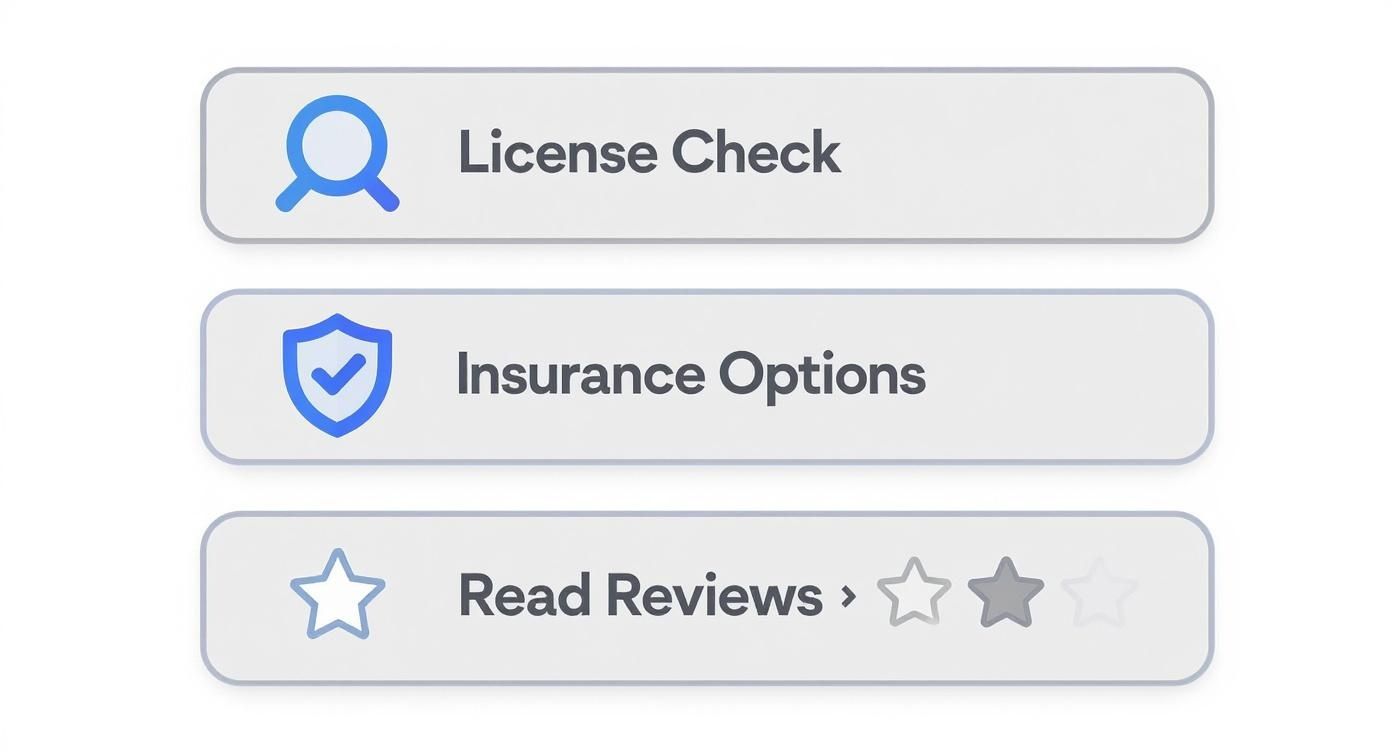
This process is critical: always verify a company’s license, understand your insurance options, and dive deep into customer reviews before making a decision.
Factoring in Add-On Services
Beyond just hauling your boxes from Point A to Point B, many moving companies offer extra services that can be a lifesaver. These will add to your total cost, so you’ll need to decide which ones are worth the investment for your particular situation.
Some common add-ons include:
- Professional Packing and Unpacking: If the thought of boxing up your entire life feels completely overwhelming, you can hire the pros to do it for you. This can be anything from packing a few fragile items to a full-service pack of your entire home.
- Specialty Item Handling: Got a piano, a pool table, or a priceless piece of art? These items require special equipment and know-how to move safely, which comes at an extra cost.
- Storage Solutions: If you have a gap between your move-out and move-in dates, you might need to store your belongings for a bit. Many companies offer secure, climate-controlled storage to bridge that gap.
Key Insight: Always insist on a detailed, itemized quote that clearly separates the cost of the basic move from any add-on services. This transparency lets you see exactly what you’re paying for and where you might be able to make adjustments to fit your budget.
For a deeper dive into what you can expect to pay, check out our guide to understanding average moving costs for more specific breakdowns.
Sample Moving Cost Estimates in Raleigh NC
To give you a practical idea of what to budget for a local move within the Raleigh area, we’ve put together a table with some general estimates. Just remember, these are ballpark figures—your actual cost will depend on the unique details of your move.
| Home Size | Typical Number of Movers | Estimated Hours | Estimated Cost Range |
|---|---|---|---|
| Studio/1-Bedroom Apt | 2 Movers | 2-4 Hours | $350 – $700 |
| 2-Bedroom Home | 3 Movers | 4-6 Hours | $750 – $1,300 |
| 3-Bedroom Home | 3-4 Movers | 6-9 Hours | $1,200 – $2,100 |
| 4+ Bedroom Home | 4 Movers | 8-12+ Hours | $1,800 – $3,000+ |
This table provides a helpful baseline, showing how costs scale with the size of your home and the labor involved. For the most accurate pricing, nothing beats getting a custom quote tailored to your specific needs.
Getting Ready for Moving Day: Your Pre-Move Game Plan

A smooth moving day isn’t a matter of luck. It’s the direct result of smart, organized prep work in the weeks beforehand. Think of this as your game plan for getting everything in order so that when our crew arrives, you’re completely ready to go. A little bit of prep work now not only saves a ton of time but also keeps stress—and potential extra costs—at bay.
Long before you even think about taping up a single box, the first job is to declutter. Honestly, there’s no better opportunity to take a hard look at everything you own. Why pay to move things you don’t need, use, or love anymore?
First Things First: Declutter and Organize
You’ll want to start this process at least a month before your move. Just go room by room and sort everything you own into one of three piles: keep, sell/donate, or toss. You have to be a little ruthless here. If you haven’t touched something in a year, it’s probably time to let it go.
This sorting frenzy does more than just clean house; it gives you a much clearer idea of what you’re actually moving. That’s crucial information for getting an accurate quote from movers in Raleigh NC. A lighter load almost always means a lower cost.
Once you’ve got your piles, it’s time to take action:
- Sell: List your more valuable items on places like Facebook Marketplace or Craigslist. Raleigh has a pretty active online resale scene, so you can often make a few bucks back.
- Donate: Drop off gently used goods at local charities. The Green Chair Project is a fantastic local option, as are any of the Raleigh-area Goodwill locations.
- Toss: Properly dispose of or recycle anything that’s broken, expired, or unusable.
Pack and Label Like a Pro
With your belongings whittled down, it’s time to pack smart. Don’t just start throwing things into boxes—a bit of strategy now will save you from a mountain of frustration when you’re unpacking later.
Kick things off with the rooms and items you use the least, like the guest bedroom or your off-season clothes. Save the daily essentials for the very last.
Pro Tip from the Field: We always recommend packing an “Open First” box. This is your moving day survival kit. Fill it with things you’ll need right away: toilet paper, hand soap, a box cutter, phone chargers, basic tools, snacks, and a change of clothes for everyone.
Your labeling system is your best friend during a move. Get specific. Instead of just writing “Kitchen,” be more descriptive: “Kitchen – Pots and Pans” or “Kitchen – Glassware (FRAGILE).” It also helps to add the destination room at the new place (e.g., “Master Bedroom,” “Downstairs Office”). A simple color-coding system—using a different color of duct tape for each room—makes identifying boxes at a glance even easier.
Don’t Forget the Admin Tasks
Moving isn’t just heavy lifting; there’s a surprising amount of paperwork and phone calls involved. You don’t want to leave these crucial tasks until the last minute, as some can take a while to process.
A few weeks out from your move, make sure you:
- Submit a Change of Address: You can do this officially right on the USPS website. It’s the best way to ensure your mail gets forwarded to your new Raleigh address.
- Transfer Utilities: Call Duke Energy for electricity and the City of Raleigh for water to schedule a service stop at your old place and a start date at the new one. Don’t forget to line up your internet and cable providers, too.
- Notify Key People: Update your address with your bank, credit card companies, subscription services, your employer, and any government agencies you deal with.
Plan for Moving Day Logistics
Finally, you have to think about the nitty-gritty details of the day itself. Finding parking for a large moving truck can be a real headache, especially in dense Raleigh neighborhoods like Downtown, Boylan Heights, or anywhere near the NC State campus.
If parking looks tight, reach out to your new landlord or HOA to see if you can reserve a spot. In some areas, you might even need to check with the City of Raleigh about getting permits to block off a section of the street. Giving your movers clear instructions on where to park is the best way to get the day started on the right foot. For more tips on timing, our guide on planning your move 6-8 weeks out breaks it down perfectly.
The Raleigh housing market is always buzzing, especially when it comes to rentals. City data shows a rental vacancy rate of around 6.2%, which is quite a bit higher than the homeowner vacancy rate. This means there’s a constant turnover in rental properties, so you’re one of many people trying to coordinate a move. You can find more local stats in the City of Raleigh’s 2017 data report.
Got Questions? We’ve Got Answers.
Even the most buttoned-up moving plan can leave you with a few lingering questions. That’s totally normal. Think of this as the go-to spot for the things people are always asking us about moving in and around Raleigh. We’ll give you clear, straight-up answers so you can feel good about your plan.
When’s the Best Time to Lock in My Movers in Raleigh?
Timing is a big deal, especially in a growing place like Raleigh. The sweet spot is to start looking and calling movers four to six weeks before your moving date. But if you’re planning a move in the summer—our peak season—or at the tail end of the month, you’ll want to bump that up to at least eight weeks out.
Booking early means you get your pick of the best companies and you’re not stuck with an awkward moving day. If you wait until the last minute, especially from May to September, you’re looking at higher prices and slim pickings. You might have to settle for a mover that wasn’t your first choice. Things definitely open up and get more affordable in the fall and winter.
Local Insight: Don’t forget about the colleges! Move-in and move-out days for NC State, Meredith, and the other local universities cause a massive surge in demand. If you’re trying to move around early August or mid-May, book your movers as far ahead as you possibly can. Seriously.
What’s the Deal with Tipping Movers?
While a tip is never expected, it’s a great way to say “thanks” for a job well done. If your crew was on time, worked hard, and treated your stuff with care, it’s a gesture they’ll definitely appreciate. There’s no hard-and-fast rule, but a good guideline is about $4 to $5 per mover for each hour they worked.
Another way people do it is by tipping a percentage of the final bill—usually somewhere between 10% and 20%—which you can then split up among the crew.
To give you a real-world idea:
- For a smaller local move, say 4 hours with 2 movers, a tip of $30 to $40 per mover is pretty common.
- For a bigger, all-day job (8 hours with 3 movers), you might be looking at around $40 to $50 per mover.
At the end of the day, it’s your call and should be based on the quality of service you got. And trust me, having some cold water and snacks ready for the crew is a small thing that goes a long, long way.
Is There Anything Movers Won’t Take?
Yep. For safety and legal reasons, there are some things professional movers just can’t put on the truck. Your moving company will give you an official list, but most of the prohibited items fall into a few main categories.
You’ll need to figure out another way to move these yourself:
- Hazardous Stuff: This is anything that’s flammable, corrosive, or could explode. We’re talking about paint, gas cans, aerosol sprays, ammunition, propane tanks, and most cleaning chemicals.
- Perishable Food: We can’t take anything from your fridge or freezer, or any open food containers that could spoil and attract pests. The best plan is to eat it, give it away, or toss it before moving day.
- Plants: State laws are really strict about moving plants across state lines to prevent the spread of pests. Besides that, most plants just don’t do well on a hot, dark moving truck.
Also, we always recommend you personally hang on to things like important documents, jewelry, medications, and irreplaceable sentimental items. Keep that box of valuables with you in your own car.
What Happens If Something Breaks During the Move?
Accidents are rare when you’re working with a professional team, but they can happen. If you notice something got damaged, the first thing to do is document it right away. Snap a few clear photos from different angles—ideally before the movers have even left your new home.
Then, you need to let the moving company know immediately. Any reputable movers in Raleigh NC will have a straightforward claims process. This is where your insurance choice (Released Value vs. Full Value Protection) really matters. If you went with Full Value Protection, the company is on the hook to get the item repaired, replaced with a similar one, or pay you a cash settlement for its current market value.
Just be sure you know the deadline for filing. It’s usually within nine months of delivery, but it’s always, always better to report it on the spot.
Do I Really Need to Be There on Moving Day?
Yes, absolutely. We strongly recommend that you or someone you trust is there for the whole show, from the first box loaded to the last one unloaded.
At your old place, you’ll need to sign the Bill of Lading (that’s the contract for your move) and be on hand to point things out or answer questions. After the truck is loaded, you’ll do one last walkthrough with the crew leader to make sure nothing got missed.
At your new Raleigh home, you’ll be the director, telling the crew where each piece of furniture and every box goes. This makes unpacking a thousand times easier. Once it’s all inside, you’ll sign off on the delivery papers, making a note of any damages you see right then and there. Your being there is what makes the whole day run smoothly.
Ready to take the guesswork out of your Raleigh relocation? Let Family Movers Express LLC provide the professional, reliable service you deserve. We handle every detail with care, so you can focus on settling into your new home. Get your free, no-obligation quote today!
Ready to protect your upcoming move?
Click Here to Fill Out Our Quick Form & Secure Your Instant Quote!