

Finding a genuinely affordable interstate mover isn't about finding the cheapest price tag; it's about understanding what you're actually paying for. It's a bit like buying a car—the final cost is a mix of the model, the features, and when you decide to buy. For moving, the big three are the weight of your stuff, the distance you're going, and the timing of it all.
Understanding Your Interstate Moving Costs

Before you can spot a great deal, you have to peek behind the curtain and see where your money is going. The quote you get from any long-distance moving company isn't just a number pulled out of a hat. It's a careful calculation based on some very specific variables. Once you get a handle on these, you're in the driver's seat to find some real savings.
Moving is a huge part of the American economy. To give you some perspective, nearly 41 million Americans pack up and move each year, spending something like $19 billion on getting from point A to point B. With long-distance moves running anywhere from $2,500 to over $11,600, it’s clear that knowing what drives those numbers is key to keeping your budget from spiraling. You can get a deeper dive into these figures from recent moving industry statistics.
The Core Cost Drivers
Your moving quote is essentially built on four pillars. The good news? Each one is a lever you can potentially pull to lower your final cost.
- Shipment Weight: This is the heavyweight champion of cost factors, no pun intended. Movers charge based on how much your belongings weigh. It’s simple math: a four-bedroom house full of furniture, books, and memories is going to cost a lot more to transport than the contents of a one-bedroom apartment.
- Travel Distance: The mileage between your old front door and your new one directly feeds into fuel costs, labor hours, and general transportation expenses. A cross-country trek from New York to California will naturally have a higher price tag than a shorter hop from Florida up to North Carolina.
- Timing and Seasonality: I can't stress this one enough: when you move matters. A lot. Moving during the peak season—think May through August—can easily inflate your costs by 20-30% because demand is through the roof. If you can swing it, a mid-month, mid-week move in the off-season (from October to April) can unlock some serious discounts.
- Additional Services: Your quote will also tick up with any extra help you need. This could be anything from full-service packing and unpacking (a lifesaver, but it comes at a price) to disassembling and reassembling that complicated IKEA bed or using special equipment for tricky spots.
Let's break down the major cost factors at play so you can see where your money goes and where you might be able to save.
Interstate Move Cost Factors at a Glance
| Cost Factor | How It Impacts Your Quote | Potential for Savings |
|---|---|---|
| Shipment Weight | The heavier your stuff, the higher the price. This is the biggest single factor. | High. Decluttering and selling or donating items you don't need can significantly reduce weight and cost. |
| Travel Distance | Longer distances mean more fuel, time, and labor, which increases the base cost. | Low. You can't change the distance, but you can ensure the quote is accurate and fair for the mileage. |
| Timing & Season | Moving in summer or on weekends costs more due to high demand. | High. Moving during the off-season (fall/winter) and on a weekday can lead to major discounts. |
| Extra Services | Packing, unpacking, and specialty item handling add to the bill. | High. Packing your own boxes and handling basic disassembly can cut costs dramatically. |
By seeing it laid out like this, you can start to strategize. You can’t shrink the distance, but you have a ton of control over the other three factors.
Putting It All Together
Let's paint a picture with two different moves. First, you have the Miller family, moving from a sprawling house in San Diego, CA, to Dallas, TX, right in the middle of July. They need the works—full packing services for everything. Their quote is going to be on the higher end because of the massive weight, the long haul, and booking during the absolute busiest month of the year.
Now, contrast that with a college student moving from a small apartment in Orlando, FL, to Raleigh, NC, in October. They've Marie Kondo'd their life, packed their own boxes, and told the movers they're flexible on the delivery date. You can bet their quote will be a fraction of the Millers'.
Want to get a ballpark idea of what your specific move might cost? The best way to start is by plugging your details into a tool that considers these factors. You can get a personalized estimate with a long-distance moving cost calculator to see how the weight and distance will shape your budget.
When you understand how these pieces fit together, you can stop just hoping for a low price and start making smart decisions that lead to a genuinely affordable move, without sacrificing quality or peace of mind.
Finding Movers You Can Actually Trust

A quick Google search will give you a long list of potential movers. But finding a company you can genuinely rely on with everything you own? That takes a little more detective work.
You have to move past the flashy websites and dig into a company's credentials. Honestly, this vetting process is your best defense against nightmare scenarios and ensures your belongings are in safe hands.
The very first thing you should do is confirm any potential mover is legitimate. Every single licensed interstate moving company must be registered with the Federal Motor Carrier Safety Administration (FMCSA). You can easily look up any company using their USDOT number on the official FMCSA Mover Search Tool.
Your Vetting Checklist
A truly professional and affordable interstate mover won't hide anything. They'll be transparent and easy to verify. Here’s a quick checklist to guide your research:
- Check Their USDOT Number: Ask for their number right away and verify it online. No number means no deal—it's that simple. This is your proof they are legally allowed to move your stuff across state lines.
- Confirm Insurance and Licensing: That same FMCSA database will show if a company’s insurance is active. If it's not, you have zero protection if something goes wrong. This is a non-negotiable.
- Read Reviews with a Critical Eye: Look for patterns in reviews on third-party sites. A few bad reviews are normal for any business, but a consistent theme of surprise fees, damaged items, or terrible communication is a massive red flag.
The Power of Multiple Quotes
Never, ever settle for the first quote you get. It’s an industry-standard for a reason, and a rule you should always follow: get at least three separate in-home or video estimates.
This isn't just about hunting for the lowest price. It’s about comparing the professionalism and thoroughness of each company. You'll quickly see who's cutting corners and who takes the job seriously.
A quote given over the phone without anyone seeing your belongings isn't a quote—it's a wild guess. A reputable mover will insist on a visual survey to give you an accurate, written estimate. This protects both you and them from surprise costs down the road.
This process gives you a much clearer, realistic picture of the market rate for your specific move. For a deeper dive on this, our guide on how to choose a moving company offers more valuable tips. A mover who rushes this step or just throws out a vague, ballpark number is probably not the partner you want for a cross-country relocation.
Getting multiple, detailed estimates from verified companies is the single best way to lock in a fair price from a mover you can trust. It puts you in the driver's seat, armed with the info you need to make a confident decision. This due diligence is what ensures the mover you hire is not only affordable but also professional and accountable.
How to Read and Compare Moving Quotes
Getting a stack of moving quotes can feel like trying to compare apples, oranges, and maybe even a pineapple. Every document from potential affordable interstate movers looks a little different, but they all hold the key details you need to understand to sidestep nasty surprises on moving day. It's time to put your detective hat back on and dig into the fine print.
The very first thing you need to lock onto is the type of estimate they've given you. This one detail is the deciding factor in whether your final bill can balloon unexpectedly.
Understanding Estimate Types
In the moving world, there are three main flavors of quotes. Knowing the difference is your best defense against a bill that's way higher than you planned for.
- Binding Estimate: This is your fixed price. Plain and simple. As long as you don't sneak in extra boxes or ask for new services on moving day, the price you're quoted is the price you'll pay. It offers some much-needed certainty in a process that can feel pretty chaotic.
- Non-Binding Estimate: Think of this more as a ballpark guess. The final cost is figured out based on the actual weight of everything you own, which means it can swing up or down. It often looks tempting because it's a lower number upfront, but it’s a gamble. If your stuff is heavier than the estimator guessed, that bill is going to climb.
- Binding-Not-to-Exceed Estimate: This one is the real sweet spot. Your price is guaranteed not to go above the estimate. But here's the kicker: if your shipment ends up weighing less than they thought, your bill actually goes down. It’s the best of both worlds, giving you a price ceiling with the potential for savings.
For total peace of mind and budget control, a binding or binding-not-to-exceed estimate is always the way to go. It locks in your price and takes the guesswork out of the equation, which is exactly what you need when you're managing all the costs of a long-distance move.
Critical Questions to Ask Every Mover
Before you even think about signing a contract, you have to get crystal clear on what's included and—more importantly—what's not. A low starting price can get ugly fast once hidden fees start piling up. Make sure you ask every single company the same set of questions so you can make a true side-by-side comparison.
Are there extra charges for things like:
- Hauling furniture up and down stairs or in elevators?
- "Long carries" (when the truck can't park right next to your door)?
- Shuttle services (if a big semi-truck can’t navigate your residential street)?
- Basic packing materials like boxes, tape, or moving blankets?
- Fuel surcharges?
The price range for an interstate move can be massive. For example, a full-service move for a three-bedroom house going 1,500 miles might run you anywhere from $4,500 to $7,000. On the flip side, renting a truck and doing it all yourself could be closer to $1,100 to $3,300. Knowing what's actually baked into your quote is the only way to understand its real value.
Once you understand the type of quote and have asked about all the potential add-ons, you’re in a much better position to pick a mover that's genuinely affordable. Lots of folks find that the predictability of a single, all-in price is well worth it. That's why exploring what flat-rate movers can offer is such a great strategy for a less stressful relocation.
Real Strategies to Lower Your Moving Bill
Knowing how to read a moving quote is half the battle; the other half is actively shrinking the numbers on that quote. Landing a deal with genuinely affordable interstate movers often comes down to a few smart decisions you make long before the truck even shows up. I’ve seen these tactics work time and again, putting real money back into people’s pockets.
The single biggest lever you can pull is also the simplest: move less stuff. Your quote is heavily based on weight, so every single item you sell, donate, or toss directly lowers your bill. Think about that old, heavy couch in the basement—selling it for a hundred dollars not only gives you cash but could also save you another hundred or more in moving costs. It's a double win.
Master the Calendar and Clock
Your moving date is a surprisingly powerful bargaining chip. Demand for movers absolutely skyrockets in the summer and on weekends, and prices climb right along with it. If you have any wiggle room in your schedule, now is the time to use it.
- Move Off-Season: Shifting your move to the fall or winter (think October through April) can sometimes slash 20-30% off the peak season price. It’s a huge difference.
- Pick a Weekday: Movers are always busiest Friday through Sunday. A Tuesday or Wednesday move is almost always cheaper.
- Go Mid-Month: The beginning and end of the month are chaotic with lease turnovers and closing dates. Booking your move in the middle of the month often comes with a lower price tag.
These timing adjustments work because you’re booking when demand is low. It’s a simple supply-and-demand game that plays out in your favor. Market trends also have an impact; for instance, the recent population boom in Southern states like Texas and Florida has increased moving traffic to those areas, sometimes tightening up availability and nudging prices.
Smart Packing and Flexibility Perks
While having a full-service crew pack your entire home is incredibly convenient, doing it yourself is a guaranteed way to save. You can find sturdy, free boxes from local grocery stores, liquor stores, or online community groups. Instead of buying packing peanuts and bubble wrap, use towels, linens, and clothes you already own as padding. For even more ways to cut costs, our guide gives you 6 tips for saving money during a move.
Another huge cost-saver is being flexible with your delivery date. If you don't need your belongings to arrive on one specific day, make sure you let the moving company know.
Offering your movers a flexible delivery window (e.g., a one-week period) allows them to consolidate your shipment with others along the same route. This logistical efficiency saves them money on fuel and labor, a discount they often pass directly on to you.
This infographic breaks down the most common types of moving quotes to help you choose the one that best protects your budget from surprises.
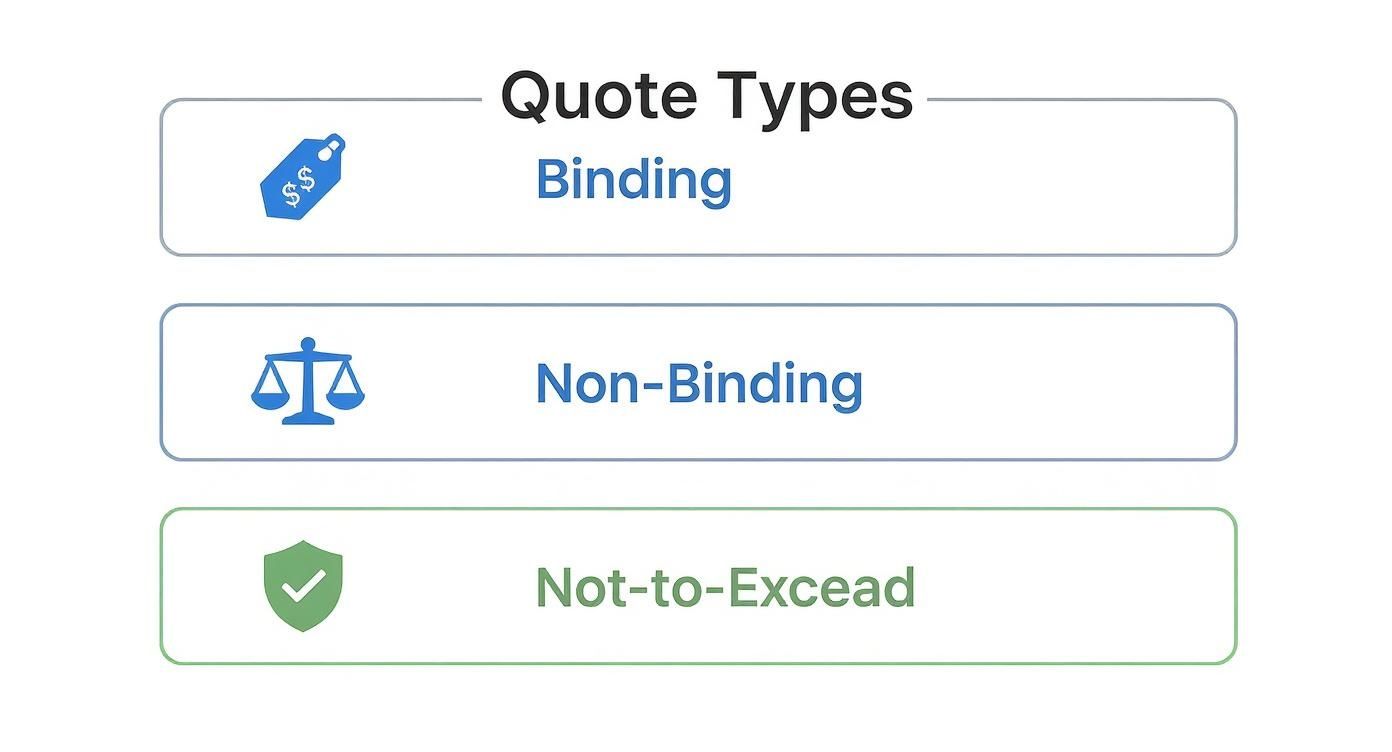
As you can see, a Binding or Not-to-Exceed quote offers the most financial security, protecting you from unexpected price hikes on moving day.
Cost-Saving Tactics Comparison
Let's break down these strategies to see their potential impact on your final moving bill and the effort required from your end.
| Strategy | Potential Savings | Effort Level | Best For… |
|---|---|---|---|
| Decluttering Ruthlessly | High (reduces weight/volume directly) | Medium-High | Anyone, but especially those with lots of unused items or old furniture. |
| Flexible Timing | Medium-High (can save up to 30%) | Low | People with flexible job start dates or no strict lease/closing deadlines. |
| DIY Packing | Medium (saves on labor and materials) | High | Budget-conscious movers who have the time and energy to pack themselves. |
| Consolidated Shipping | High (significant discounts on transport) | Low | Those who aren't in a rush to receive their items and can offer a delivery window. |
| Sourcing Free Boxes | Low (saves $50-$200+ on materials) | Medium | Proactive movers willing to make a few calls or stops at local businesses. |
By combining a smart quote choice with cost-saving tactics like decluttering and flexible timing, you can secure an interstate move that is both affordable and a whole lot less stressful. It's all about planning ahead and knowing where the savings are.
Spotting Moving Scams and Red Flags
Hunting for a great deal on an interstate move can feel like a victory, but it can also lead you down a pretty risky path. The moving industry is filled with hardworking, legitimate companies. Unfortunately, there are always a few bad apples out there looking to take advantage of people trying to save a buck.
Learning to spot the warning signs of a scam isn't just a good idea—it’s absolutely critical. It’s what stands between you and a moving day disaster that could cost you your belongings, your money, and your peace of mind.
The oldest trick in the book? A quote that seems way too good to be true. Scammers love to dangle a ridiculously low price to get you on the hook, only to slam you with a mountain of hidden fees later. If one company’s estimate is thousands of dollars less than everyone else's, that should be a massive red flag, not a sign of good fortune.
The Most Common Warning Signs
Beyond that suspiciously low price, there are several other classic signs of trouble. As you're talking to potential movers, keep your eyes peeled for these red flags.
- They Want a Big Deposit Upfront: A reputable mover won't ask for a huge cash deposit before they’ve even started. Payment is almost always collected upon delivery. If a company is pushing for a large sum of money before the truck even shows up, they might not be planning to show up at all.
- Vague Quotes Over the Phone: Any mover who gives you a solid price without seeing your stuff—either through an in-home visit or a detailed video survey—isn't giving you a real quote. It's a guess, and it's a guess designed to get your business before they jack up the price on moving day.
- They Show Up in a Rental Truck: Professional movers operate their own fleet. Their trucks will be clearly branded with the company name and a USDOT number. A plain white U-Haul or generic rental truck is a huge indicator that you're not dealing with a licensed, insured, and legitimate business.
Here's a pro tip: By law, every licensed interstate mover has to give you a booklet from the Federal Motor Carrier Safety Administration (FMCSA) called "Your Rights and Responsibilities When You Move." If a mover doesn't provide this or acts like they've never heard of it, run the other way.
How to Protect Yourself from "Hostage" Situations
One of the ugliest scams out there is the "hostage load." This is where a shady operator loads all your possessions onto their truck, then suddenly inflates the price by thousands of dollars. They refuse to unload a single box until you pay their outrageous new fee. It's flat-out illegal, but it happens.
The best defense is a good offense. Always, always insist on a binding or binding-not-to-exceed estimate in writing. This document locks in your price and gives you legal protection against last-minute price hikes. Another crucial tip: pay with a credit card. It offers fraud protection that cash or a cashier's check simply can't match.
Knowing these red flags is your first line of defense. But it's also smart to know what to do if things go wrong. For clear guidance on what to do next and how to hold a company accountable, you can learn more about how to file moving company complaints. A little preparation ensures the company you hire is a genuinely affordable partner, not a scammer in disguise.
Got Questions About Your Big Move? We've Got Answers.
Planning a move across state lines can feel like a huge puzzle. There are a lot of pieces to fit together, and it's totally normal to have questions pop up, especially when you're trying to find affordable interstate movers without cutting corners on quality.
Let's cut through the noise. Here are some of the most common questions we hear from families just like yours, with straight-to-the-point answers to help you plan your move with a bit more confidence.
How Far In Advance Should I Book Movers?
This is a big one. To get the best rates and lock in the dates you actually want, you should be looking to book your movers at least two to three months ahead of time. This is non-negotiable if you're planning a move during the peak season, which is basically May through August.
Booking early is your best negotiation tool. You'll have your pick of reputable companies, and you can lock in a price before the summer rush sends rates soaring. If you're moving in the off-season, you might have a little more wiggle room, maybe a month out, but getting ahead of the game is always the smartest financial move.
Is It Really Cheaper to Move Myself?
At first glance, renting a truck and going the DIY route seems like the ultimate money-saver. But trust me, those costs sneak up on you faster than you'd think.
A DIY move isn't just the sticker price of the truck. You have to add up the cost of gas for a massive vehicle, mileage fees, special insurance, hotels and food for a cross-country trip, and renting equipment like dollies and moving blankets.
Once you tally it all up, the final bill for a long-distance DIY move can get shockingly close to what a budget-friendly professional mover would charge. The biggest difference? Hiring pros saves you from days of back-breaking labor and the mountain of stress that comes with it.
What Is Valuation Coverage and Do I Need It?
Okay, let's clear this one up because it causes a lot of confusion. Valuation coverage isn't your typical insurance policy. It's simply the moving company's limit of liability for your stuff while it's in their hands. Federal law requires them to offer two basic options.
- Released Value Protection: This is the free, default option, but the protection is incredibly minimal. It covers your belongings at a flat rate of just 60 cents per pound per item. So, if your 50-pound flat-screen TV gets damaged, you’d only be compensated for $30. Not ideal.
- Full Value Protection: This option has an added cost, but it holds the mover responsible for the current replacement value of anything that gets lost or damaged. It's a much more comprehensive safety net for your possessions.
For true peace of mind, your first step should be to call your homeowner's or renter's insurance agent to see what your existing policy covers during a move. If you're not covered, springing for Full Value Protection or a separate moving insurance policy is a smart investment to protect everything you own.
Planning your interstate move doesn't have to be overwhelming. The team at Family Movers Express LLC guarantees your pick-up and delivery dates and even offers flexible financing options to make your relocation as smooth and affordable as possible. Get your free, no-obligation quote today at https://www.familymoversxpress.com.
Ready to protect your upcoming move?
Click Here to Fill Out Our Quick Form & Secure Your Instant Quote!
