

Planning a cross country move is a huge undertaking, but it doesn’t have to be a nightmare. The secret is simple: give yourself time. I’ve seen it time and time again—the smoothest moves are the ones that start with a solid plan two to three months before moving day. Breaking it all down into smaller, more manageable pieces is the key to dodging that last-minute panic.
Your Cross Country Moving Timeline From Eight Weeks Out
Let’s be honest, the thought of relocating everything you own across state lines can feel massive. But if you map it out, it’s just a series of steps. Think of it less like one giant to-do list and more like a roadmap. A good timeline turns chaos into a controlled, organized process and gives you a buffer for those little surprises that always pop up.
Here’s a look at how to structure the next two months, breaking your move into distinct phases with clear priorities.
The First Steps: 6 to 8 Weeks Before Your Move
Right now, it’s all about research and making the big decisions. Don’t even think about a single packing box yet. This is the time to lay the groundwork for everything that comes next.
- Research and Vet Moving Companies: You’ll want to get quotes from at least three reputable cross-country movers. Check reviews, make sure they’re properly licensed, and ask about their experience on your specific route. If you’re moving anywhere along the East Coast, from Raleigh up to Boston or down to Orlando, finding a crew that knows those corridors is a huge advantage.
- Establish a Realistic Moving Budget: This is crucial. Fire up a spreadsheet and list out every possible expense—the movers, packing supplies, travel costs, maybe a hotel for a night or two, and always, always a contingency fund for the unexpected.
- Begin the Decluttering Process: Go through your home room by room and be ruthless. Make piles: keep, sell, donate, and trash. I can’t stress this enough: the less stuff you move, the less you pay. It’s the single best way to cut down your moving costs.
This is also the perfect time to get your paperwork in order. Grab a binder or create a digital folder for your moving estimates, receipts, and important contacts. For a more detailed guide, check out our post on how to plan your move 6-8 weeks prior to your move.
Four Weeks Out: Getting Tactical
Okay, mover booked? Budget set? Now the real work begins. It’s time to shift from planning to doing. The goal here is to make consistent progress every week so you aren’t buried in tasks during that final home stretch.
A well-planned move is 90% preparation and 10% execution. Every ounce of effort you put in now will pay you back tenfold on moving day, making the whole experience smoother and far more predictable.
Timing is everything, especially when moving along the busy East Coast. Data shows that most people move in the summer—June is the peak, followed by July and May, with Fridays being the most popular day. Cities like Wilmington, NC, are seeing inbound move rates as high as 83%. What does that mean for you? Book early. But if you find yourself in a bind, don’t panic. Companies like Family Movers Express run seven days a week and have rapid crews ready for those unexpected short-notice residential or commercial moves. You can dive deeper into these migration patterns on Allied’s website.
This simple timeline gives you a great visual of the major milestones you need to hit.
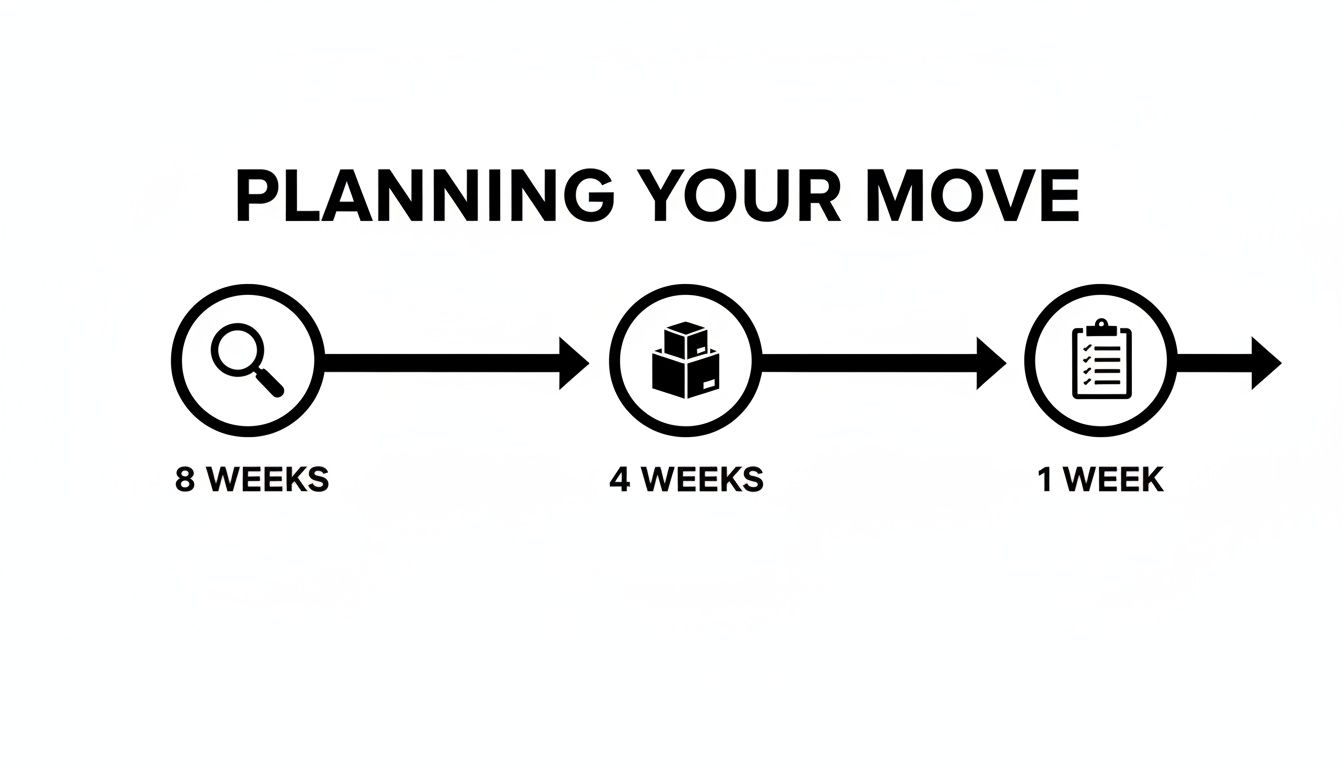
Seeing your timeline laid out like this really helps keep the most important tasks—from initial research to that final box—right where you can see them.
To help you stay on track, we’ve broken down the entire process into a simple, high-level overview.
Your Essential 8-Week Cross Country Moving Timeline
| Timeframe | Key Planning Tasks | Budgeting and Logistics | Packing and Decluttering |
|---|---|---|---|
| 8 Weeks Out | Research and vet at least 3 moving companies. Create a master "moving binder" for all documents. | Set a comprehensive moving budget. Start requesting quotes and comparing services. | Begin decluttering one room at a time. Plan a garage sale or schedule donation pick-ups. |
| 6 Weeks Out | Finalize and book your moving company. Schedule time off from work for moving days. | Purchase moving insurance (check mover's liability vs. full-value). Order all necessary packing supplies. | Start packing non-essential items (seasonal clothes, books, decor). |
| 4 Weeks Out | Notify key parties of your move (schools, doctors). Arrange for pet and vehicle transportation if needed. | Begin the process of transferring utilities and services. Confirm travel and lodging arrangements. | Label boxes with contents, room destination, and priority level. Create a home inventory. |
| 2 Weeks Out | Confirm all details with your mover. Fill any necessary prescriptions. | Submit your change of address form with the USPS. Update your address with banks and subscriptions. | Pack the majority of your belongings. Set aside an "essentials" box for the first few days. |
| 1 Week Out | Defrost the refrigerator and freezer. Pack your suitcase and essentials box. | Withdraw cash for tips and incidentals. Reconfirm travel plans. | Finish all packing. Disassemble furniture. Do a final clean-up of your old home. |
| Moving Day | Supervise the movers. Do a final walkthrough to ensure nothing is left behind. | Provide contact information to the moving crew. Sign the bill of lading after reviewing it. | Keep your essentials box and important documents with you, not on the truck. |
This timeline serves as your guide, but remember to adjust it based on the size and complexity of your own move. The key is to keep moving forward, one step at a time.
Budgeting Your Move and Finding the Right Movers
With a timeline sketched out, it’s time to get down to the brass tacks: your budget and the people you’ll trust with your belongings. A cross-country move is a serious investment, but mapping out your expenses right from the start is the single best way to stay in control and avoid any nasty surprises later on. This is about more than just the mover’s fee—it’s about seeing the entire financial picture.
I always tell clients to start with a simple spreadsheet. The more detail you pour into it now, the fewer curveballs you’ll have to dodge down the road.
Creating a Realistic Moving Budget
So many people get caught off guard by the small, everyday expenses that stack up during a move. Your budget needs to account for way more than just the moving truck.
Here are the big-ticket items you absolutely need to factor in:
- Professional Mover Fees: This will be your largest expense. It's almost always based on the distance of your move and the total weight of everything you're shipping.
- Packing Supplies: Even if you DIY the packing, the cost for quality boxes, tape, bubble wrap, and markers can easily run into several hundred dollars. Don't underestimate this one.
- Travel Expenses: This means gas, hotels, and food if you’re driving, or flights and rental cars if you’re flying ahead to meet the truck.
- Temporary Storage: What if your new home isn’t quite ready when your stuff arrives? You might need to store everything for a bit. Many movers offer this, and some even include the first 30 days free.
- Contingency Fund: This is non-negotiable. Set aside 10-15% of your total budget for the unexpected. Trust me, something always comes up—like needing a smaller shuttle truck because the semi can’t fit down your new street.
When you move can also make a huge difference in cost. We’re seeing major trends along the East Coast, with outbound moves from states like New Jersey hitting 67% and New York at 59%. A lot of those families are heading south to places like Florida, which gained a staggering 71,000 New Yorkers in just one year.
If you can, try to plan an off-peak move. The summer months, especially June, and Fridays are the absolute busiest (and most expensive) times. A little flexibility here can save you a lot of money.
How to Get Accurate Moving Quotes
Once your budget is drafted, it's time to shop for movers. You need to get quotes from at least three different licensed and insured companies. A huge red flag? Any company that gives you a quote over the phone without actually seeing your stuff. A professional will always insist on a virtual or in-home survey to give you a real, accurate estimate.
As you get quotes, you'll see a few different types of estimates:
- Non-Binding Estimate: This is just a ballpark figure. The final cost can—and often does—change based on the actual weight of your shipment. It offers you very little protection from a surprise bill.
- Binding Estimate: This is a locked-in price based on the inventory you both agreed on. The cost won't change as long as you don't add more items to the move.
- Binding Not-to-Exceed Estimate: This is usually your best bet. The final price can’t go over the estimate, but if your items weigh less than predicted, your bill could actually be lower.
Always, always insist on a written, binding estimate. This document is your shield against a common scam where a mover jacks up the price once your belongings are already on their truck.
Choosing the Right Moving Company
The cheapest quote is almost never the best one. When you're moving across the country, reliability and peace of mind are worth far more than a bargain-basement price.
Look for a mover that offers guaranteed pick-up and delivery dates. This isn't a small detail; it's essential for coordinating your own travel, your work schedule, and your entire transition. You need to know when your life will arrive at your new front door.
Flexibility is also huge. Life happens. If you need to shift your dates, you want a company that can work with you without hitting you with massive change fees. And for those in a real pinch, like a sudden job offer, some movers specialize in short-notice or even same-day moves. These services are built to get you moving fast without cutting corners on quality.
Before you sign anything, make sure you're prepared with a solid list of questions to ask any moving company you're considering.
Mastering the Art of Packing and Downsizing
A cross-country move is more than just a change of address; it's a golden opportunity for a fresh start. But before you can kick back in your new place, you’ve got to face the mountain of boxes. Think of the packing phase as your first strategic move—a chance to get lean, save serious money on shipping weight, and make sure your new home is a clutter-free zone from day one.
Every single item you own has a cost attached to it when you're moving it hundreds or thousands of miles. The more you’re willing to part with, the lighter your load, and the happier your wallet will be. I’ve found the best way to tackle this is with a brutally simple, four-category system for every item you touch. No maybes.
- Keep: These are the non-negotiables. The things you love, use all the time, or that hold priceless sentimental value.
- Sell: Perfect for that decent couch that won't fit the new living room, old electronics, or clothes that are in great shape but just aren't you anymore.
- Donate: Got items that are still perfectly good but not worth the hassle of selling? Let a local charity give them a second life.
- Toss: Anything that’s broken, expired, or just plain unusable needs to go. Be ruthless and responsible.
This method forces an immediate decision, which is the key to avoiding that classic mistake of just shuffling clutter from one pile to another.
Creating Your Home Inventory
As you sort through everything, start building a home inventory. This doesn't have to be some overly complicated project—a basic spreadsheet or even a moving app on your phone works perfectly. Just jot down your valuable items, especially electronics with serial numbers, and a general description of what’s in each box.
This little list does two incredibly important things. First, it's your absolute best friend if you need to make an insurance claim for something lost or damaged. Second, it acts as your master checklist when the truck arrives, so you can quickly confirm everything made the journey safely.
Trust me on this, do not skip the inventory. In the rare case you need to file a claim, a detailed list, especially with photos, is the most powerful proof you can have. It turns what could be a massive headache into a simple, straightforward process.
Smart Packing Strategies for a Long Haul
Okay, you’ve downsized. Now it’s time to pack what's left like a pro. A trip across the country involves a lot of road, which means a lot of bumps and vibrations. Protecting your stuff is paramount.
For fragile items like dishes and glassware:
- Start by lining the bottom of a small, sturdy box with a good cushion of crushed packing paper.
- Wrap every single item individually. A critical tip for plates: stack them vertically in the box, like records in a crate, never flat on top of each other. This distributes pressure and dramatically reduces the risk of breakage.
- Stuff all the empty gaps with more crumpled paper. You want zero wiggle room. Slap a FRAGILE label on every side of the box.
For electronics:
The original box is always your best bet. If that’s long gone, find a snug-fitting, sturdy box and give the item a generous wrapping in bubble wrap. Here’s a lifesaver tip: take a quick photo of the cable setup before you unplug everything. Your future self, surrounded by a tangle of cords, will thank you profusely.
A good labeling system will feel like a superpower when you're unpacking. Don't just write "Kitchen." Get specific: "Kitchen – Pots & Pans" or "Kitchen – Everyday Dishes." I also like to number each box and match that number to my inventory list. It adds another layer of control to the chaos. For a deeper dive into techniques, check out our guide on packing like a pro for your out-of-state move.
When to Call in the Pros for Packing
Are you looking at your stuff and just feeling completely overwhelmed? Full-service packing can be an absolute game-changer. Yes, it's an additional cost, but it literally buys you back dozens of hours and gives you peace of mind knowing everything is packed to professional, road-worthy standards. It’s a fantastic option if you’re moving on a tight schedule, have a lot of high-value or delicate pieces, or if you’d simply rather focus your energy on everything else that comes with a big move.
Handling the Logistics of Your Journey
Okay, the boxes are packed. Now what? A cross-country move isn't just about getting your furniture from Point A to Point B. You also have to figure out the literal moving parts of your journey—your car, your pets, and maybe even that ficus you’ve managed to keep alive for years. It's these details that can really throw a wrench in your plans if you don't think them through.
So, let's talk about the playbook for getting everyone and everything to your new home in one piece. We'll cover the practical stuff that’s easy to overlook but absolutely critical for a smooth ride.

Transporting Your Vehicle Across the Country
Driving your own car thousands of miles sounds like a classic American road trip, but it’s not always the most practical option, especially with kids or pets in tow. That’s where auto transport services become a game-changer. You've generally got two main choices.
- Open Carrier Transport: This is the most popular and budget-friendly method. Your car will be loaded onto a large, open trailer with several other vehicles. For most standard cars, it’s a perfectly safe and reliable way to go.
- Enclosed Carrier Transport: If you're moving a classic car, a luxury model, or something you've put a lot of custom work into, you’ll want to consider an enclosed carrier. It provides a complete shield against weather and road debris. It's a bigger investment, but the peace of mind is priceless for a high-value vehicle.
When you're looking for an auto transporter, do your homework. Make sure they are fully licensed and insured. Any reputable company will give you a detailed quote and a clear window for pickup and delivery. Don't be shy about asking how they handle any potential damage during transit—you need to know their process upfront.
Ensuring a Safe Journey for Your Pets
Moving is incredibly stressful for animals. They have no idea what’s happening, and it’s up to you to make the transition as calm as you possibly can for them. A little bit of planning makes a world of difference.
About a month before you move, schedule a check-up with your vet. You’ll want to grab a copy of your pet's health records and make sure their vaccinations are current. If you know you have an anxious traveler, this is also the perfect time to ask about a mild sedative.
Pack a "pet essentials" bag that travels with you, not in the moving truck. This should have their food, water, bowls, any medications, a favorite toy, and their carrier. Having those familiar smells and items on hand provides a huge sense of comfort and routine when everything else is chaotic.
If you’re flying, dig into the airline's pet policies way ahead of time. Driving? Plan for plenty of breaks to let your pet stretch, drink some water, and do their business. And it goes without saying, but never, ever leave your pet alone in the car, especially when the weather is warm.
Navigating Moving Insurance and Storage Options
Let’s get real about moving insurance. Understanding what you're covered for is one of the most important parts of this whole process. Federal law requires movers to offer two basic liability options:
- Released Value Protection: This is the standard, no-cost option, but the protection it offers is minimal. Your belongings are covered at just 60 cents per pound per article. If your 10-pound, $1,000 laptop gets smashed, you'd only get back $6. That's it.
- Full Value Protection: This is the option we almost always recommend for a long-distance move. It's more comprehensive, meaning the moving company is on the hook for the full replacement value of anything lost or damaged. Yes, it costs more, but the coverage is significantly better.
Sometimes, your move-out and move-in dates just don't sync up perfectly. That's when temporary storage becomes a lifesaver. Many movers, including us at Family Movers Express, offer secure, climate-controlled storage. Some even offer the first 30 days free, which can be a huge relief when you're trying to bridge a gap in your timeline. You can learn more about the costs and benefits of renting a moving container for storage. It's a flexible way to keep your things safe until you're ready for them.
Your Final Week and Moving Day Game Plan
The final stretch before a big move is always a bit of a whirlwind. There are a million little things to do, and the anticipation is really starting to build. But this is exactly where all your careful planning starts to pay off, turning what could be a chaotic scramble into a calm, controlled process. The goal for this last week isn't to start panicking—it's to execute the game plan you've already put in place.
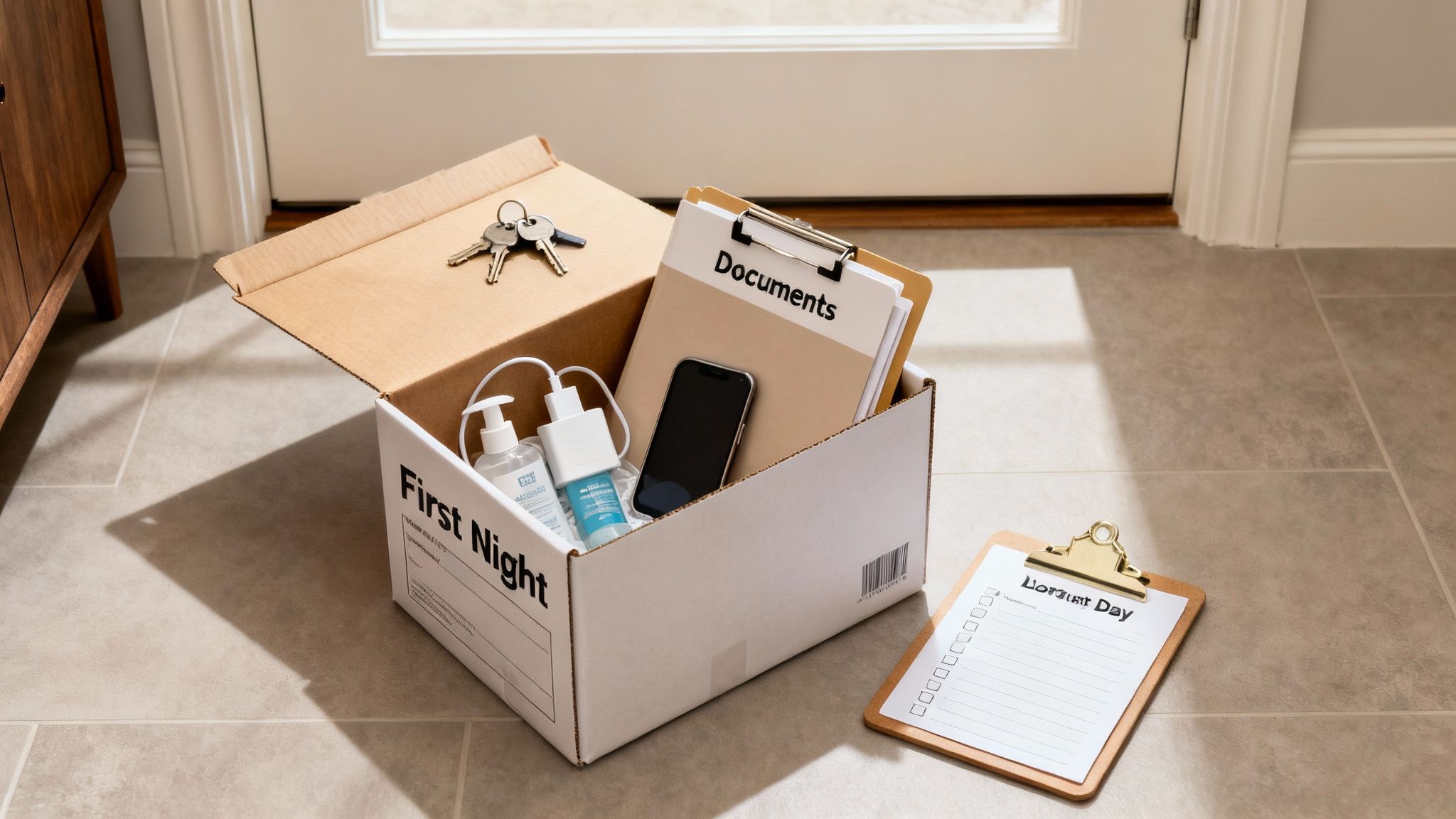
Think of this week as your final countdown. It’s the perfect time to touch base with your moving company one last time. A quick call to confirm their arrival window, the crew details, and the best way to reach your driver on moving day can provide some serious peace of mind. This is also when you should put together your "first night" box—the one box that travels with you in your own car, not on the truck.
The Final 7-Day Checklist
A simple checklist for this last week is a lifesaver. It keeps those small but critical tasks from falling through the cracks. Breaking it down helps keep things from feeling overwhelming.
- Defrost and Clean: Make sure to empty, clean, and defrost your refrigerator and freezer at least 24 hours before the movers are scheduled to show up.
- Pack Your Suitcase: Get a bag ready with a few days' worth of clothes, toiletries, and any necessary medications. Basically, pack like you're going on a short trip.
- Assemble Your Essentials Box: This box will be your lifeline for the first 24 hours in your new place. Fill it with phone chargers, a basic toolkit, toilet paper, paper towels, some snacks, and any important documents you need to keep handy.
- Confirm Utilities: Give your utility companies a final call. You want to double-check that services are set to be turned off at your old place the day after you leave, and turned on at your new home the day before you get there.
This kind of detailed prep is especially important if you’re heading to a popular area. A recent National Movers Study showed states like Oregon (65% inbound) are experiencing a huge influx of new residents. On the East Coast, places like Wilmington, NC (83% inbound) are absolute hotspots. In high-demand markets like these, locking in a mover with guaranteed pick-up dates is non-negotiable. You can dig into the numbers yourself in the full United Van Lines study.
What to Expect on Moving Day
Once the crew arrives, things will start moving fast. The team lead or driver will want to do a walkthrough with you to get the lay of the land and confirm which items are going. This is your chance to point out any boxes that are particularly fragile or pieces of furniture that might need a little extra TLC.
Before they even think about loading the truck, they'll present you with the Bill of Lading. This document is the official, legal contract between you and the moving company.
CRITICAL: Take a minute to read the Bill of Lading carefully before you sign anything. Check that all the details are correct—your name, both addresses, the inventory list, and the estimated cost. Once you sign it, you're agreeing to all its terms.
While the crew is working, your main job is just to be available. Try to stay out of the main traffic areas so they can work efficiently, but stick around to answer any questions that pop up. After the truck is fully loaded, do one last sweep of your entire home. Check every single closet, cabinet, and corner to make absolutely sure nothing got left behind.
With the movers on their way, you can wrap up the final few tasks: drop off your keys, snap a few photos of the empty rooms for your records, and finally, start your own journey. And if you ever find yourself in a tight spot and need to move on short notice, it’s good to know that options for reliable same-day moving services are out there.
Settling In: Unpacking and Your New Home Checklist
Congratulations, you’ve made it! The long haul is over, but this last stretch—the unpacking—is what really turns a new house into your home. The way you handle the mountain of boxes sitting in front of you will make all the difference between feeling settled in a week versus feeling like you're camping in your own living room for a month.
Resist the temptation to just start ripping open random boxes. Trust me on this. The key is to be methodical, focusing on one room at a time to get your new space functional as fast as possible. Creating these little islands of order will give you the sanity and energy you need to tackle everything else.
A Strategic Room-by-Room Unpacking Plan
Your first move should be to tackle the rooms that are the absolute backbone of your daily life. We're not aiming for perfection here; we're aiming for functional.
Here’s the order of operations I always recommend:
- The Kitchen: Being able to brew a pot of coffee or make a simple sandwich is a huge morale boost. Get those small appliances plugged in, and unpack your everyday plates and a few pots and pans.
- The Bedrooms: Before you do anything else, build the beds and put fresh sheets on them. After the chaos of moving day, a good night's sleep is non-negotiable.
- The Bathrooms: Hang the shower curtain, put out some towels, and get your toiletries unpacked. A hot shower can feel like hitting the reset button on your entire move.
Once those core areas are up and running, then you can start thinking about the living room, office, or guest rooms. This approach keeps you from getting sidetracked by decor when you still can't find your toothbrush.
Take your time. Unpacking isn’t a race. Aim to get through just one or two boxes a day instead of trying to conquer the whole house in a single weekend. A steady pace prevents burnout and makes the whole process feel way more manageable.
Your Post-Move Administrative Checklist
With the boxes slowly disappearing, it’s time to shift gears to the paperwork that officially plants your roots in your new community. These are the final items on your cross-country move plan.
Make sure these tasks are on your radar for the first few weeks:
- Update Your Driver's License and Vehicle Registration: Most states give you a window of 30 to 60 days after you move to get this done. Hop on your new state's DMV website to see exactly what they require.
- Register to Vote: It’s a simple but powerful step toward becoming an active member of your new town.
- Find New Healthcare Providers: Don't wait until you're sick. Start researching a new primary doctor, dentist, and any specialists you need so you're established before an emergency pops up.
- Explore Your New Neighborhood: This is the fun part! Go for walks, say hi to your neighbors, and find your new go-to spots—the best grocery store, the closest pharmacy, and that perfect local coffee shop. This is how you really start to feel at home.
Of course. Here is the rewritten section, crafted to sound completely human-written and natural, following all the specified requirements.
Your Cross-Country Move Questions, Answered
Even with the best plan in hand, a few questions are bound to pop up. Moving across the country is a massive undertaking, and it's totally normal to have some lingering "what ifs." Getting these sorted out is the key to feeling confident and ready. Let's dig into some of the most common questions we hear from people in your exact shoes.
What’s the Best Time of Year to Move?
If you have any flexibility, aim for the off-season. Hands down, the most affordable and available time for a long-distance move is from late fall to early spring—think October through April.
Summer is peak moving season. That means movers are slammed, availability is tight, and prices are at their highest. If you absolutely have to move during the summer, book your crew at least two or three months out. A little pro-tip: sometimes you can snag slightly better rates by aiming for a move in the middle of the week and the middle of the month.
How Much Is This Really Going to Cost Me?
There’s no single answer here. The final price tag depends on how far you're going, how much stuff you have (the total weight is a huge factor), and what extra services you might need, like having the movers pack for you or using storage.
You could be looking at anywhere from $2,500 to well over $10,000. The only way to know for sure is to get a few companies to give you an estimate—ideally three reputable movers who can do an in-home or virtual walkthrough.
Always, always push for a binding or a binding-not-to-exceed estimate in writing. This is your single best defense against surprise charges after your belongings are already on the truck. It’s a non-negotiable step when you plan a cross country move.
What's the Difference Between a Binding and a Non-Binding Estimate?
This is a big one, so pay close attention. A non-binding estimate is just a ballpark guess. The moving company is giving you their best idea of the cost, but the final bill can—and often does—change based on the actual weight of your shipment. It offers you very little protection.
A binding estimate, on the other hand, is a locked-in price. As long as you don’t add more items to the move, that’s the price you’ll pay. Even better is a "binding not-to-exceed" estimate. With this, your final cost can’t go over the estimated price, but it could actually be lower if your stuff weighs less than they thought. It’s the best of both worlds.
Ready to get a clear, guaranteed quote for your East Coast move? The team at Family Movers Express LLC provides transparent estimates and flexible scheduling to make your relocation seamless. Get your free moving quote today!
Ready to protect your upcoming move?
Click Here to Fill Out Our Quick Form & Secure Your Instant Quote!
