Let’s be honest: moving can feel like total chaos. But you don’t have to face it alone. The real key to a stress-free experience is to stop looking at it as one giant, overwhelming headache. Instead, think of it as a series of smaller, much more manageable tasks.
Our goal here is to give you a real-world blueprint with actionable steps for packing and moving, so you can quit worrying and start getting things done.
Your Stress-Free Moving Blueprint
That feeling of being completely overwhelmed? It usually comes from not knowing where to even begin. Instead of just staring at a mountain of work, we’re going to break it all down into four distinct phases—the same approach professional movers use to make sure everything runs like clockwork.
This system gives you immediate clarity and a solid framework to build on, whether you have months to prepare or just a few weeks. It’s not just another generic checklist; it’s a strategic system designed to build momentum. When you tackle your move in stages, you avoid burnout and stay in control from the first box you tape up to the last piece of furniture you set in place.
The Four Phases of a Successful Move
To get organized from day one, it helps to visualize the entire process. Each phase has a clear objective and core activities that flow logically into the next. Think of it as your high-level game plan.
Phase
Key Objective
Core Activities
Planning
Build your strategic foundation.
Decluttering, creating a moving timeline, and setting a realistic budget.
Packing
Protect your belongings for transit.
Strategic room-by-room packing, smart labeling, and inventory management.
Logistics
Get everything from Point A to Point B.
Hiring movers or renting a truck, coordinating schedules, move-day prep.
Settling In
Make your new house a home.
Methodical unpacking, home setup, and post-move tasks like address changes.
A well-thought-out plan is the single most important factor in a low-stress move. If you’re ready to dive deeper into the first phase, you can explore our detailed guide to plan your move from start to finish.
The demand for reliable moving help isn’t just in your head—it reflects broader economic trends. With increasing urbanization and corporate relocations, the global moving services market is projected to swell to an estimated USD 159.67 billion by 2032. It’s a big industry because moving is a big deal in people’s lives.
Mastering Your Room-by-Room Packing Strategy
Let’s be honest, packing is more than just throwing stuff in boxes. Smart packing is about protecting your belongings and, just as importantly, setting yourself up for an easy unpack on the other side. A strategic approach can turn what feels like a chaotic pile of everything you own into a smooth, manageable process.
The secret? Focus on one room at a time. This simple shift in mindset is a total game-changer. Instead of staring at an entire house that needs to be packed, you’re just tackling the kitchen today. Tomorrow, maybe the office. It breaks a monumental task down into a series of smaller, achievable goals, which keeps the overwhelm at bay.
Conquering the Kitchen
The kitchen is almost always the toughest room to pack. It’s a minefield of fragile items, heavy appliances, and awkwardly shaped gadgets. My advice is to start with the things you use the least—think specialty bakeware, that fancy china you break out once a year, or the holiday-themed platters.
For plates and bowls, use the “dish pack” method the pros swear by. You wrap each one individually in packing paper and then stack them vertically in a sturdy box, almost like files in a filing cabinet. This trick minimizes pressure and dramatically cuts down the risk of chipping or breaking.
When it comes to glassware, stuff each glass with crumpled paper before wrapping the outside. Pop them into a box with cardboard dividers if you have them. For a deeper dive, our guide on packing dishes for moving walks you through every step to make sure your kitchenware arrives in one piece.
Pro Tip: Whatever you do, never lay plates flat on top of each other in a box. All the weight gets concentrated on that bottom plate, making it incredibly likely to crack under pressure during the move.
Streamlining Bedrooms and Closets
Bedrooms are the perfect opportunity to declutter as you pack. Be ruthless. If you haven’t worn something in a year, it’s time for it to go.
For the clothes you are keeping, wardrobe boxes are your best friend. Seriously, they’re a game-changer. You can lift clothes straight from your closet rod to the box, hangers and all. This saves an unbelievable amount of time when you’re packing and when you’re unpacking.
For everything else in the bedroom, a few simple techniques go a long way:
Roll, Don’t Fold: When packing casual clothes like t-shirts and jeans, roll them tightly. It saves a ton of space and helps keep wrinkles to a minimum.
Use Compression Bags: For bulky items like winter coats, duvets, and pillows, vacuum-sealed compression bags are incredible. They shrink down to a fraction of their original size.
Smart Jewelry Packing: Prevent tangled necklaces by threading them through straws. For smaller items like earrings and rings, a simple pill organizer works wonders.
Handling Electronics and Living Spaces
The living room is usually Grand Central for a tangled mess of electronic cords. Before you unplug a single thing, snap a quick photo of the back of your TV or computer setup. You’ll thank yourself later when you’re not guessing where every cable goes. A little piece of painter’s tape on each end of a cord, labeled with what it connects to, is another lifesaver.
When it comes to heavy items like books, always, always use small boxes. It’s a classic rookie mistake to cram a huge box full of books only to realize it’s physically impossible to lift. A better approach is to distribute the weight. Put a few books at the bottom of several different boxes, then top them off with lighter things like linens or throw pillows.
Deciding on Your Moving Support Team
One of the first big questions you’ll face is whether to hire a professional crew or rally the troops for a DIY move. There’s no single right answer here. It really comes down to a classic trade-off between your budget, your timeline, and just how much heavy lifting you’re personally willing to do.
Choosing your moving support is all about understanding the true costs—and I’m not just talking about money. It’s about your time and your sanity, too.
The True Cost of DIY vs. Professional Movers
A DIY move almost always looks like the cheapest option on paper. You rent a truck, grab some boxes, and bribe your friends with the promise of pizza and beer. I’ve been there. But those “hidden” costs can sneak up on you fast.
You have to factor in fuel, surprise mileage fees, and renting the right equipment like dollies and furniture pads. And what about the risk? Without professional experience or the right insurance, a dropped TV or a scratched floor can turn a “cheap” move into an expensive mistake.
On the flip side, hiring a full-service moving company is an investment in expertise and pure convenience. It’s a huge industry, with over 7,667 companies employing around 106,000 people, most of whom are small businesses dedicated to making your life easier. For a closer look at the industry’s scale, you can read more about these moving industry statistics.
A professional crew handles everything—the packing, the careful loading, the driving, and the unloading. This saves you an incredible amount of time and spares your back from serious strain.
To help you visualize the decision, here’s a quick comparison:
Comparing Moving Options: DIY vs Professional Movers
Deciding how to get your belongings from point A to point B is a major decision. The right choice depends entirely on your personal circumstances, including your budget, how much stuff you have, and how much time you can dedicate to the process. This table breaks down the key factors to help you weigh the pros and cons of each approach.
Factor
DIY Moving
Professional Movers
Total Cost
Lower upfront cost, but watch out for hidden fees (fuel, equipment).
Higher initial price, but it’s typically an all-inclusive quote.
Time & Effort
High. You’re responsible for every step, from packing to driving.
Low. The crew handles all the physical labor and logistics.
Risk & Liability
You are fully responsible for any damage to your items or property.
Reputable movers are licensed and insured, offering protection.
Heavy Lifting
All on you and your friends. Can be physically demanding and risky.
Trained professionals use proper equipment to move heavy items safely.
Packing
You source materials and pack everything yourself. Can be very time-consuming.
Pros offer partial or full packing services with high-quality materials.
Convenience
Low. Requires extensive planning and coordination on your part.
High. They manage the entire process, freeing up your time and energy.
Ultimately, a DIY move gives you maximum control and potential savings if you’re well-organized. Hiring professionals, on the other hand, offers peace of mind and saves you from the physical and mental stress of the move.
How to Choose Reputable Movers
If you decide to go with the pros, doing your homework is non-negotiable. Don’t just jump on the first quote you get. A truly reputable company will always insist on an in-home or virtual walkthrough to give you a precise, written estimate.
Keep an eye out for these red flags:
Vague “Over-the-Phone” Estimates: If a mover gives you a quote without seeing your stuff, hang up. It’s a massive warning sign of a potential scam.
Large Cash Deposits: Established moving companies will never demand a large cash deposit before the move.
Missing Credentials: Always ask for their USDOT number (for interstate moves) and proof of insurance. A legitimate business will provide this without hesitation.
Choosing a moving company is a big deal. You’re not just hiring muscle; you’re trusting a team with everything you own. Take the time to read recent reviews and verify their credentials. It’s the best way to ensure your belongings are in safe, capable hands.
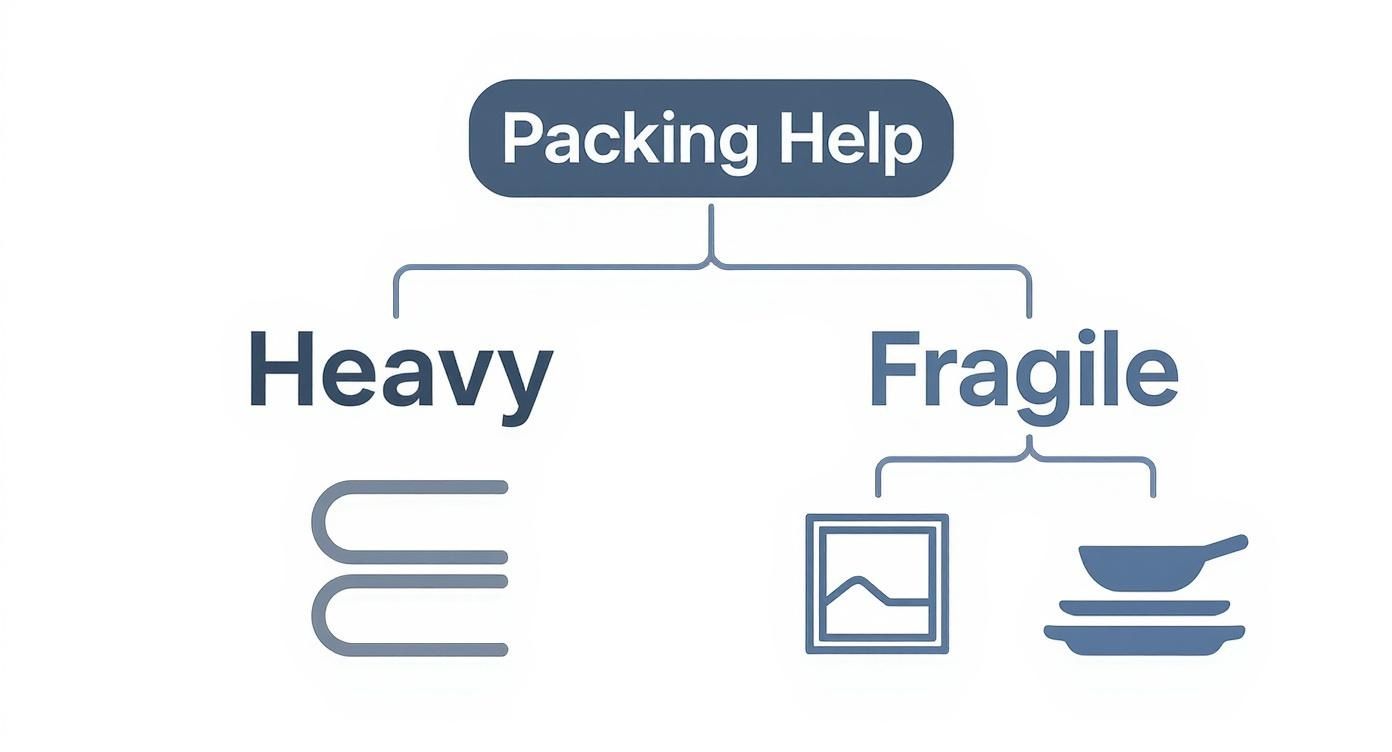
This infographic can help you decide when it’s best to call in the professionals for certain items. The bottom line? Specialized items, whether they’re heavy like a library of books or fragile like artwork, usually benefit from a professional touch to avoid heartbreak later.
Pulling Off a Successful DIY Move
Going the do-it-yourself route can absolutely save you a good chunk of change, especially if you’re organized and have a reliable support system. The key to success is solid planning.
Start by getting your truck size right—renting one that’s too small is a classic moving-day nightmare that forces you to make extra trips. When you recruit your friends, be specific. Instead of a vague “can you help me move?”, try “Could you help me move the heavy furniture for two hours on Saturday morning?” Clear expectations make people more likely to commit and prevent everyone from getting burned out.
While hiring pros is often the smoothest path, a well-planned DIY move can be just as successful. If you’re still on the fence, check out our article on the advantages of hiring professional movers to get a complete picture of all your options.
Making Your Move Day Flawless
This is it—game day. After all the weeks of planning and packing, the success of your move comes down to how you handle these next few hours. A little bit of prep right before the truck arrives can turn potential chaos into a smooth, controlled operation.
The key is to think one step ahead of your movers. Before they even ring the doorbell, make sure your home is completely ready for them. Clear wide pathways from every single room to the main exit. Roll up any rugs that could be a tripping hazard and make sure hallways are totally free of stray boxes or forgotten items.
I also recommend protecting your floors with flattened cardboard boxes or old sheets, especially in high-traffic areas. The last thing you want are scuffs and scratches on the floors you’re trying to leave in perfect condition.
Your Move Day Survival Kit
If there’s one piece of advice I give everyone looking for help packing and moving, it’s this: assemble a “first-night” box. Think of this box as your lifeline for the first 24 hours in your new place. This box stays with you—put it in your car, not on the moving truck.
This isn’t just another box. It holds the absolute essentials you’ll need right away, long before you have the energy to start ripping open tape.
Critical Documents: Passports, birth certificates, and especially your moving contract should stay with you at all times.
Electronics: Don’t get caught without your phone chargers, laptop, and a portable power bank.
Basic Toiletries: Pack toothbrushes, soap, deodorant, and at least one roll of toilet paper. Trust me on that last one.
Simple Comforts: You’ll be grateful for coffee supplies, a few snacks, water bottles, and any daily medications.
Having this box ready means you won’t be frantically digging through dozens of containers just to find your toothbrush. It’s a simple step that brings an immediate sense of normalcy to the frenzy of move-in day.
The Final Walkthrough and Your Arrival Strategy
Once the truck is loaded and ready to pull away, but before you officially hand over the keys, do one last sweep of your old home. I mean a thorough walkthrough. Check every closet, every cabinet, every drawer—even the dishwasher and the back of the pantry. It’s amazing how often small, overlooked items get left behind.
When you get to your new home, your job shifts from packer to director. Be ready to guide the crew. You can have a simple floor plan sketched out or just use painter’s tape on the floor to label where furniture goes. This little bit of direction stops a mountain of boxes from piling up in your living room, which saves you a ton of work later. For a deeper dive into loading logistics, check out these 5 keys to safe and effective truck loading.
As the big stuff like sofas and dressers come off the truck, give them a quick inspection. Look for any new dings or damage that might have happened in transit. It’s much easier to flag any issues with the moving company right then and there.
Finally, focus on unpacking the absolute essentials first. Make the beds and get the bathroom set up with towels and toiletries. Accomplishing these two small tasks will make your new house feel like a home almost immediately.
Smart Logistics That Prevent Moving Headaches
Great packing is only half the battle. After years in this business, I can tell you that smart organization is what truly separates a smooth move from a chaotic one. These little logistical systems make a huge difference, keeping you in control and stomping out those last-minute panic moments.
And it all starts with how you label your boxes.
A solid labeling system will save you hours, if not days, when it’s time to unpack. Instead of just scribbling “Kitchen Stuff” on the top of a box, you need to get more specific. The best systems I’ve seen combine crystal-clear details with dead-simple execution, ensuring anyone helping—friends, family, or pros—can understand it at a glance.
Implementing a Foolproof Labeling System
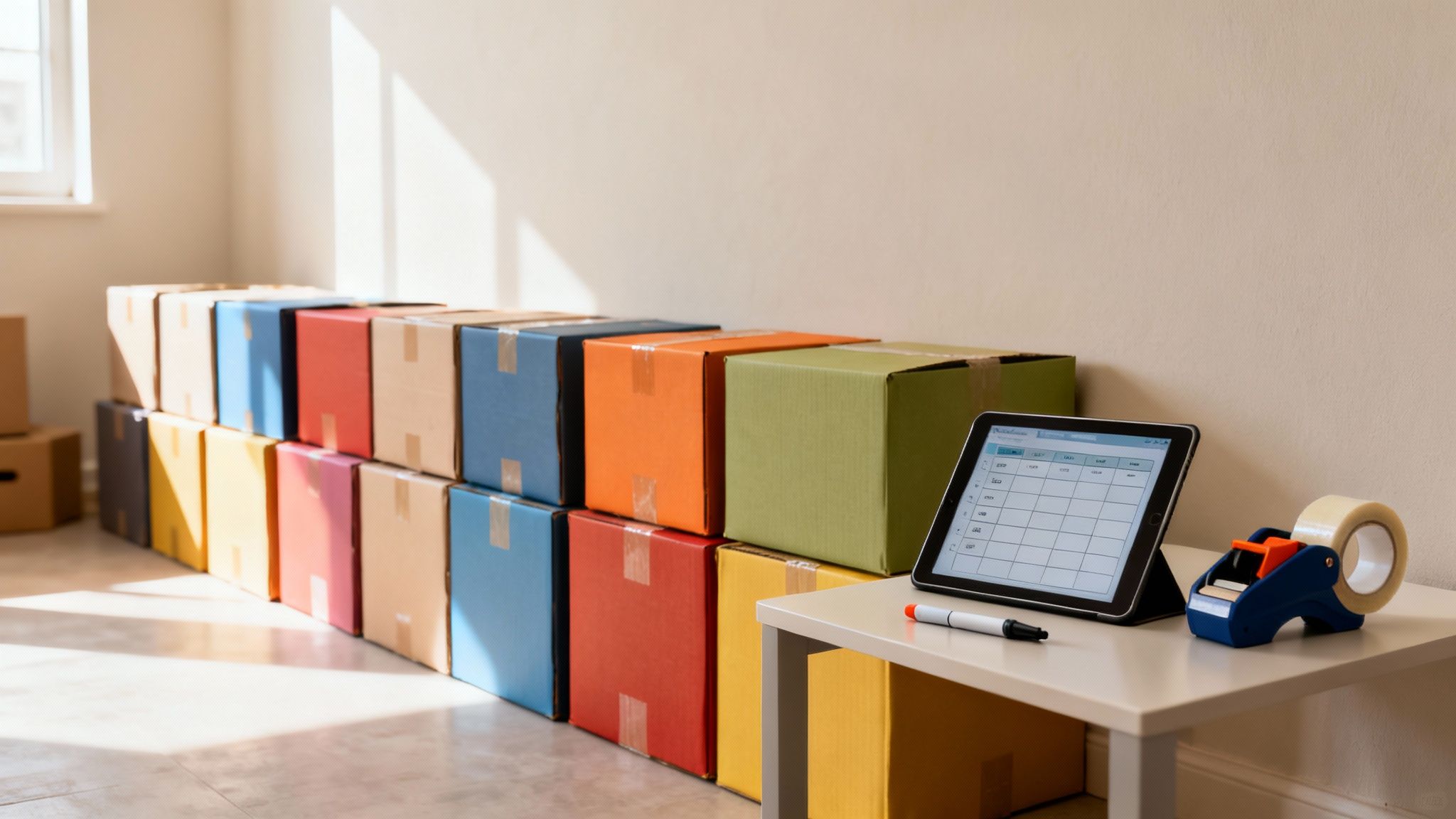
Your goal is to make every single box instantly identifiable. A multi-layered approach works wonders here. First up, assign a specific color to each room in your new place. Think blue for the main bedroom, green for the kitchen, yellow for the living room. You can use colored tape, big colored dot stickers, or even markers for this.
Next, give every box its own unique number. This is your secret weapon for tracking everything with precision. Finally, add a short but clear description of what’s inside.
Here’s what a perfect label looks like in action:
Color: Blue Tape (Main Bedroom)
Number: Box #27
Contents: Bedside lamps, alarm clock, books
Special Note: FRAGILE
This method tells you everything you need to know: where it goes, what’s inside, and how carefully it needs to be handled. No guesswork required.
Think of a detailed labeling system as your roadmap for unpacking. It tells movers exactly where to put each box, preventing that giant, intimidating mountain of cardboard from forming in your living room. It turns unpacking into a methodical, much less stressful process.
Creating a Simple Digital Inventory
While you’re numbering your boxes, take your organization one step further by creating a quick digital inventory. Seriously, this doesn’t need to be complicated. A simple spreadsheet or even a notes app on your phone will do the trick.
As you tape up each box, just create a new entry with its number and a quick list of the key contents. For high-value items like your TV, computer, or artwork, I always recommend snapping a quick photo and adding it to your inventory. This simple list serves two massive purposes:
Peace of Mind: You have a complete record of everything you packed. It’s invaluable if you’re worried something might have gone missing in transit.
Insurance Documentation: In the unlikely event something is damaged, your detailed inventory and photos provide the exact proof you need for a smooth insurance claim.
Coordinating Transport and Delivery
Whether you’re driving a rental truck yourself or have hired a professional moving company, clear communication is non-negotiable. If you’ve hired pros, give them a call to confirm your delivery window a few days before the move. Ask who your point of contact will be on moving day and make sure their phone number is saved in your phone.
For a DIY move, double-check that truck reservation. Plan your route ahead of time, thinking about traffic, low bridges, and where you might need to stop. Knowing these details beforehand removes the guesswork and keeps your moving day timeline from falling apart. The right help packing and moving is all about sweating these small details so you can avoid the big headaches.
Common Questions About Packing and Moving
Even the most organized person has questions when a big move is on the horizon. Getting solid, straight-up answers can be the difference between a chaotic scramble and a confident, well-managed relocation. I’ve seen it all over the years, so let’s tackle some of the most frequent questions that pop up.
Think of this as a quick chat with a moving pro. We’ll cover everything from when to start boxing things up to how to find movers you can actually trust. My goal is to give you the clarity you need to move forward.
How Far in Advance Should I Pack?
The sweet spot for starting the packing process is about six to eight weeks before your moving day. I know, that sounds like a long time, but hear me out. This timeline lets you chip away at the task without the stress and panic of a last-minute frenzy.
Start with the rooms and items you use the least. Think guest room closets, seasonal decorations, that bookshelf full of novels you’ve already read. Packing these non-essentials first clears out space and gives you a sense of progress without messing up your daily routine. As moving day gets closer, you’ll work your way toward the more frequently used items, leaving the absolute must-haves for the final week. This way, you’re not digging through boxes just to find your coffee maker.
Finding Reputable Moving Assistance
This is probably one of the most critical parts of your move, so don’t rush it. Your first step should always be to get at least three different estimates, and insist on an in-home or virtual survey. A quote scribbled on a napkin after a 5-minute phone call is a huge red flag.
When you’re checking out potential movers, ask for their credentials. A legit company won’t hesitate to show you proof of their licensing and insurance. If you’re moving across state lines, they are required to have a USDOT number, which you can easily look up online to check their safety record. Finally, dig into recent reviews on places like Google or the Better Business Bureau. What real customers have to say is often the best indicator of what your own experience will be like.
Key Takeaway: A professional mover will never demand a large cash deposit upfront. They provide a detailed, written estimate that clearly outlines all services and charges, ensuring transparency and building trust from the start.
What Is the Cheapest Way to Get Supplies?
You can definitely save some cash by sourcing free boxes. Check with local grocery or liquor stores, and keep an eye on community social media groups. These are perfect for sturdy, non-fragile things like books and canned goods. But please, don’t skimp on protection for your fragile belongings.
It’s worth it to invest in new, high-quality boxes, packing paper, and bubble wrap for your dishes, glassware, and electronics. You can also get creative with what you already have. Use bath towels, blankets, and even t-shirts as free padding for items that aren’t easily breakable. It’s a great way to save a little money and cut down on waste. And before you pack everything, make sure you know what movers can’t legally transport by checking out our guide on what you can’t pack for an interstate move. Ready to take the stress out of your relocation? The experts at Family Movers Express LLC offer professional packing, reliable transport, and dedicated support for moves in Orlando, Raleigh, Charlotte, and beyond. Get your free moving quote today!