
Let’s be honest—figuring out the best time of year to move is all about striking a balance between cost, convenience, and weather. If you’re looking for that sweet spot, your best bet is usually the “shoulder seasons” of fall (September-November) and spring (March-April). This is when the summer rush dies down, opening the door to better prices and more flexible schedules with movers.

Choosing when to move is a lot like planning a road trip. You could hit the highway in the middle of a summer heatwave, stuck in bumper-to-bumper traffic. Or, you could pick a cooler day with wide-open roads. Both trips will get you there, but one will be a whole lot smoother and cheaper.
The moving industry works the same way, with its own “peak” and “off-peak” seasons. Getting a handle on this rhythm is your first step toward a smarter, less expensive move. It’s a simple case of supply and demand: when everyone wants to move, prices and competition shoot up. When demand cools off, you’re in the driver’s seat, with better deals and more dates to choose from.
In the U.S., the moving industry’s peak season is undeniably summer, running from May through September. This massive surge is mostly driven by families trying to relocate between school years, hoping to cause as little disruption for their kids as possible. Because of this, you can expect moving costs to be 20-30% higher than at other times of the year.
On the flip side, the off-peak season covers fall, winter, and early spring. With fewer people moving during these months, you’ll find:
Pro Tip: Simply choosing a date in the off-peak season is one of the most powerful moves you can make to lower your expenses. A flexible timeline gives you the power to shop around for the best rates and dodge the stress of a last-minute booking.
Timing your move strategically is the foundation of a good experience. By understanding how the seasons impact the moving industry, you can make a call that fits your budget and your life. Good scheduling is everything, and our guide on how to plan your move 6-8 weeks in advance can give you a solid roadmap.
But every season has its own unique set of pros and cons, which we’ll dig into next to help you pinpoint your perfect moving window.
To help you get a quick feel for the landscape, here’s a quick comparison of what it’s like to move throughout the year.
| Season | Average Cost | Movers’ Availability | Key Advantage | Primary Challenge |
|---|---|---|---|---|
| Spring | Moderate | Good | Pleasant weather for moving | Unpredictable rain and storms |
| Summer | High | Low | Long daylight hours, no school | High prices and intense heat |
| Fall | Low | Good | Cooler temps, lower costs | Shorter days, school schedules |
| Winter | Lowest | High | Cheapest rates, best deals | Snow, ice, and holiday conflicts |
While this table gives you a great starting point, remember that your personal circumstances—from your budget to where you’re moving—will play a huge role in what works best for you.

There’s no getting around it: summer is the undisputed king of moving season. Spanning from May through September, these sunny months are when millions of people decide to relocate, and it’s easy to see why. You’ve got long daylight hours and warm, predictable weather, creating what feels like the perfect backdrop for packing up and starting fresh.
For families with kids, a summer move is often the only realistic choice. Moving between school years keeps disruption to a minimum, letting children settle in and start the new academic year without missing a beat. College students and recent grads are also on the move during this time, lining up their new places with academic calendars and the start of new jobs.
But all that popularity comes with some serious drawbacks. Think of it like booking a flight for a major holiday—everyone wants to go at the same time, so you’re stuck with fewer options and much higher prices. The moving industry works the exact same way. Demand skyrockets, far outpacing the supply of available trucks and crews.
This intense competition means you’ll almost certainly face:
Beyond the logistical headaches, the physical side of a summer move can be brutal. Hauling heavy furniture in sweltering heat isn’t just uncomfortable; it’s a health risk. Dehydration and heat exhaustion are real dangers. Plus, the intense sun can damage sensitive items like electronics, artwork, and wood furniture if they’re left sitting out for too long.
If you’re locked into a summer move, don’t worry. With some smart planning, you can navigate the peak season chaos and still pull off a smooth relocation. The trick is to be proactive and strategic.
First things first: book your movers as early as you possibly can. Ideally, you should be getting quotes and locking in your date two to three months ahead of time. This is your best shot at securing a top-notch company at a more reasonable rate. Understanding the full advantages of hiring professional movers will show you exactly why booking a trusted team early is so critical.
A summer move requires a different mindset. Instead of hoping for the best, you need to plan for the worst—fully booked schedules, traffic delays, and extreme heat—and build contingencies into your schedule.
If your schedule has any wiggle room, use it. Moving mid-week (Monday through Thursday) is almost always cheaper than a weekend move. Similarly, a mid-month date can save you money compared to the beginning or end of the month when most leases turn over. When moving day arrives, push for an early morning start to beat the worst of the afternoon heat. It’s a small change that protects your belongings, your moving crew, and your sanity.

Once the hectic energy of summer dies down, autumn steps in as the unsung hero of the moving calendar. The months from September through November are a genuine “sweet spot,” offering a fantastic compromise between summer’s chaos and winter’s challenges. It’s the Goldilocks season for a move—not too hot, not too cold, but just right.
Think about what happens after Labor Day. The overwhelming demand for movers takes a nosedive, and the entire industry seems to breathe a collective sigh of relief. This shift directly benefits you, making it much easier to find and book the services you need. For anyone looking for a less stressful and more affordable move, fall is often the perfect answer.
The biggest perk of a fall move is the perfect balance it strikes between cost and comfort. The summer rush is over, which means moving companies have more openings in their schedules. This leads to better availability and, more importantly, more competitive pricing. You’re no longer fighting with thousands of other families to squeeze in a move before school starts.
This opens up a few key advantages:
Honestly, the weather alone is a massive selling point. You get to dodge the risk of heatstroke that comes with a July move, and in most parts of the country, you can get settled in before the first major snowfall. This moderate climate is also gentler on your things, protecting sensitive items like electronics and wood furniture from extreme temperature swings.
Of course, no season is absolutely perfect, and a fall move has its own quirks. The most obvious challenge is for families with school-aged children. Moving after the school year has already started can be disruptive, forcing kids to adapt to a new school and social circle mid-stream.
An autumn move often means trading the convenience of a summer school break for significant cost savings and better mover availability. For families, the key is deciding which of these factors is the higher priority.
On top of that, the weather can be a bit of a wildcard, especially later in the season. While early fall is usually beautiful and mild, late October and November can bring unexpected cold snaps or even early snowstorms in northern states. The days also get shorter, which can put a time crunch on moving day if you don’t get an early start.
Ultimately, fall offers a pretty compelling mix of benefits. If you aren’t tied to a school calendar—think young professionals, remote workers, or retirees—it presents an almost perfect window to relocate. By weighing the incredible cost and scheduling advantages against the potential for school disruptions and unpredictable weather, you can figure out if this balanced season is the right fit for your move.
If protecting your wallet is priority number one, then a winter move is your undisputed champion. The off-peak season, which runs from December through February, is hands-down the most affordable time of year to relocate. This is when the moving industry hits its quietest stretch, and that dip in demand translates directly into major savings for you.
Think of the moving world like a popular vacation destination. Summer is peak season—crowded beaches, sky-high hotel rates, and everything booked solid. Winter, on the other hand, is the off-season. The crowds have vanished, the pace is slower, and businesses are offering their best deals to bring people in. It’s the exact same story with moving companies; with fewer people on the move, their calendars open up, and they get much more competitive with their pricing.
The biggest advantage of a winter move is simple: cost savings. With demand hitting rock bottom, moving companies are hungry for business. This creates a buyer’s market where you suddenly have more negotiating power and access to the best rates of the entire year.
The financial perks often include:
By choosing to move between December and February, you’re strategically setting yourself up to get the most bang for your buck. The money you save can be substantial, freeing up cash for new furniture, home repairs, or just easing the financial squeeze that comes with relocating.
Of course, those incredible savings come with a trade-off. A winter move demands some serious planning to handle the unique hurdles the season throws at you. The weather is the biggest and most unpredictable variable. Snow, ice, and freezing rain can create some seriously hazardous conditions, making roads slick and walkways treacherous.
You’re also working with shorter daylight hours, which means you have a much smaller window to get the job done. An early start is non-negotiable if you want to avoid loading or unloading in the dark, which only increases the risk of accidents. On top of that, holiday schedules in December can create logistical headaches, with businesses and services running on limited hours. You’ll need to double-check availability and plan around any potential closures.
For those looking to get the most out of their budget, there are plenty of ways to cut costs beyond just picking the right season. Our guide offers 6 tips for saving money during a move that can help you keep expenses down, no matter when you decide to relocate.
Success in a winter move all comes down to preparation. A solid plan can neutralize just about all the potential risks that come with moving in the cold.
A winter move might look a little intimidating on the surface, but the financial benefits are impossible to ignore. By weighing the pros and cons and preparing for the challenges, you can turn the coldest time of year into the smartest time to move.
Think of spring as the sweet spot for moving—that perfect window after the winter frost has thawed but before the summer moving frenzy really kicks off. It’s like finding the “pre-sale” for your relocation. By getting a jump on things in March and April, you can sidestep the crowds and lock in better rates before peak-season madness sends prices soaring.
This shoulder season offers a fantastic blend of milder weather and more reasonable costs. You’ll find that the best movers still have plenty of availability without charging the premium prices that become the norm by late May. You’re catching the industry at an ideal time. Demand is picking up, sure, but it hasn’t completely overwhelmed the supply of trucks and crews, which means less stress and more flexibility for you.
One of the best parts about a spring move is settling into your new place just as the world outside is waking up. The days get longer, the weather warms up, and your new neighborhood starts buzzing with farmers’ markets, festivals, and outdoor events. This timing makes it so much easier to get out, explore your new surroundings, and meet people. You’ll feel settled and connected in no time.
This decision tree breaks down the basic trade-offs you’re looking at with a spring move.
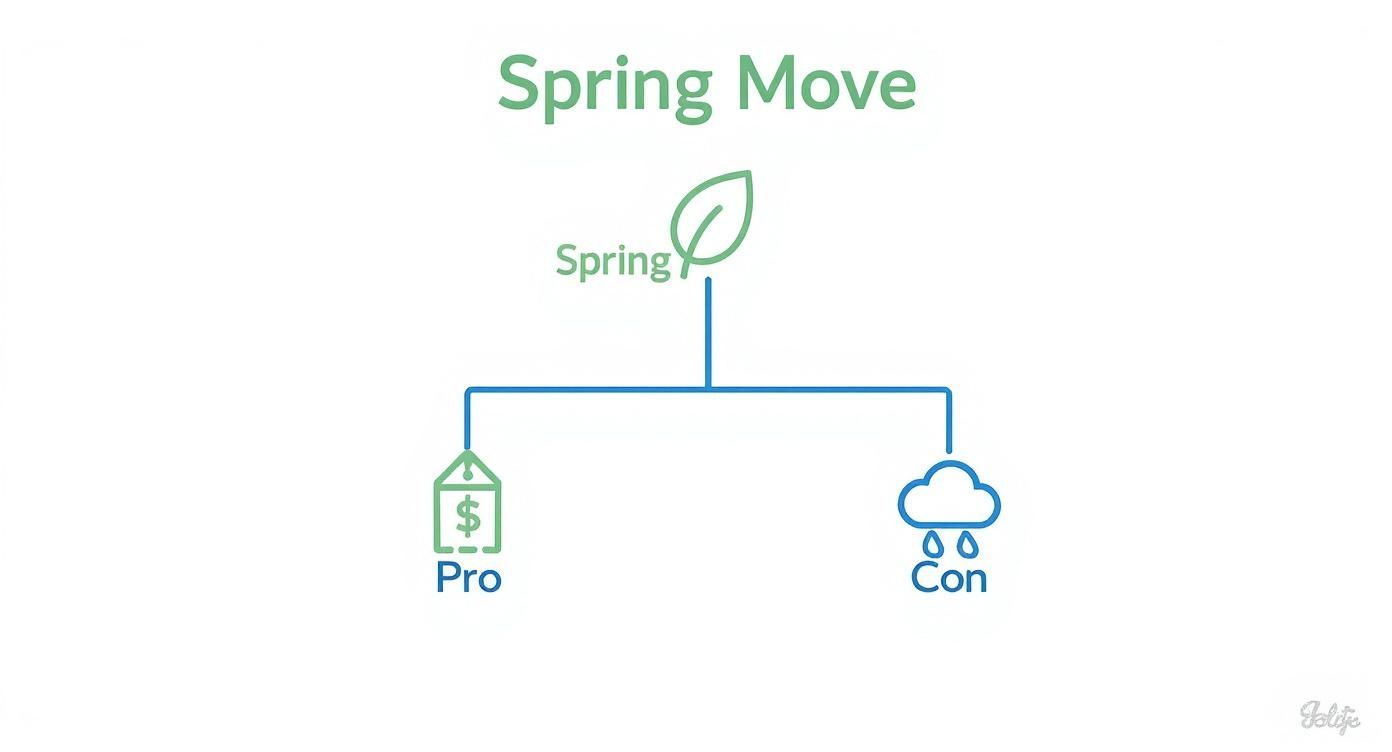
As you can see, the biggest wins are financial, but the major gamble is the weather, which can be a bit of a wild card.
The moderate temperatures also make the physical labor of moving way more pleasant. You’re not battling icy sidewalks or sweating through a sweltering summer afternoon. This is not only easier on you and your moving crew but also safer for your temperature-sensitive items. Planning a bigger relocation, like a cross-country move, feels a lot less intimidating when you know the weather is likely to be on your side. For a closer look at those logistics, our guide on how to move across the country if you’ve never done it before has a complete step-by-step plan.
While spring has a lot going for it, it isn’t perfect. The biggest unknown is definitely the weather. Spring is famous for surprise rain showers and, depending on where you are, some pretty intense storms. It’s smart to have a backup plan ready and make sure your belongings are wrapped and protected from potential downpours.
A spring move is a calculated bet. You are betting that you can get your move done before the summer price hikes begin, while hoping that the unpredictable spring weather cooperates on moving day.
Another thing to keep an eye on is the calendar. As you inch closer to May, you’ll see availability tighten up and prices start their slow climb to their summer peak. The real magic happens in early to mid-spring. If you wait too long, you might miss the boat on the best deals and scheduling options.
All in all, a spring move can be a fantastic way to kick off a new chapter. If you time it right, you can cash in on some serious savings, enjoy comfortable weather, and get settled just in time to enjoy the summer in your new home.
The calendar gives us a great starting point, but let’s be real—the true best time of year to move isn’t a one-size-fits-all answer. It’s deeply personal. Think of the seasonal trends we’ve talked about as a highway map showing the busiest travel times. Your personal situation, however, is the GPS plotting a custom route that considers your unique start, finish, and what matters most along the way.
One of the biggest factors that can throw a wrench in your plans is the regional climate. General advice about a “pleasant” fall move doesn’t mean much if you’re relocating somewhere with extreme weather. For instance, planning a move to Phoenix in July means battling temperatures that can rocket past 110°F, which is a serious risk for your movers and your belongings. In the same way, a late summer move to Florida or the Gulf Coast drops you right into peak hurricane season—a huge gamble that could derail your entire plan.
Beyond geography, your current life situation is the biggest piece of the puzzle. What works for a college student is a world away from what a growing family or a retiring couple needs. The trick is to pinpoint your biggest constraints and build your timeline around them.
Different life stages naturally create different moving windows:
At the end of the day, the best moving date is the one that aligns with your non-negotiables. Whether it’s your child’s first day of school, a new job’s start date, or the closing date on your home, these are the fixed points on your calendar that should anchor your entire moving plan.
To make it even clearer, let’s break down the ideal moving windows for different groups. Every situation has its own rhythm and set of priorities, and finding your sweet spot is all about understanding your specific needs.
| Mover Profile | Primary Consideration | Best Timeframe | Things to Avoid |
|---|---|---|---|
| Students & Recent Grads | Academic calendar, budget | May-June or late August | Last-minute bookings in August, moving during finals week. |
| Families with Children | School year stability | June-July | Moving mid-school year, late-August rush if possible. |
| Remote Workers | Cost savings, flexibility | September-November, March-May | Peak summer season, holiday weekends. |
| Seniors & Retirees | Comfort, safety, mild weather | Late spring (May), early fall (September-October) | Extreme heat or cold, icy winter conditions. |
| Businesses | Minimizing operational downtime | Company’s slowest quarter, weekends | Peak business season, major industry events or deadlines. |
This table is a great starting point, but always remember to layer in your personal deadlines and preferences to find that perfect date.
The whole idea of a single “best” season is also becoming a bit outdated in our interconnected world. As our work and lives go global, moving timelines are being shaped by things that have nothing to do with the weather. The global expat population hit around 300-304 million people by mid-2024, which just goes to show how many moves are now driven by international opportunities.
For this growing community, the ideal move date hangs on things like visa processing times, international school calendars, and job contracts, which rarely line up with traditional American moving seasons. You can find more insights on these global expat statistics and see how they’re reshaping the way people relocate.
Ultimately, finding your personal best time to move is an exercise in balancing your priorities. Start by figuring out your biggest constraints—whether it’s your budget, your job, your family, or your location—and then look for the seasonal window that works best for them. The perfect date is simply the one that brings the most harmony to your unique situation.
Even with a rock-solid plan, there are always a few lingering questions that pop up when you’re trying to nail down the perfect time to move. Think of this as a final check-in, where we’ll tackle the most common head-scratchers to make sure you’ve covered all your bases for a smarter, less stressful relocation.
If you’re hunting for the biggest bargain, look no further than January and February. This is when demand for movers hits rock bottom. The post-holiday slump, chilly weather, and a general lack of motivation to relocate mean moving companies are eager for business.
To get people on their schedules, they drop their rates, offering the most competitive prices you’ll see all year.
This really comes down to the season. If you’re planning a summer move during peak season, you need to be on top of it. I’d recommend booking movers at least two to three months in advance to lock in a reputable company before they’re all booked up.
For a move in the off-season, like fall or winter, you have a lot more breathing room. You can typically get away with booking just four to six weeks out.
Oh, absolutely. It matters a lot. Weekends, especially Saturdays, are prime time for moving, which makes them the most expensive days by a long shot.
If your schedule has any wiggle room, booking your move for a weekday—think Monday through Thursday—can lead to some serious savings. The middle of the month is also usually cheaper than the beginning or end, which is when most leases are turning over. To get a better handle on these costs, you can explore our detailed guide on the average moving costs and see how all these little factors add up.
The housing market plays a huge role in this whole dance. Spring and summer are the hottest times for home buying, which lines up perfectly with the peak moving season and ramps up the competition for everything.
On the flip side, moving in the fall or winter might mean fewer houses on the market, but you’ll also be up against fewer buyers. That could give you a bit more leverage when it’s time to negotiate.
Your best move date is often a balancing act between what movers are charging and what the housing market is doing. It’s all about finding that sweet spot that works for your budget and your timeline.
We’re also seeing some big shifts in how people move. With remote work becoming more common, people aren’t tied to a specific season anymore, and many are heading for the Sun Belt states year-round. These trends show that the “best time to move” is now being shaped more by housing prices and job opportunities than just the calendar. You can discover more insights about these 2025 global mobility trends to see how the landscape is changing.
Ready to plan a move that fits your schedule and budget? At Family Movers Express LLC, we offer flexible scheduling, guaranteed dates, and transparent pricing to make your relocation seamless. Whether you’re moving next month or next year, get a free quote from Family Movers Express today and let us handle the heavy lifting.
Ready to protect your upcoming move?
Click Here to Fill Out Our Quick Form & Secure Your Instant Quote!