

When you hear the term "climate-controlled storage," don't just picture a standard garage with a lock on it. Think of it more like a personal vault for your belongings, one that actively protects them from the elements.
In a nutshell, it's a specialized storage space that maintains a consistent temperature and humidity level all year long. This isn't just about keeping things cool in the summer; it's about creating a stable environment where your sensitive items can be preserved.
Going Beyond a Simple Garage
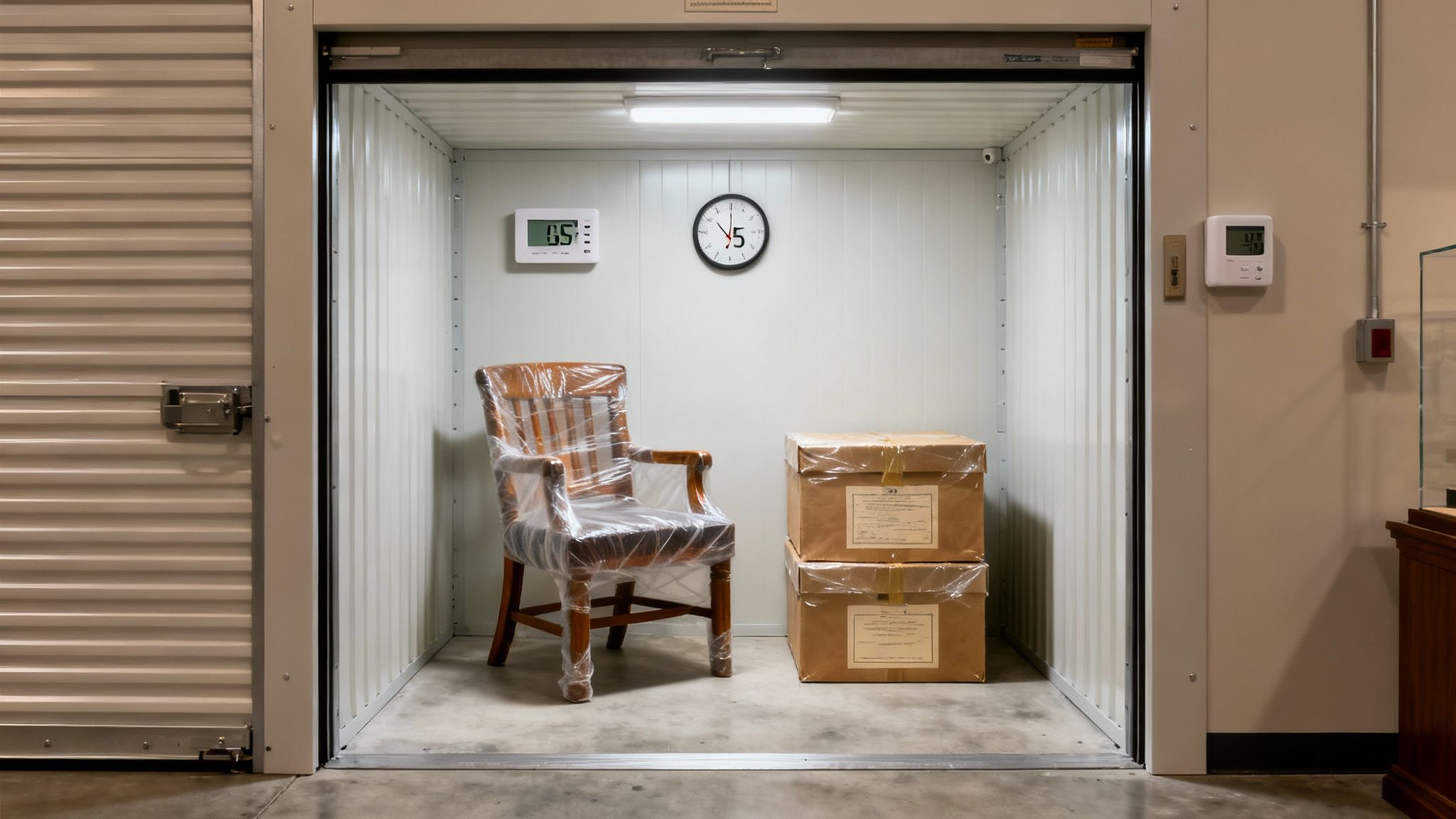
Think about how a museum protects priceless artifacts or how a wine cellar keeps vintages in perfect condition. They both rely on a meticulously managed environment. That’s the exact principle behind climate-controlled storage. A standard unit is basically a box that gets as hot, cold, or humid as the weather outside. A climate-controlled unit, on the other hand, creates its own indoor weather.
Why does this matter so much? Because extreme conditions can wreak havoc on your things. Intense summer heat can warp beautiful wood furniture and melt plastics. A deep freeze in winter can crack the sensitive components in your electronics or damage a prized guitar. And the biggest enemy of all? Humidity. High humidity is a breeding ground for mold, mildew, and rust.
This diagram breaks down the three core pillars that work together to create a true climate-controlled space.

As you can see, it's not just about one thing. It's the constant management of temperature, humidity, and even air quality that truly shields your belongings from harm.
A proper climate-controlled unit keeps the temperature steady, typically somewhere between 55°F and 80°F, and maintains a consistent humidity level. It acts as a buffer, protecting your items from the damaging swings happening right outside the door.
This level of protection has become a must-have in the self-storage world, which has grown into a massive industry worth over $62 billion in the U.S. alone. In fact, more and more people are choosing climate-controlled units over standard ones, especially in places with notoriously humid weather like the East Coast.
If you're weighing your options, it's always good to know what to look for in a professional storage provider. Be sure to check out our guide on finding the best temperature-controlled storage near you.
When you're trying to figure out what needs to go into a climate-controlled unit, it really boils down to one simple question: will this item get wrecked by crazy temperatures or humidity? Lots of things are pretty tough, but some of your most prized possessions are surprisingly delicate when faced with heat, cold, and moisture.
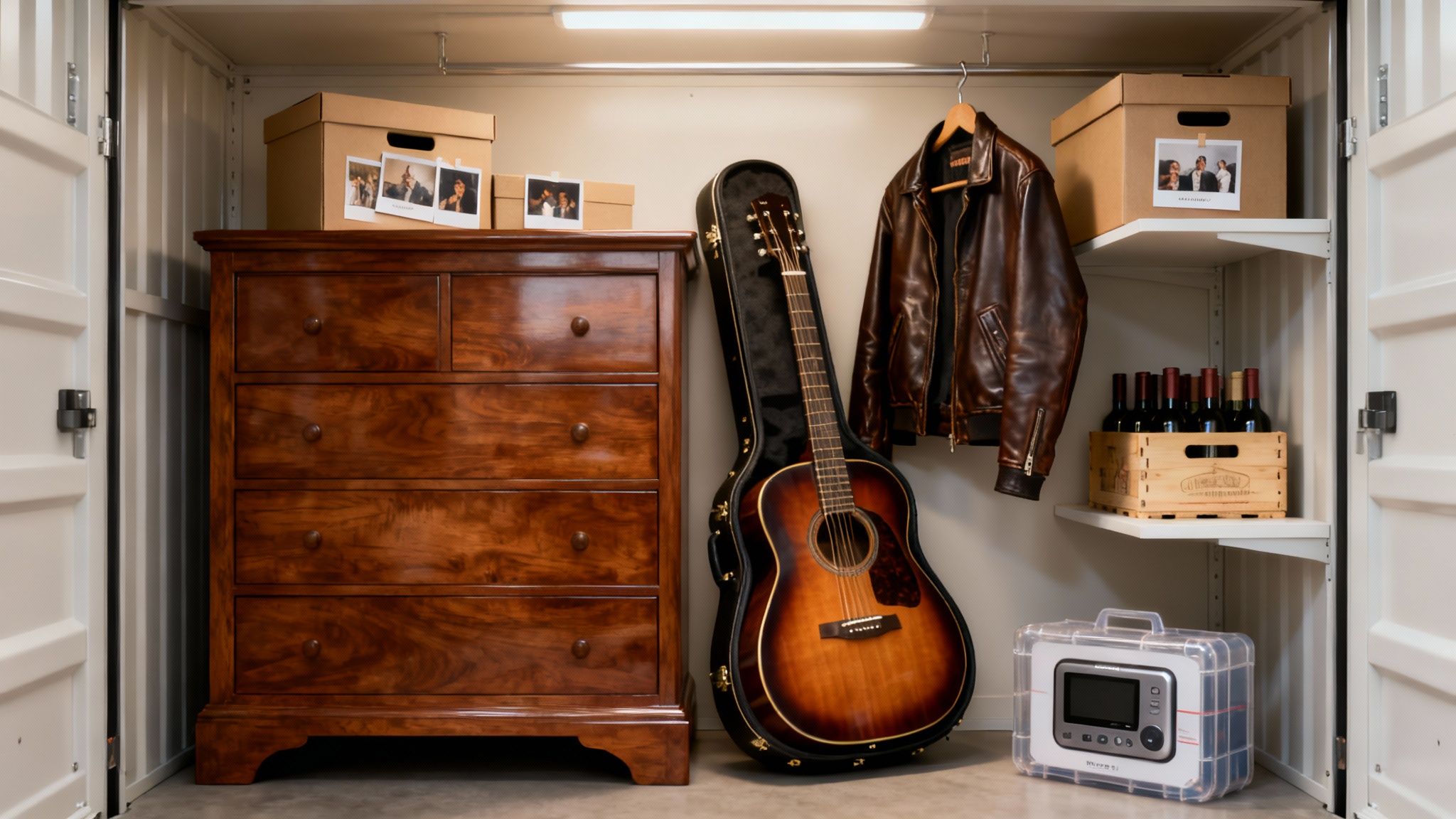
Let’s talk about that beautiful wood furniture you own. In a standard storage unit, it's exposed to wild temperature swings that make the wood expand and contract. Over and over again. Eventually, that constant movement can cause warping, cracking, and splitting, turning a family heirloom into a weekend repair project.
The same goes for anything made of leather. It can dry out and crack in the scorching heat or become a breeding ground for mold when the humidity gets too high.
Electronics and Media
Your expensive electronics—TVs, computers, sound systems—are especially vulnerable. Extreme heat can fry sensitive internal circuits, while damp, humid air is a one-way ticket to corrosion and total system failure.
This also covers all the physical media holding your priceless memories:
- Photographs and Important Documents: Humidity is the enemy here. It can make photos stick together in a single, ruined block and cause documents to yellow or grow mildew.
- Vinyl Records, Tapes, and CDs: Heat is notorious for warping vinyl records, making your favorite albums completely unplayable. The same goes for old cassette tapes and even CDs.
- Artwork and Collectibles: That painting from a local artist or your prized stamp collection needs stable conditions to prevent colors from fading, canvases from cracking, and paper from degrading.
Special and Sentimental Items
Finally, think about those one-of-a-kind items or things that just mean the world to you. Musical instruments like guitars and pianos are incredibly sensitive to environmental shifts that can warp the wood and throw them permanently out of tune.
A wedding dress, vintage clothing, or other fine fabrics also need a stable, dry environment to keep them from yellowing or developing that musty smell of mildew over time. For more tips on this, our team put together a great guide on packing delicate items like a pro.
To make it even clearer, we've put together a quick checklist of common items that are best kept in climate-controlled storage.
Checklist for Climate Controlled Storage
| Item Category | Examples | Risk Without Climate Control |
|---|---|---|
| Wood & Leather Furniture | Dining tables, antique dressers, leather sofas | Warping, cracking, splitting, mold, mildew |
| Electronics | TVs, computers, speakers, cameras | Corrosion, circuit damage, battery failure |
| Media | Vinyl records, photos, documents, books | Warping, sticking, mildew, yellowing, fading |
| Artwork & Collectibles | Paintings, sculptures, stamp collections | Fading, cracking, degradation, mold |
| Specialty Clothing | Wedding dresses, leather jackets, fur coats | Yellowing, mildew, fabric decay, pests |
| Musical Instruments | Guitars, pianos, violins, woodwinds | Warping wood, broken strings, tuning issues |
| Appliances | Refrigerators, washing machines, microwaves | Rust, mildew in hoses, mechanical damage |
By running through your own inventory and thinking about these vulnerabilities, you can confidently decide what truly needs that extra layer of protection.
Is It Worth the Extra Cost?
It's no secret that a climate-controlled unit usually costs a bit more than a standard one. But it's better to think of that extra cost not as an expense, but as an insurance policy for your most valuable and sentimental belongings.
The real question isn't just about the monthly fee. It's about what it might cost you not to use climate control. Imagine the price tag on replacing a family heirloom dresser that's warped, fixing a high-end TV with fried internal circuits, or losing a whole box of irreplaceable family photos to mildew. When you look at it that way, the small upfront cost to prevent that kind of damage is almost always a bargain.
What Goes Into the Price
A few key things will determine the final price of a climate-controlled unit. Knowing what they are can help you budget and find the right fit for what you need.
- Unit Size: This one's straightforward. Just like any storage space, bigger units that can hold more stuff will have a higher price.
- Location: You'll often find that facilities in bustling city centers or high-demand areas have higher rates compared to those in quieter suburban or rural spots.
- Facility Features: Extra perks like top-tier security systems, 24/7 access, or the convenience of a ground-floor unit can also nudge the price up a bit.
Think of the extra investment in a climate-controlled unit as buying peace of mind. It’s the proactive way to guarantee your things come out of storage looking exactly the same as when they went in.
At Family Movers Express, we try to make this an easy call. We actually include 30 days of free climate-controlled storage with our services. This little perk turns a potential expense into a huge stress-reducer during your move, giving your items the protection they need without that initial hit to your wallet. If you're mapping out your budget, our guide on the moving container rental cost can give you some more great insights.
Picking the right storage unit is about more than just finding a space that’s big enough. To get it right, you really need to think about two things: what you're putting into storage and how long it’s going to be there. Your answers will point you straight to the perfect option.
First, take a quick inventory of what you’re packing away. If your list has items like your grandmother’s wooden dresser, that new flat-screen TV, or boxes of irreplaceable family photos, then you absolutely need to understand what climate controlled storage is all about. These kinds of belongings are really susceptible to damage from big temperature swings and humidity, which makes a stable, controlled environment a must-have.
Next up, think about the timeline. Are you just stashing things for a couple of weeks during a move, or is this a longer-term situation spanning months or even years? The longer your stuff is in storage, the more it's going to be exposed to the changing seasons.
Key Facility Features to Look For
Once you have a clear picture of what you need, it's time to start checking out some facilities. A good storage facility offers way more than just a roll-up door and a lock. You’ll want to keep an eye out for these critical features to make sure your things are genuinely protected:
- Serious Security: Look for gated access, plenty of good lighting, and 24/7 surveillance cameras. You want a place that takes security seriously.
- Cleanliness and Upkeep: A property that’s well-maintained is a great sign. It shows the management is on top of things and cares about protecting items from pests, dust, and decay.
- Convenient Access Hours: Make sure their hours actually line up with your schedule. There's nothing worse than needing to grab something and finding out you can't get to it.
Making the right call from the start saves you a world of expensive headaches down the road. A quality facility acts as a true safeguard for your valuables by providing a secure, clean, and stable environment, which buys you complete peace of mind.
Working with a professional moving and storage company can take all the guesswork out of the equation. An experienced crew can look at what you have, recommend the perfect unit size, and handle all the moving parts without a hitch. To get a better look at the options in your area, check out our guide on finding the best climate-controlled storage units near you.
Making Your Move Easier with Integrated Storage
Let’s be honest, moving timelines are rarely perfect. More often than not, there’s a stressful gap between when you have to be out of your old place and when you can get into your new one. Your belongings are stuck in limbo, and so are you. This is exactly where combining your move with storage saves the day.
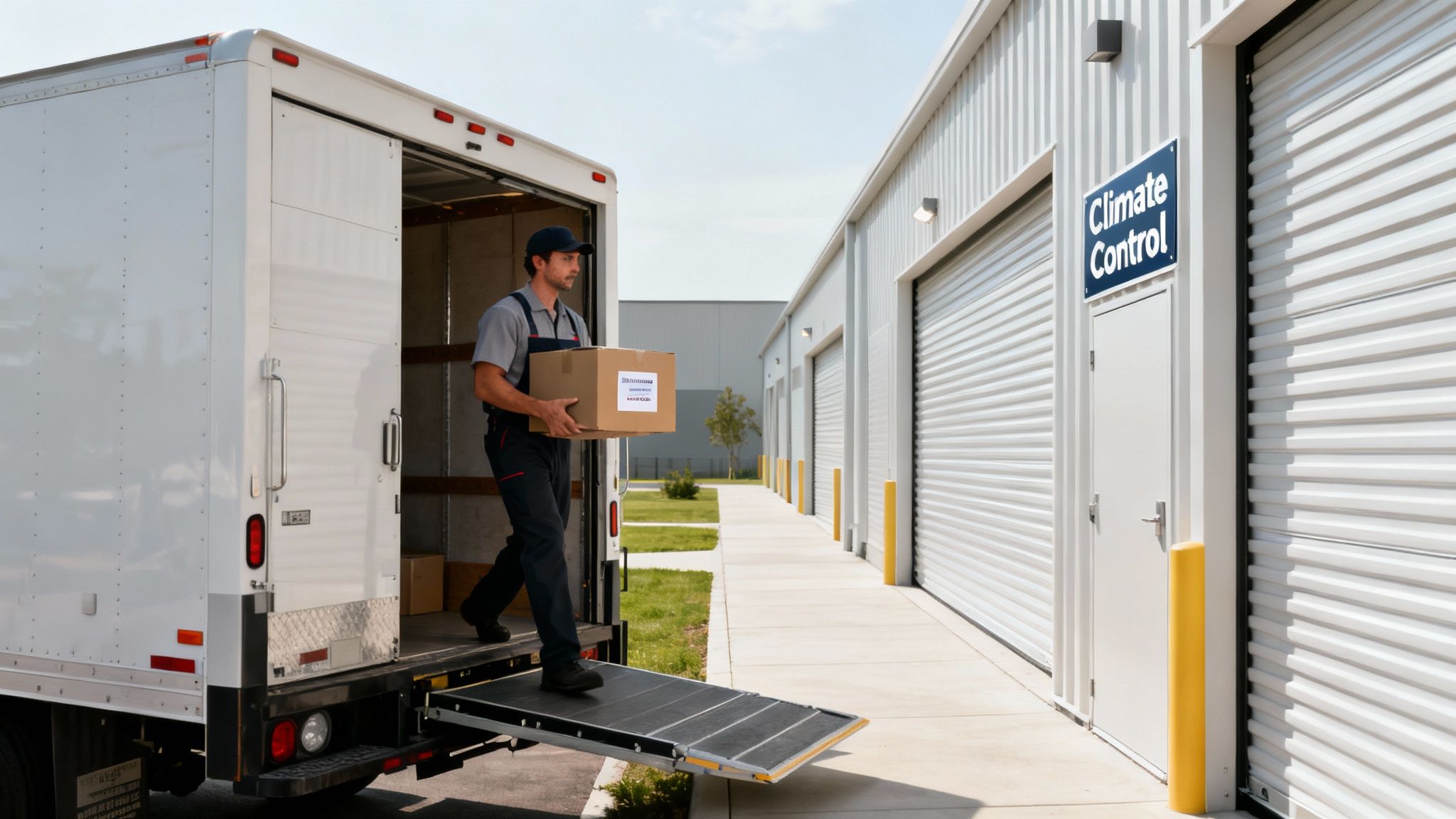
Instead of trying to juggle a moving company and a separate storage facility, an all-in-one solution just makes sense. A professional team can handle everything—the packing, the loading, and transport—and take your items directly to a secure unit. It cuts out the logistical nightmare and minimizes the number of times your things are handled, which means less risk of damage.
The Advantage of a Single Partner
The real magic happens when you have one trusted partner managing the entire process. At Family Movers Express, we bridge that timing gap by offering 30 days of free climate-controlled storage with our moving services. Think of it less as a discount and more as a tool to give you some breathing room.
This gives you the flexibility to finalize closing dates, get some renovations done, or just move in without a mountain of boxes staring you down. And you can rest easy knowing your sensitive items, from antique wooden dressers to your flat-screen TV, are safe from the East Coast’s wild temperature swings and humidity.
Choosing an integrated service means your possessions are safeguarded under one umbrella of care from start to finish. It’s the difference between merely moving boxes and having a partner manage your entire transition with expertise and peace of mind.
This approach is a lifesaver for long-distance moves. With our guaranteed pickup and delivery dates, you get the certainty you need. No more wondering when your stuff will finally show up or what condition it will be in when it does.
This integrated model is all about making your move more efficient while keeping your valuables protected. If you want to explore this idea further, you can learn more about how storage solutions simplify your move in our detailed guide.
Common Questions About Climate Controlled Storage
Even when you have a good handle on what climate-controlled storage is, a few questions usually pop up. Let's tackle the most common ones so you can feel confident about protecting your belongings.
Is Climate Controlled the Same as Temperature Controlled?
Not quite, and it’s a crucial distinction. When a facility says "temperature-controlled," they’re usually just talking about keeping things from getting too hot or too cold. True climate control is a different beast—it manages both temperature and humidity.
That second part, the humidity control, is what really saves your stuff. It’s the key to stopping moisture-related nightmares like mold, mildew, and rust from taking hold. For delicate things like electronics, family documents, or that antique wooden dresser, managing the moisture in the air is everything.
Do I Need Climate Control for a Short Term Move?
That really depends on what you're storing and when. Even a few weeks in the middle of a summer scorcher or a deep winter freeze can do a number on your belongings. Wood can warp, electronics can fry, and artwork can degrade faster than you'd think.
Getting 30 days of free climate-controlled storage from Family Movers Express is a no-brainer. It's a risk-free way to make sure your valuables are safe during the transition, no matter how short.
In humid climates, uncontrolled storage can see damage rates as high as 25-50%, a disaster that can cost thousands. When you think about the estimated $5 billion lost annually worldwide just from electronics failing due to climate issues, taking a simple precaution makes a lot of sense. You can explore more about these market trends and how they impact storage.
How Should I Prepare Items for a Climate Controlled Unit?
Even in a perfect environment, a little prep work goes a long way. Think of it as giving your items the best possible chance to come out looking just as good as they went in.
Here are a few essential tips:
- Clean and Dry Everything: Before you store anything, especially appliances and fabrics, make sure it’s completely clean and bone-dry. This is your best defense against mildew.
- Use the Right Containers: Sturdy, sealed plastic bins are your best friend here. They offer way better protection from dust and pests than cardboard boxes.
- Give 'Em Room to Breathe: Don't cram your belongings right up against the unit's walls. Leaving a small gap all around helps the air circulate, letting the climate-control system do its job effectively.
Of course, our professional packing services can handle all this for you, making sure every last item is perfectly prepped for its stay.
Can I Access My Belongings in Storage?
Absolutely. Our storage facilities are designed to be both ultra-secure and easy for you to access. You can get to your items whenever you need them during our designated access hours.
Just give our team a heads-up, and we’ll help coordinate your visit and answer any questions to make sure you can grab what you need, when you need it.
Ready to protect your valuables and take the stress out of your move? Family Movers Express offers 30 days of free climate-controlled storage to give you total peace of mind. Get your free quote today!
Ready to protect your upcoming move?
Click Here to Fill Out Our Quick Form & Secure Your Instant Quote!
